Question
Generate a complete, print-ready paper with questions like this in minutes — across 16+ boards, with answer keys.
| Column I | Column II |
| (i) Gigantism | (a) Over-secretion of thyroxine. |
| (ii) Cushing's syndrome | (b) Over-secretion of growth hormone in childhood. |
| (iii) Exophthalmic goiter | (c) Over-secretion of cortical hormones. |
| (iv) Acromegaly | (d) Over-secretion of growth hormones in adults. |
| (e) Simulates skeletal growth. |
| Column A | Column B |
| 1. Diffusion | (a) Xylem |
| 2. Semipermeable | (b) Osmosis |
| 3. Diffusion of water | (c) Mixing of molecules |
| 4. Upward flow of water | (d) Cell membrane |
| (e) Cell wall |
| Column I | Column II |
| (a) Hyposecretion of Thyroxine in adults | 1. Diabetes insipidus |
| (b) Hyposecretion of Insulin | 2. Myxedema |
| (c) Hypersecretion of Growth hormone in Childhood | 3. Dwarfism |
| (d) Hyposecretion of ADH | 4. Gigantism |
| 5. Diabetes mellitus |
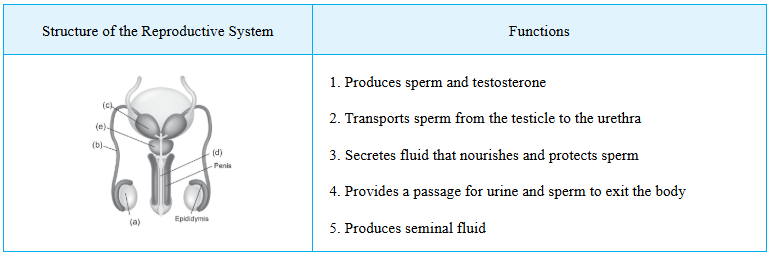
| Column I | Column II |
| (i) Coronary artery | (a) Largest artery |
| (ii) Aorta | (b) Blocking of coronary arteries. |
| (iii) Heart attack | (c) Sphygmomanometer |
| (iv) Blood pressure | (d) Largest vein |
| (e) Carry oxygenated blood to heart muscles. |
| Column I | Column II |
| (i) Exosmosis | (a) The process by which roots absorb water from the soil. |
| (ii) Osmosis | (b) The concentration of the solution when lower than that of the cell sap. |
| (iii) Plasmolysis | (c) Two solutions which have equal osmotic pressure. |
| (iv) Hypotonic solution | (d) The shrinkage of protoplasm when the cell is kept in a hypertonic solution |
| (e) The exit or flow of water from the cell to the outer environment. |
| Component | Approximate number | Life Span |
| I. RBCs | (A) 7,000 | (i) 3-5 days |
| II. WBCs | (B) 2,50,000 | (ii) 100-120 days |
| III. Blood platelets | (C) 4.8-5-5 million | (iii) 2 weeks |
| Column I | Column II |
| (i) Adrenal | (a) Master of master gland. |
| (ii) Hypothalamus | (b) Heterocrine gland. |
| (iii) Pancreas | (c) Increases heart and breathing rate, raises blood pressure. |
| (iv) Testes | (d) Emergency hormone. |
| (e) Produces male sex characteristics. |