MCQ
.
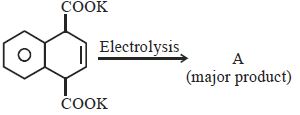
- A

- B
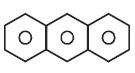
- ✓

- D
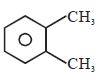
Generate a complete, print-ready paper with questions like this in minutes — across 16+ boards, with answer keys.
If $\Delta H^o = 25\,kcal/mol$ and $\Delta S^o = 50\,cal/K,$ at what temperature equilibrium will be established in the container. (Ignore variation of $\Delta H^o$ and $\Delta S^o$ with temperature.).......$K$
Given :
Molar mass $N =14\,g\,mol ^{-1} ; O =16\,g\,mol ^{-1} ; C =12\,g\,mol ^{-1} ; H =1\,g\,mol ^{-1}$;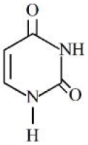
Statement-$I$: Since fluorine is more electronegative than nitrogen, the net dipole moment of $\mathrm{NF}_3$ is greater than $\mathrm{NH}_3$.
Statement-$II$: In $\mathrm{NH}_3$, the orbital dipole due to lone pair and the dipole moment of $\mathrm{NH}$ bonds are in opposite direction, but in $\mathrm{NF}_3$ the orbital dipole due to lone pair and dipole moments of $N-F$ bonds are in same direction. In the light of the above statements. Choose the most appropriate from the options given below.
$(i)$ In pure water
$(ii)$ In presence of $0.1\ M AgNO_3$
$(iii)$ In presence of $2\ M aq.$ solution of $KCN$
$(iv)$ In presence of $ 1\ M aq$. solution of $Ca(CN)_2$
$(v)$ In presence of $2\ M aq.$ solution of $NH_3$
(Assuming $100\%$ dissociation of $AgNO_3, KCN$ and $Ca(CN)_2)$ and complex formation with $NH_3$ and $CN^-$ will take place.
| $Cl_2(g) \rightarrow 2Cl(g),$ | $242.3\,kJ\,mol^{-1}$ |
| $I_2(g) \rightarrow 2I(g),$ | $151.0\,kJ\,mol^{-1}$ |
| $ICl(g) \rightarrow I(g)+Cl(g),$ | $211.3\,kJ\,mol^{-1}$ |
| $I_2(s) \rightarrow I_2(g),$ | $62.76\,kJ\,mol^{-1}$ |
Given that the standard states for iodine and chlorine are $I_2(s)$ and $Cl_2(g),$ the standard enthalpy of formation for $ICl(g)$ is : ............... $\mathrm{kJ\,mol}^{-1}$