MCQ
$4200\, J$ of work is required for
  • A
    Increasing the temperature of $10\, gm$ of water through $10°C$
  • Increasing the temperature of $100\, gm$ of water through $10°C$
  • C
    Increasing the temperature of $1 \,kg$ of water through $10°C$
  • D
    Increasing the temperature of $10\, kg$ of water through $10°C$
Answer

Correct option: B.
Increasing the temperature of $100\, gm$ of water through $10°C$
b
(b) Work done to raise the temperature of $100\,gm$ water through $10°C$ is

$W = JQ = 4.2 \times (100 \times {10^{ - 3}} \times 1000 \times 10) = 4200\,J$

Need a full question paper?

Generate a complete, print-ready paper with questions like this in minutes — across 16+ boards, with answer keys.

Start Generating Free

Similar questions

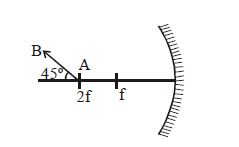
The shape of image formed of an object $AB$ due to the concave mirror shown in the figure is best represented by (assume point $A$ is at the centre of curvature of the mirror) :-
In the absence of external torque for a body revolving about any axis the quantity that remains constant is
The dimension of the ratio of magnetic flux and the resistance is equal to that of :
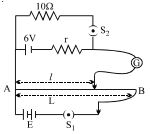
In the arrangement shown in figure when the switch $S_2$ is open, the galvanometer shows no deflection for $l = L/2$. When the switch $S_2$ is closed, the galvanometer shows no deflection for $l = 5L /12$ . The internal resistance $(r)$ of $6\, V$ cell, and the $\mathrm{emf}$ $E$ of the other battery are respectively
A calcite crystal is placed over a dot on a piece of paper and rotated, on seeing through the calcite one will be see
Due to capillary action, a liquid will rise in a tube, if the angle of contact is
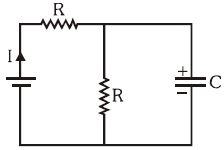
In the given figure initially the capacitor is uncharged. Ratio of current at $t = 0$ & $t = \infty$ will be
The diameter of the eye-ball of a normal eye is about $2.5\, cm$. The power of the eye lens varies from
The initial velocity of a projectile is $\vec u = (4\hat i + 3\hat j)\,m/s$ it is moving with uniform acceleration $\vec a = (0.4\hat i + 0.3\hat j)\, m/s^2$ The magnitude of its velocity after $10\,s$ is.........$m/s$
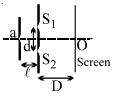
The figure shows a schematic diagram showing the arrangement of Young's Double Slit Experiment If the distance $d$ is varied, then identify the correct statement