Question

A 50 volt potential difference is suddenly applied to a coil with   henry and R = 180 ohm. The rate of increase of current after 0.001 second is

(a) 27.3 amp/sec

(b) 27.8 amp/sec

(c) 2.73 amp/sec

(d) None of the above

Answer

(d) None of the above

Need a full question paper?

Generate a complete, print-ready paper with questions like this in minutes — across 16+ boards, with answer keys.

Start Generating Free

Similar questions

Three capacitors each of capacity $ 4μ\text{F}$ are to be connected in such a way that the effective capacitance is $6μ\text{F}$. This can be done by:

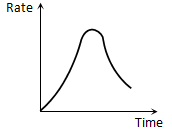
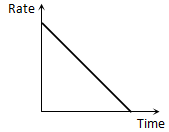
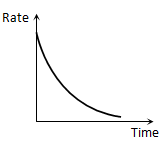
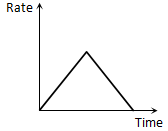
In an L–R circuit connected to a battery the rate at which energy is stored in the inductor is plotted against time during the growth of the current in the circuit. Which of the following best represents the resulting curve

(a)

(b)

(c)

(d)

Force between two charges at rest is____?

Two sources give interference pattern which is observed on a screen, D distance apart from the sources. The fringe width is 2w. If the distance D is now doubled, the fringe width will

(a) Become w/2

(b) Remain the same

(c) Become w

(d) Become 4w

In $\gamma\ \text{ray}$ emission from a nucleus:
The wavelength of light visible to eye is of the order of:

In hydrogen spectrum the wavelength of  line is 656 nm whereas in the spectrum of a distant galaxy,  line wavelength is 706 nm. Estimated speed of the galaxy with respect to earth is

(a) 2  

(b) 2 

(c) 2  

(d) 2  

The figure shows a plot of photocurrent v/s anode potential for a photo sensitive surface for three different radiations. Which one of the following is a correct statement?

A person's near point is 50 cm and his far point is 3 m. Power of the lenses he requires for

(i)  reading and  (ii) for seeing distant stars are

(a) – 2 D and 0.33 D

(b) 2 D and – 0.33 D

(c) – 2 D and 3 D

(d) 2 D and – 3 D

Two identical induction coils each of inductance L joined in series are placed very close to each other such that the winding direction of one is exactly opposite to that of the other, what is the net inductance

(a) L2

(b) 2L

(c) L/2

(d) Zero