MCQ
A bicyclist comes to a skidding stop in $10m.$ During this process, the force on the bicycle due to the road is $200N$ and is directly opposed to the motion. The work done by the cycle on the road is:
  • A
    $+2000J$
  • B
    $-200J$
  • zero
  • D
    $-20,000J$

Answer

Correct option: C.
zero
As the friction is present in fhis problem,
so mechanical energy is not conserved.
So energy will be lost due to dissipation by friction
Here, work is done by the frictional force on the cycle and is equal to $200 \times 10 = -2000J$
As the road does not move at all, therefore, work done by the cycle on the road is zero.
Important point.
We should be aware that here the energy of bicyclist is lost during the motion, but it is lost due to friction in the form of heat.

Need a full question paper?

Generate a complete, print-ready paper with questions like this in minutes — across 16+ boards, with answer keys.
Start Generating Free

Similar questions

During the adiabatic expansion of $2$ moles of a gas, the internal energy of the gas is found to decrease by $2$ joules, the work done during the process on the gas will be equal to ....... $J$
The pressure $P,$ volume $V$ and temperature $T$ of a gas in the jar $A$ and the other gas in the jar $B$ at pressure $2P,$ volume $V/4$ and temperature $2T,$ then the ratio of the number of molecules in the jar $A$ and $B$ will be
In circular motion, the centripetal acceleration is given by
A person travelling on a straight line moves with a uniform velocity $\text{v}_1$ for a distance $x$ and with a uniform velocity $\text{v}_2$ for the next equal distance. The average velocity $v$ is given by:
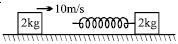
A $2\, Kg$ block moving with $10\, m/s$ strikes a spring of constant $\pi ^2 N/m$ attached to $2\, Kg$ block at rest kept on a smooth floor, the velocity of the rear $2\, kg$ block after it separates from the spring will be ..... $m/s$
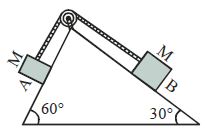
Two blocks each of mass $M$ are resting on a frictionless inclined plane as shown in figure. Then
Standing waves can be produced
The centre of mass of a system of particles is at the origin. It follows that:
If an electric heater is rated at $1000\, W$, then the time required to heat one litre of water from $20\,^oC$ to $60\,^oC$ is
A vessel contains oil (density =$ 0.8 \;gm/cm^3$) over mercury (density = $13.6\; gm/cm^3$). A homogeneous sphere floats with half of its volume immersed in mercury and the other half in oil. The density of the material of the sphere in $ gm/cm^3$ is