Question
A body rotating at 20rad/s is acted upon by a constant torque providing it a deceleration of $2rad/s^2.$ At what time will the body have kinetic energy same as the initial value if the torque continues to act?

Answer

Initial angular velocity = 20rad/s Therefore $\alpha=2\text{rad/s}^2$
$\Rightarrow\text{t}_1=\frac{\omega_2}{\alpha_1}=\frac{20}{2}=10\text{sec}$
Therefore 10sec it will come to rest. Since the same torque is continues to act on the body it will produce same angular acceleration and since the initial kinetic energy = the kinetic energy at a instant. So initial angular velocity = angular velocity at that instant Therefore time require to come to that angular velocity,
$\Rightarrow\text{t}_2=\frac{\omega}{\alpha_2}=\frac{20}{2}=10\text{sec}$
therefore time required $= t_1 + t_2 = 20$sec.

Need a full question paper?

Generate a complete, print-ready paper with questions like this in minutes — across 16+ boards, with answer keys.
Start Generating Free

Similar questions

Half life of $^{238}\text{U}_{92}$against$\alpha$ decay is $4.5 \times 10^{9}$years. Calculate the activity of Ig sample of$^{238}\text{U}_{92}$? Given Avogadro's number $= 6 \times 10^{26}$atoms/kmol.
Answer the following questions.
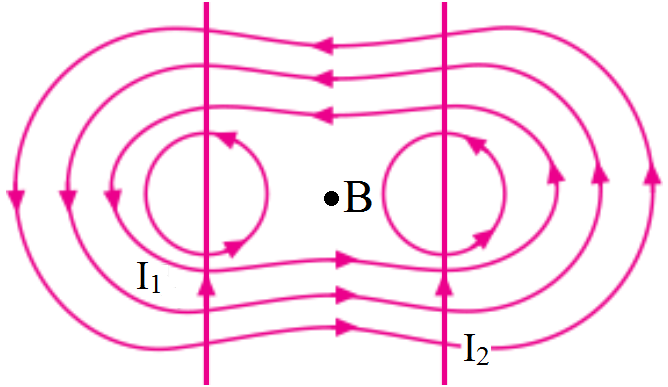
  1. Draw the magnetic field lines due to two straight, long, parallel conductors carrying currents $I_1$ and $I_2$ in the same direction. Write an expression for the force acting per unit length on one conductor due to other. Is this force attractive or repulsive?
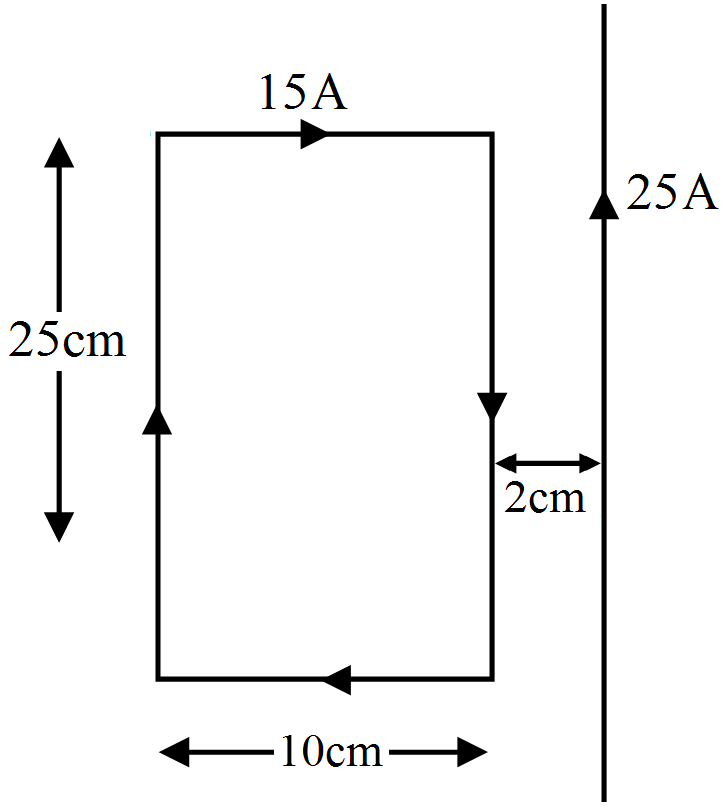
  1. Figure shows a rectangular current-carrying loop placed 2cm away from a long, straight, current-carrying conductor. What is the direction and magnitude of the net force acting on the loop?
In order to emit the electron from the metallic surface, which physical methods are used to give the minimum energy? Explain.
A 10cm long rod carries a charge of $+50\mu\text{C}$ distributed uniformly along its length. Find the magnitude of the electric field at a point 10cm from both the ends of the rod.
A short magnet is moved along the axis of a conducting loop. Show that the loop repels the magnet if the magnet is approaching the loop and attracts the magnet if it is going away from the loop.
A gas cylinder has walls that can bear a maximum pressure of $1.0 \times 10^6Pa$. It contains a gas at $8.0 \times 10^5Pa$ and 300K. The cylinder is steadily heated. Neglecting any change in the volume, calculate the temperature at which the cylinder will break.
One end of a rod of length 20cm is inserted in a furnace at 800K The sides of the rod are covered with an insulating material and the other end emits radiation like a blackbody. The temperature of this end is 750K in the steady state. The temperature of the surrounding air is 300K. Assuming radiation to be the only important mode of energy transfer between the surrounding and the open end of the rod, find the thermal conductivity of the rod. Stefan constant $\sigma=6.0\times10^{-8}\text{Wm}^{-2}\text{K}^{-4}.$
Two identically charged particles are fastened to the two ends of a spring of spring constant $100\ Nm^{-1}$ and natural length 10cm. The system rests on a smooth horizontal table. If the charge on each particle is $2.0 \times 10^{-8}C$, find the extension in the length of the spring. Assume that the extension is small as compared to the natural length. Justify this assumption after you solve the problem.
A series LCR circuit is connected across an a.c. source of variable angular frequency $' \omega'$. Plot a graph showing variation of current ‘i’ as a function of $' \omega'$ for two resistances $R_1$ and $R2 (R_1 > R_2).$
Answer the following questions using this graph:
  1. In which case is the resonance sharper and why?
  2. In which case is the power dissipation more and why?
A vessel contains 1.60g of oxygen and 2.80g of nitrogen. The temperature is maintained at 300K and the volume of the vessel is $0.166m^3.$ Find the pressure of the mixture.