Question
A charged gold leaf electroscope has its leaves apart by certain amount having enclosed air. When the electroscope is subjected to $X$-rays, then the leaves

Answer

(c)

A charged gold leaf electroscope has its leaves apart by certain amount having enclosed air. When an electroscope is subjected to $x$-rays, then the $x$-ray will ionize the air around the leaves into positive and negative charges. Hence, the charge created in the air and opposite to the gold leaf will move towards it. Thus, the opposite charges neutralize the charge on the leaf, causing the leaf to collapse.

Need a full question paper?

Generate a complete, print-ready paper with questions like this in minutes — across 16+ boards, with answer keys.

Start Generating Free

Similar questions

If displacement $x$ and velocity $v$ are related as $4v^2 = 16\, -\, x^2$ in a $SHM$ . Then time period of given $SHM$ is (consider $SI\,units$ )
$STATEMENT-1$ The sensitivity of a moving coil galvanometer is increased by placing a suitable magnetic material as a core inside the coil. and

$STATEMENT-2$ Soft iron has a high magnetic permeability and cannot be easily magnetized or demagnetized
A beaker containing a liquid of density $\rho $ moves up with an acceleration $a$ ; the pressure due to the liquid at a depth $h$ below the free surface of the liquid is
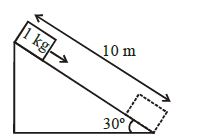
Find work done by friction if block reaches to the end with constant velocity
If $\overrightarrow {\rm A} = 2\hat i + 3\hat j - \hat k$ and $\overrightarrow B = - \hat i + 3\hat j + 4\hat k$ then projection of $\overrightarrow A $ on $\overrightarrow B $ will be
A girl jumps down from a moving bus, along the direction of motion of the bus, tilting slightly forward. She falls on $(a)$ a sheet of ice $(b)$ a patch of glue.
An aluminium sphere of $20 \;cm$ diameter is heated from $0^{\circ} C$ to $100^{\circ} C$. Its volume changes by (given that coefficient of linear expansion for aluminium $\alpha_{A l}=23 \times 10^{-6}\;/{^o}C$
A prism of angle $A=1^{\circ}$ has a refractive index $\mu=1.5 .$ A good estimate for the minimum angle of deviation (in degrees) is close to $N/10$ Value of $N$ is......
Three forces $\vec{F}_1=(2 \hat{i}+4 \hat{j}) \,N ; \vec{F}_2=(2 \hat{j}-\hat{k}) \,N$ and $\vec{F}_3=(\hat{k}-4 \hat{i}-2 \hat{j}) \,N$ are applied on an object of mass $1 kg$ at rest at origin. The position of the object at $t=2 s$ will be
A magnetic needle suspended parallel to a magnetic field requires $\sqrt 3\, J$ of work to turn it through $60^o  .$ The torque needed to maintain the needle in this position will be.....$J$