Question
A clock with an iron pendulum keeps the correct time at $20^{\circ} C$. How much will it lose or gain if the temperature changes to $40^{\circ} C$ ? Coefficient of cubical expansion of iron $=36 \times 10^{-6}{ }^{\circ} C ^{-1}$.

Answer

Time period of simple pendulum,
$
T_{20}=2 s
$
Let $T _{40}$ be the time period at $40^{\circ} C$. If $l _0, l _{20}, l _{40}$ be the lengths of the pendulum at $0^{\circ} C , 20^{\circ} C$ and $40^{\circ} C$ respectively, then
$
\begin{aligned}
& l_{20}=l_0(1+20 \alpha) \\
& l_{40}=l_0(1+40 \alpha)
\end{aligned}
$
$
\begin{aligned}
& T_{20}=2 \pi \sqrt{\frac{l_{20}}{g}}=2 \pi \sqrt{\frac{l_0(1+20 \alpha)}{g}} \\
& T_{40}=2 \pi \sqrt{\frac{l_{40}}{g}}=2 \pi \sqrt{\frac{l_0(1+40 \alpha)}{g}} \\
& \therefore \frac{T_{40}}{T_{20}}=\sqrt{\frac{1+40 \alpha}{1+20 \alpha}}=(1+40 \alpha)^{1 / 2}(1+20 \alpha)^{-1 / 2}
\end{aligned}
$
$
\begin{aligned}
& =\left(1+\frac{1}{2} \times 40 \alpha\right)\left(1-\frac{1}{2} \times 20 \alpha\right) \text { [Using Binomial theorem] } \\
& =(1+20 \alpha)(1-10 \alpha)=1+10 \alpha
\end{aligned}
$
Fractional loss in time
$
\begin{aligned}
& =\frac{T_{40}-T_{20}}{T_{20}}=10 \alpha \\
& =10 \times 1.2 \times 10^{-5}=1.2 \times 10^{-4}
\end{aligned}
$
As the temperature increases, time period also increases. The clock runs slow.
Time lost in 24 hours
$
=1.2 \times 10^{-4} \times 24 \times 3600=10.368 s
$

Need a full question paper?

Generate a complete, print-ready paper with questions like this in minutes — across 16+ boards, with answer keys.
Start Generating Free

Similar questions

The planet Saturn has a mass $95$ times that of the earth, and its radius is $9.5$ times the earth's radius. Calculate the escape speed of a body from Saturn's surface, if the escape speed from the earth's surface is $11.2kms^{-1}$.
Give examples of a one-dimensional motion where: The particle moving along positive x-direction comes to rest periodically and moves forward.
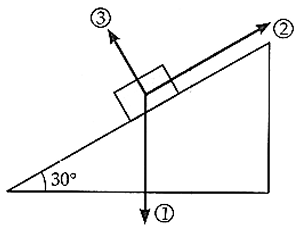
A block of wood of mass 3 kg is resting on the surface of a rough inclined surface, inclined at an angle $\theta$ as shown in the figure.
Image
a. Name the forces $(1,2,3)$.
b. If the coefficient of static friction is 0.2 , calculate the value of all three forces.
$
\text { (use } g=10 m / s^2 \text { ) }
$
A liquid is kept in a cylindrical container which is being rotated around its axis. The support of the walls will rise higher. If the radius of the container is 0.05 m and speed of rotation is 2 revolutions per second then find the difference in height of the container between the center and the side of the container.
The acceleration due to gravity on the moon is only one-sixth of that on earth. Suppose the average density of both are same, what would be the ratio of the radii of the moon and the earth?
A concrete slab has a length of 10 m on a winter night when the temperature is $0^{\circ} \mathrm{C}$. Find the length of the slab on a summer day when the temperature is $35^{\circ} \mathrm{C}$. The coefficient of linear expansion of concrete is $1.0 \times 10^{-5^{\circ}} \mathrm{C}^{-1}$.
The equation for the vibration of a string, fixed at both ends vibrating in its third harmonic, is given by$\text{y}=(0.4\text{cm})\sin\big[(0.314\text{cm}^{-1})\text{x}\big]\cos\big[(600\pi\text{s}^{-1})\text{t}\big]$
  1. What is the frequency of vibration?
  2. What are the positions of the nodes?
  3. What is the length of the string?
  4. What is the wavelength and the speed of two travelling waves that can interfere to give this vibration ?
The volume of a liquid flowing out per second of a pipe of length l and radius r is written by a student as,$\text{v}=\frac{\pi}{8}\frac{\text{Pr}^4}{\eta\text{l}}$
where P is the pressure difference between the two ends of the pipe and $\eta$ is coefficent of viscosity of the liquid having dimensional formula $ML^{-1} T^{-1}$. Check whether the equation is dimensionally correct.
An electric field of $20NC^{-1}$ exists along the $x-$axis in space. Calculate the potential difference $V_B - V_A$ where the points $A$ and $B$ are given by,
  1. $A = (0, 0); B = (4m, 2m)$
  2. $A = (4m, 2m); B = (6m, 5m)$
  3. $A = (0, 0); B = (6m, 5m)$
Do you find any relation between the answers of parts $(a), (b)$ and $(c)\ ?$
Assume that the mass of a nucleus is approximately given by $M=A m_p$ where $A$ is the mass number. Estimate the density of matter in $\mathrm{kg} / \mathrm{m}^3$ inside a nucleus. What is the specific gravity of nuclear matter?