Question
A dam is a barrier across flowing water that obstructs, directs or retards the flow. often creating a reservoir, lake or impoundment. "Dam" refers to the reservoir rather than the structure. Most dams have a section called a spillway or weir over which or through which it is intended that water will flow either intermittently or continuously. Dams are classified according to structure, intended purpose or height. Based on structure and the materials used, dams are classified as timber dams, embankment dams or masonry dams, with several subtypes. According to the height, dams can be categorised as large dams and major dams or alternatively as low dams, medium height dams and high dams
i. What does the word 'Dam' actually refer to? (1)
ii. Mention any one benefit of a Multi-purpose River Valley Project. (1)
iii. How have multi-purpose river valley projects a cause of social movements?
Explain. (2)
Answer

i. "Dam" refers to the reservoir rather than the structure or a dam is a barrier across flowing water that obstructs, directs or retards the flow, often creating a reservoir, lake or impoundment.
ii. a. Dams are used for electricity generation.
b. Dams are used for irrigation purpose.
c. Any other relevant point.
Any one point to be mentioned.
iii. a. Large scale displacement of local communities.
b. Local people had to give up their land and livelihood.
c. Local people lost control over their meagre resources for the greater good of the nation.
d. Any other relevant point.
Any two points to be mentioned.

Need a full question paper?

Generate a complete, print-ready paper with questions like this in minutes — across 16+ boards, with answer keys.

Start Generating Free

Similar questions

Read the extract and answer the questions that follow:
The testimony of an indentured labourer
Extract from the testimony of Ram Narain Tewary, an indentured labourer who spent ten years on Demerara in the early twentieth century:
New emigrants find the tasks allotted to them extremely heavy and cannot complete them in a day. Deductions are also made from wages if the work is considered to have been done unsatisfactorily. Many people cannot therefore earn their full wages and are punished in various ways. In fact, the labourers have to spend their period of indenture in great trouble .
Source: Department of Commerce and Industry, Emigration Branch, 1916.
  1. What is meant by indentured labour? What were the main destinations of Indian indentured migrants?
  2. What do you know about their living and working conditions?
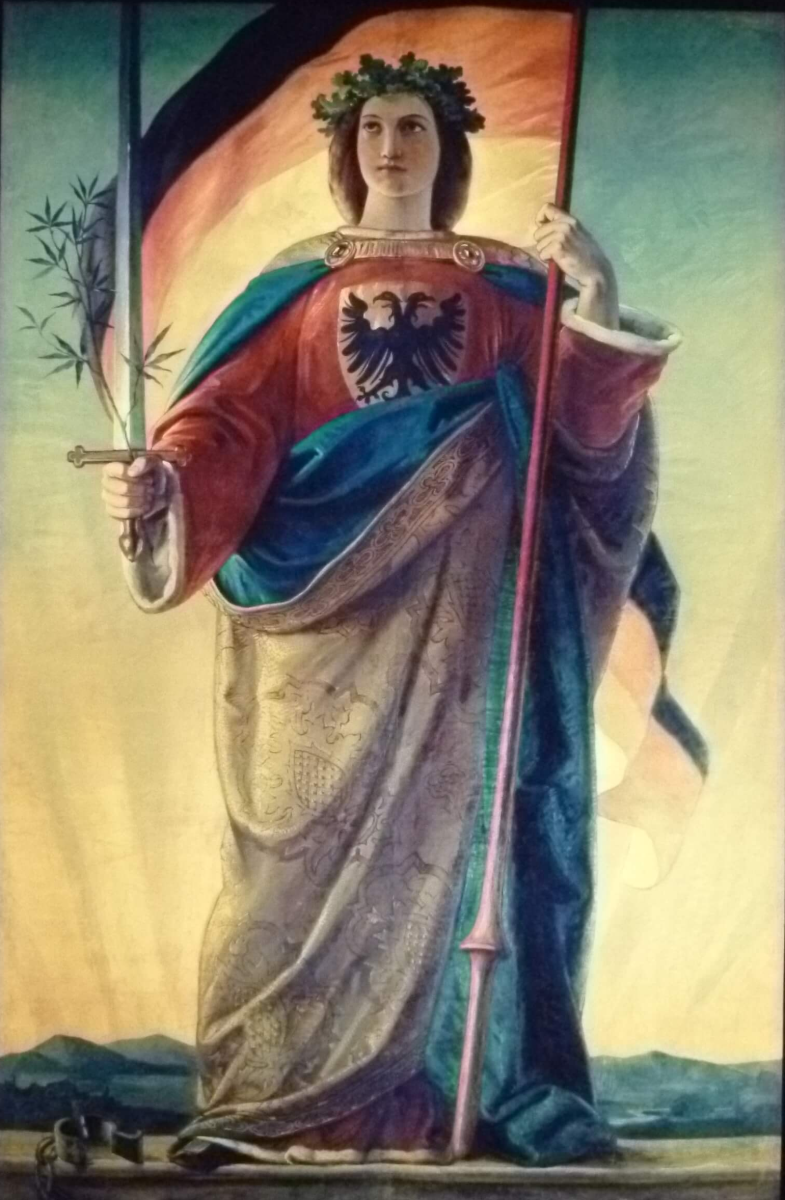
Recognise the picture below and answer the following questions:
  1. Whose painting is it? Who painted it and when?
  2. What does it signify
Read the source given below and answer the questions that follow:
Socially and politically, a landed aristocracy was the dominant class on the continent. The members of this class were united by a common way of life that cut across regional divisions. They owned estates in the countryside and also town-houses. They spoke French for purposes of diplomacy and in high society. Their families were often connected by ties of marriage. This powerful aristocracy was, however, numerically a small group. The majority of the population was made up of the peasantry. To the west, the bulk of the land was farmed by tenants and small owners, while in Eastern and Central Europe the pattern of landholding was characterised by vast estates which were cultivated by serfs.
Answer the following MCQs by choosing the most appropriate option:
  1. Which was the dominant class on the continent of Europe?
  1. Landed aristocracy.
  2. Tenants.
  3. Small owners.
  4. High class society.
  1. What did the majority of population comprise of?
  1. Tenants.
  2. Small owners.
  3. Land holders.
  4. Peasantry.
  1. The given passage describes the social and political life of this class?
  1. Serfs and peasants.
  2. Big land owners.
  3. Aristocracy and middle class.
  4. Peasants and small owners.
  1. Aristocratic class used to speak French for the purpose of:
  1. Diplomacy and high society.
  2. Farming on a big land.
  3. Unity among the members.
  4. Educing regional divisions.
Source - 1: Religious Reform and Public DebatesThere were intense controversies between social and religious reformers and the Hindu orthodoxy over matters like widow immolation, monotheism, Brahmanical priesthood and idolatry. In Bengal, as the debate developed, tracts and newspapers proliferated, circulating a variety of arguments.
i. Evaluate how did the print shapes the nature of the debate in the early nineteenth century in India.

Source - 2: New Forms of Publication
New literary forms also entered the world of reading lyrics, short stories, essays about social and political matters. In different ways, they reinforced the new emphasis on human lives and intimate feelings, about the political and social rules that shaped such things.
ii. To what extent do you agree that print opened up new worlds of experience and gave a vivid sense of diversity of human lives?

Source - 3: Women and Print
Since social reforms and novels had already created a great interest in women's lives and emotions, there was also an interest in what women would have to say about their own lives.
iii. To what extent did the print culture reflect a great interest in women's lives and emotions? Explain.
Read the text given below and answer the questions that follow:
Globalisation is not a new phenomenon. It was there at the time of colonisation. In the nineteenth century when European traders came to India, at that time too, Indian spices were exported to different countries of the world and farmers of south India were encouraged to grow these crops. Till today, it is one of the important items of export from India. During the British period cotton belts of India attracted the British and ultimately cotton was exported to Britain as a raw material for their textile industries. Under globalisation, particularly after 1990, the farmers in India have been exposed to new challenges. Despite being an important producer of rice, cotton, rubber, tea, coffee, jute and spices, our agricultural products are not able to compete with the developed countries because of the highly subsidised agriculture in those countries. Today, Indian agriculture finds itself at the crossroads. To make agriculture successful and profitable, proper thrust should be given to the improvement of the condition of marginal and small farmers. The green revolution promised much. But today it’s under controversies. It is being alleged that it has caused land degradation due to overuse of chemicals, drying aquifers and vanishing biodiversity. The keyword today is “gene revolution”, which includes genetic engineering. In fact, organic farming is much in vogue today because it is practised without factory made chemicals such as fertilisers and pesticides. Hence, it does not affect environment in a negative manner.
  1. The given extract throws light on _____________.
  1. Globalisation and the colonisation in agriculture
  2. Impact of globalisation on agriculture.
  3. New Economic policy pertaining to agriculture.
  4. None of these.
  1. Which of the following has been a direct disadvantage of globalisation to the farmer?
  1. Increase in global competition with the developed countries.
  2. Degradation of land due to the overuse of chemicals.
  3. Increased expenditure on buying HYV seeds.
  4. All the above.
  1. The method of farming done without using any type of chemical fertiliser, urea, insecticides is known as _____________.
  1. Mixed farming.
  2. Organic farming.
  3. Sustainable farming.
  4. Inorganic farming.
  1. The key word today is “gene revolution” which includes genetic engineering. Which of the following is recognized as genetic engineering?
  1. Powerful supplement in inventing insecticides and pesticides.
  2. Powerful supplement in inventing biological inputs and fertilisers.
  3. Powerful supplement in inventing new hybrid varieties of seeds.
  4. Powerful supplement in inventing organic and inorganic farming.
Read the source given below and answer the questions that follows:
Manchester imports into India declined as the British mills were busy with war production to meet the needs of the army paving the way for the Indian mills to supply for the huge home market. As the war prolonged, Indian factories were called upon to supply war needs. As a result, new factories were set up, new workers were employed and everyone was made to work longer hours. On 13th April 1919, a crowd of villagers, who had come to attend a Baisakhi fair, gathered in the enclosed ground of Jallianwala Bagh. Being from outside the city, many were not aware of the martial law that had been imposed as a repressive measure. General Dyer with his British troops entered the park and closed the only exit point without giving any warning to the assembled people and ordered the troops to fire at the crowds, killing hundreds. Foreign goods were boycotted, liquor shops were picketed and foreign cloth was burnt. The import of foreign cloth halved between 1921-1922. Its value dropped from Rs. 102 crore to Rs. 57 crore. Many merchants and traders refused to trade in foreign goods or finance foreign trade. Use of khadi was popularized.
Answer the following MCQs by choosing the most appropriate option:
  1. Which was the effect of First World War on India as Britain was busy in war in Europe?
  1. Manchester imports into India declined as the British mills were busy with war.
  2. Production to meet the needs of the army paving the way for the Indian mills to supply for the huge home market.
  3. As the war prolonged, Indian factories were called upon to supply war needs.
  4. All of these.
  1. Which of the following were related to the incident of Jallianwala Bagh Massacre?
  1. On 13th April 1919, a crowd of villagers who had come to attend a Baisakhi fair, gathered in the enclosed ground of Jallianwala Bagh.
  2. General Dyer with his British troops entered the park and closed the only exit point without giving any warning.
  3. Both (a) and (b).
  4. None of these.
  1. What were the consequences of non - cooperation movement after 1922?
  1. Foreign goods were not boycotted.
  2. The import of foreign cloth halved between 1921-1922. Its value dropped from Rs. 102 crore to Rs. 57 crore.
  3. Many merchants and traders did not refuse to trade in foreign goods or finance foreign trade.
  4. Use of khadi was not popularized.
  1. What was the name of British officer who was responsible for the Jallianwala Bagh massacre?
  1. General Dyre.
  2. Lord Cornwallis.
  3. Lord Wellesley.
  4. Lord Dalhousie.
Suppose for the present that a particular country is quite developed. We would certainly like this level of development to go up further or at least be maintained for future generations. This is obviously desirable. However, since the second half of the twentieth century, a number of scientists have been warning that the present type and levels of development are not sustainable. Groundwater is an example of renewable resources. These resources are replenished by nature as in the case of crops and plants. However, even these resources may be overused. For example, in the case of groundwater, if we use more than what is being replenished by rain then we would be overusing this resource. Non-renewable resources are those which will get exhausted after years of use. We have a fixed stock on earth that cannot be replenished. We do discover new resources that we did not know of earlier. New sources in this way add to the stock. However, over time, even this will get exhausted. Consequences of environmental degradation do not respect national or state boundaries; this issue is no longer region or nation-specific. Our future is linked together. Sustainability of development is comparatively a new area of knowledge in which scientists, economists, philosophers and other social scientists are working together. In general, the question of development or progress is perennial. At all times as a member of society and as individuals we need to ask where we want to go, what we wish to become and what our goals are. So the debate on development continues.
i. Identify the new area of knowledge which has been a subject of interest for social scientists and philosophers alike.
ii. What have the scientists warned about the present type of development? Explain.
iii. Explain how our future is linked together?
Read the passage below and answer the questions that follow:
The need for decentralisation was recognised in our Constitution. Since then, there have been several attempts to decentralise power to the level of villages and towns. Panchayat in villages and municipalities in urban areas were set up in all the States. But these were directly under the control of state governments. Elections to these local governments were not held regularly. Local governments did not have any powers or resources of their own. Thus, there was very little decentralisation in effective terms.
A major step towards decentralisation was taken in 1992. The Constitution was amended to make the third-tier of democracy more powerful and effective. Now it is constitutionally mandatory to hold regular elections to local government bodies. Seats are reserved in the elected bodies and the executive heads of these institutions for the Scheduled Castes, Scheduled Tribes and Other Backward Classes. At least one-third of all positions are reserved for women. An independent institution called the State Election Commission has been created in each State to conduct panchayat and municipal elections. The State governments are required to share some powers and revenue with local government bodies. The nature of sharing varies from State to State.
  1. What is the basic idea behind decentralization?
  1. There are a large number of problems and issues which are best settled at the local level.
  2. Besides, at the local level it is possible for the people to directly participate in decision making. This helps to inculcate a habit of democratic participation.
  3. Local government is the best way to realise one important principle of democracy, namely local self-government.
  4. All the above.
  1. Consider the following statements on the practice of federalism in India. Identify those which hold true for decentralisation after 1992.
  1. B and C
  2. A and C
  3. A and D
  4. B and D
  1. In local self-government institutions at least one-third of all positions are reserved for?
  1. Men.
  2. Women.
  3. Scheduled caste.
  4. Scheduled tribe.
  1. Which of these is incorrect, based on the Consitutional Amendment, 1992?
  1. One-fourth of positions are reserved for women.
  2. Regular elections should be held to the local government bodies.
  3. Seats are reserved for SCs, STs and OBCs.
  4. State Election Commission looks after these elections.
Read the source given below and answer the questions that follow:
Economists began to think in terms of the national economy. They talked of how the nation could develop and what economic measures could help forge this nation together. Friedrich List, Professor of Economics at the University of Tubingen in Germany, wrote in 1834: ‘The aim of the zollverein is to bind the Germans economically into a nation. It will strengthen the nation materially as much by protecting its interests externally as by stimulating its internal productivity. It ought to awaken and raise national sentiment through a fusion of individual and provincial interests. The German people have realised that a free economic system is the only means to engender national feeling.’
Answer the following MCQs by choosing the most appropriate options:
  1. State the aim of the Zollverein in Germany.
  1. To divide German regions.
  2. To support time consuming calculations.
  3. To create confusion in trade.
  4. To bind the Germans economically into a nation.
  1. What German people have realised about new economic system?
  1. German people wanted to conquer more regions.
  2. German people realised the importance of closed economy.
  3. German people have realised that a free economic system is the only means to engender national feeling.
  4. German people realised that a free economic system is obstacle to develop nationalism.
  1. How does a country become stronger?
  1. It will strengthen the nation materially as much by protecting its interests externally as per stimulating its internal productivity.
  2. By conquest.
  3. By making alliances.
  4. Both (b) and (C).
  1. Who was Friedrich List?
  1. French artist.
  2. Professor of Economics at the University of Tubingen in Germany.
  3. Philosopher.
  4. Painter.
Read the given source and answer the questions that follow:
Nature worship is an age old tribal belief based on the premise that all creations of nature have to be protected. Such beliefs have preserved several virgin forests in pristine form called Sacred Groves (the forests of God and Goddesses). These patches of forest or parts of large forests have been left untouched by the local people and any interference with them is banned. Certain societies revere a particular tree which they have preserved from time immemorial. The Mundas and the Santhal of Chota Nagpur region worship mahua (Bassia latifolia) and kadamba (Anthocaphalus cadamba) trees, and the tribals of Odisha and Bihar worship the tamarind (Tamarindus indica) and mango (Mangifera indica) trees during weddings. To many of us, peepal and banyan trees are considered sacred.
Q.1. What are Sacred Groves?
Q.2. In which way tribes preserved the forest?
Q.3. Which trees are worshiped by the Mundas and the Santhal tribes?