Question
| a) Dativebond | – |
| b) CaH2 → Ca+H2 | – |
| c) – | Reduction |
| d) – | Redox reaction |
| a) Dativebond | – |
| b) CaH2 → Ca+H2 | – |
| c) – | Reduction |
| d) – | Redox reaction |
| a) Dativebond | Co-ordinate covalent bond |
| b) CaH2 → Ca+H2 | Oxidation |
| c) Fe3+ + e– →Fe2+ | Reduction |
| d) both Oxidation of Reduction takes place simultaneously | Redox reaction |
Generate a complete, print-ready paper with questions like this in minutes — across 16+ boards, with answer keys.
| Atomic Number | Mass Number | Number of Neutrons | Number of Protons | Number of Electrons | Name of the Element |
| 9 | ______ | 10 | ______ | ______ | ______ |
| 16 | ______ | 16 | ______ | ______ | ______ |
| ______ | 24 | ______ | ______ | 12 | Magnesium |
| ______ | 2 | ______ | 1 | ______ | ______ |
| ______ | 1 | 0 | 1 | 1 | ______ |
| Sr. No. | List I | List II | |
| 1. | Motion of a body covering equal distances in equal interval of time | D. | 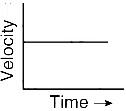 |
| 2. | Motion with non uniform acceleration | C. | 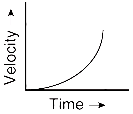 |
| 3. | Constant retardation | A. | 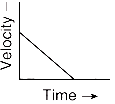 |
| 4. | Uniform acceleration | B. | 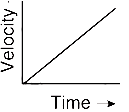 |