MCQ
A gas performs minimum work when it expands:
- AAdiabatically.
- BIsothermally.
- CIsobarically.
- DIsochorically.
Explanation:
In isochoric process, V = constant, dV = 0
dW = P(dv) = 0 and hence minimum.
Generate a complete, print-ready paper with questions like this in minutes — across 16+ boards, with answer keys.
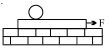
$\vec{\text{v}},\ \vec{\text{v}}_1$ and $\vec{\text{v}}_2$ must be parallel to each other.
$\vec{\text{v}}_1+\vec{\text{v}}_2$ must be parallel to $\vec{\text{v}}.$
$\text{m}_1\vec{\text{v}}_1+\text{m}_2\vec{\text{v}}_2$ must be parallel to $\vec{\text{v}}.$
| Colum $I$ | Colum $II$ |
| $(A)$ Distance travelled in $3\,s$ | $(p)$ $-20$ units |
| $(B)$ Displacement in $1\,s$ | $(q)$ $15$ units |
| $(C)$ Initial acceleration | $(r)$ $25$ units |
| $(D)$ Velocity at $4\,s$ | $(s)$ $-10$ units |
$Image$
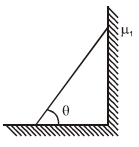
$(A)$ $\mu_1=0 \mu_2 \neq 0$ and $N _2 \tan \theta=\frac{ mg }{2}$
$(B)$ $\mu_1 \neq 0 \mu_2=0$ and $N_1 \tan \theta=\frac{m g}{2}$
$(C)$ $\mu_1 \neq 0 \mu_2 \neq 0$ and $N _2 \tan \theta=\frac{ mg }{1+\mu_1 \mu_2}$
$(D)$ $\mu_1=0 \mu_2 \neq 0$ and $N _1 \tan \theta=\frac{ mg }{2}$