Question
A lightning arrester must have the following property.

Answer

  1. Needle end.
Explanation:
Needle end can arrest the lightning easily. Besides, the device must provide a continuous path to electricity so that current passes to ground. It must have a high melting point else it will meltdown due to the heat generated during carrying lightning current.

Need a full question paper?

Generate a complete, print-ready paper with questions like this in minutes — across 16+ boards, with answer keys.
Start Generating Free

Similar questions

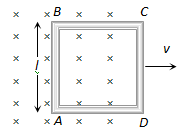
A conducting square loop of side $l$ and resistance $R$ moves in its plane with a uniform velocity $v$ perpendicular to one of its sides. A magnetic induction $B$ constant in time and space, pointing perpendicular and into the plane at the loop exists everywhere with half the loop outside the field, as shown in figure. The induced $\text{e.m.f.}$ is
The phenomenon by which stars recedes from each other is explained by:
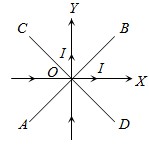
Two very thin metallic wires placed along $X$ and $Y-$axis carry equal currents as shown here. $AB$ and $CD$ are lines at $45^\circ$  with the axes with origin of axes at $O.$ The magnetic field will be zero on the line
NOR gate is the series combination of:
An electric iron draws 5 amp, a TV set draws 3 amp and refrigerator draws 2 amp from a 220 volt main line. The three appliances are connected in parallel. If all the three are operating at the same time, the fuse used may be of(a) 20 amp (b) 5 amp (c) 15 amp (d) 10 amp
       
In the experiment of potentiometer, at balance point, there is no current in the:
A bright star is indicated to have a brightness magnitude of – 5 compared to a star of brightness zero magnitude. It means that this star compared to the reference star of zero brightness is            (a) 100 times less bright(b) 5 times more bright(c) 5 times less bright(d) 100 times more bright
   
   
The imaginary line passing through the pole and the center of curvature of the curved mirror is called its _______.
The relation between the wavelength and linear momentum for a particle in motion was given by :
In the Young's double slit experiment, if the phase difference between the two waves interfering at a point is $\varnothing$, the intensity at that point can be expressed by the expression $($Where $A$ and $B$ depend upon the amplitudes of the two waves$)$