Question
A molecule. of hydrogen contains two protons and two electrons. The nuclear force between these two protons is always neglected while discussing the behaviour of a hydrogen molecule. Why?

Answer

Inside the nucleus, two protons exert nuclear force on each other. These forces are short-ranged (a few fm), strong and attractive forces. They also exert electrostatic repulsive force (long-ranged). While discussing the behaviour of a hydrogen molecule, the nuclear force between the two protons is always neglected. This is because the separation between the two protons in the molecule is ~70pm which is much greater than the range of the nuclear force.

Need a full question paper?

Generate a complete, print-ready paper with questions like this in minutes — across 16+ boards, with answer keys.
Start Generating Free

Similar questions

Prove that the power dissipated in an ideal resistor connected to an ac source is $\frac{\text{V}^2_{\text{eff}}}{\text{R}}.$
The focal lengths of a convex lens for red, yellow and violet rays are 100cm, 98cm and 96cm respectively. Find the dispersive power of the material of the lens.
A series LCR circuit is connected across an a.c. source of variable angular frequency $' \omega'$. Plot a graph showing variation of current ‘i’ as a function of $' \omega'$ for two resistances R1 and R2 (R1 > R2).
Answer the following questions using this graph:
  1. In which case is the resonance sharper and why?
  2. In which case is the power dissipation more and why?
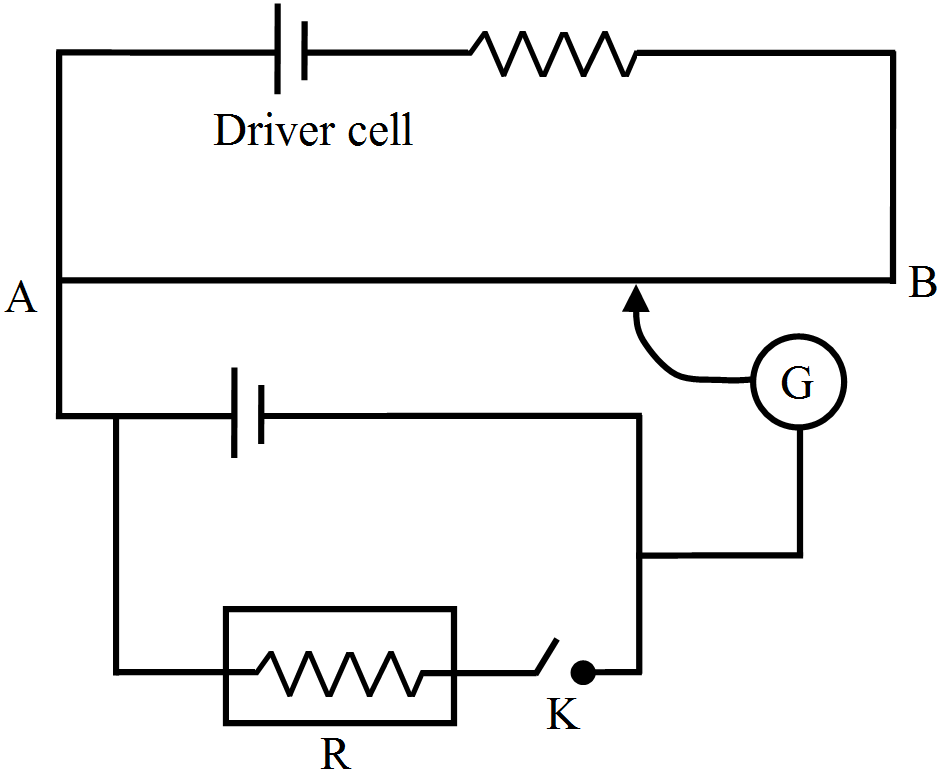
The following circuit shows the use of potentiometer to measure the internal resistance of a cell:

  1. When the key is open, how does the balance point change, if the current from the driver cell decreases?
  2. When the key K is closed, how does the balance point change if R is increased keeping current from the driver cell constant?
A hydrogen atom in ground state absorbs a photon of ultraviolet radiation of wavelength 50nm. Assuming that the entire photon energy is taken up by the electron with what kinetic energy will the electron be ejected?
A resistor of $200 \Omega$ and a capacitor of $15.0 \mu F$ are connected in series to a $220 V , 50 Hz$ ac source. (a) Calculate the current in the circuit; (b) Calculate the voltage (rms) across the resistor and the capacitor. Is the algebraic sum of these voltages more than the source voltage? If yes, resolve the paradox.
Calculate the amount of energy released during the $\alpha - $ decay of $^{238}_{92}\text{U}\to ^{234}_{92}\text{Th} + ^{4} _{2}\text{He}$

Given:

  1. Atomic mass of $^{238}_{92}\text{U}= 238.05079u$
  2. Atomic mass of  $^{234}_{90}\text{Th}= 234.04363u$

  3. Atomic mass of $^{4}_{2}\text{He}= 4.00260\text{ u}$

$\text{1u} = 931.5 \text{MeV/c}^{2}$

Is this decay spontaneous? Give reason.

Is $\text{p}=\frac{\text{E}}{\text{c}}$ valid for electrons?
A particle starts from the origin, goes along the X-axis to the point (20m, 0) and then returns along the same line to the point (-20m, 0). Find the distance and displacement of the particle during the trip.
A bat emitting an ultrasonic wave of frequency 4.5 × 104Hz flies at a speed of 6m/s between two parallel walls. Find the two frequencies heard by the bat and the beat frequency between the two. The speed of sound is 330m/s.