Question
A neutron exerts a force on a proton which is:
  1. Gravitational.
  2. Electromagnetic.
  3. Nuclear.
  4. Weak.

Answer

  1. Gravitational
  1. Nuclear
Explanation:
A neutron exerts both the gravitational and nuclear forces on a proton.
The gravitational force can be seen between a neutron and a proton. However, its strength is negligible. The nuclear force is exerted only if the interacting particles are neutrons or protons or both. A neutron cannot exert electromagnetic force, because it is a neutral particle.

Need a full question paper?

Generate a complete, print-ready paper with questions like this in minutes — across 16+ boards, with answer keys.
Start Generating Free

Similar questions

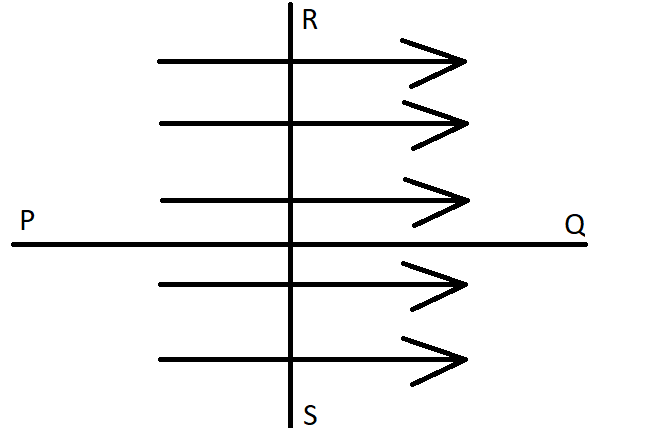
According to the diagram, the equipotential points are _____. The arrows are the direction of the electric field.
Image
The neutron was discovered by:
Consider a collision between an oxygen molecule and a hydrogen molecule in a mixture of oxygen and hydrogen kept at room temperature. Which of the following are pcssible?
  1. The kinetic energies of both the molecules increase.
  2. The kinetic energies of both the molecules decrease.
  3. The Kinetic energy of the oxygen molecule increases and that of the hydrogen molecule decreases.
  4. The kinetic energy of the hydrogen molecule increases and that of the oxygen molecule decreases.
In a common emitter transistor, the current gain is 80. What is the change in collector current, when the change in base current is 250 mA (a) 80  × 250 mA(b) (250 – 80) mA(c) (250 + 80) mA(d) 250/80 mA
       
Two identical light sources $S_1$ and $S_2$ emit light of same wavelength $\lambda$. These light rays will exhibit interference if
Balmer series lies in which spectrum?
The electronic transition from $n = 2$ to $n = 1$ will produce shortest wavelength in:
Consider the following two statements:
  1. Linear momentum of the system remains constant.
  2. Centre of mass of the system remains at rest.
  1. ​​​​​​A implies B and B implies A.
  2. A does not imply B and B does not imply A.
  3. A implies B but B does not imply A.
  4. B implies A but A does not imply B.
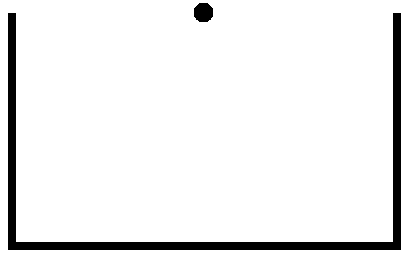
A charge q is placed at the centre of the open end of a cylindrical vessel (figure). The flux of the electric field through the surface of the vessel is:
  1. $\text{Zero}$
  2. $\frac{\text{q}}{\epsilon_0}$
  3. $\frac{\text{q}}{2\epsilon_0}$
  4. $\frac{2\text{q}}{\epsilon_0}$
The current sensitivity of a galvanometer is defined as: