MCQ
A parallel plate capacitor is charged and then disconnected from the source steady $E.M.F.$ The plates are then drawn apart farther. Again it is connected to the same source. Then :
  • A
    the potential difference across the plate increases, while the plates are being drawn apart.
  • B
    the charge from the capacitor flows into the source, when the capacitor is reconnected.
  • C
    the electric intensity between the plates remains constant during the drawing apart of plates.
  • all of the above

Answer

Correct option: D.
all of the above
d

Need a full question paper?

Generate a complete, print-ready paper with questions like this in minutes — across 16+ boards, with answer keys.

Start Generating Free

Similar questions

The period of oscillations of a magnetic needle in a magnetic field is $1.0 \,sec$. If the length of the needle is halved by cutting it, the time period will be.....$sec$
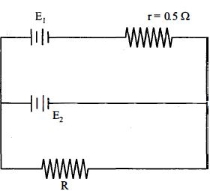
A $dc$ source of $emf \,E_1 = 100\,V$ and internal resistance $r = 0.5\,\Omega ,$ a storage battery of emf $E_2 = 90\,V$ and an external resistance $R$ are connected as shown in figure. For what value of $R$ no current will pass through the battery ? ................ $\Omega$
The potential differences across the resistance, capacitance and inductance are $80\,\, V, \,\,40 \,\,V$ and $100\,\, V$ respectively in an $L-C-R$ circuit. The power factor of this circuit is 
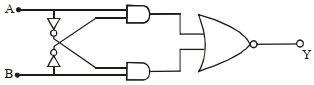
The truth table for the followng logic circuit is ...... .
In extrinsic semiconductors
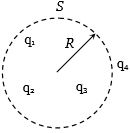
${q_1},\;{q_2},\;{q_3}$ and ${q_4}$ are point charges located at points as shown in the figure and $S$ is a spherical Gaussian surface of radius $R$. Which of the following is true according to the Gauss’s law
A line passing through places having zero value of magnetic dip is called
The potential gradient along the length of a uniform wire is $10\,volt/metre$. $B$ and $C$ are the two points at $30\,cm$ and $60\,cm$ point on a meter scale fitted along the wire. The potential difference between $B$ and $C$ will be ............. $volt$
Which of the following spectral series in hydrogen atom give spectral line of $4860 Å$
Currents of a $10\, ampere$ and $2\, ampere$ are passed through two parallel thin wires $A$ and $B$ respectively in opposite directions. Wire $A$ is infinitely long and the length of the wire $B$ is $2\, m$. The force acting on the conductor $B$, which is situated at $10\, cm$ distance from $A$ will be