Question
A particle executes the motion described by $\text{x}(\text{t})=\text{x}_0(1-\text{e}^{-\gamma\text{t}});\text{t}\ge0,\text{x}_0>0.$
Find maximum and minimum values of x(t), v(t), a(t). Show that x(t) and a(t) increase with time and v(t) decreases with time.
Answer

x(t) is minimum at $\text{t}=0\ \because\ \text{At t}=0,[\text{x}(\text{t})]_\text{min}=0$
x(t) is maximum at $\text{t}=\infty\ \because\ \text{At t}=\infty[\text{x}(\text{t})]_\text{max}=\text{e}-\gamma\text{t}=\infty$
v(t) is maximum at $\text{t}=0\ \because\ \text{At t}=0;\text{v}(0)=\text{x}_0\gamma$
v(t) is minimum at $\text{t}=\infty\ \because\ \text{At t}=\infty\text{ v}(\infty)=0$
a(t) is maximum at $\text{t}=\infty\ \because\ \text{At t}=\infty\text{ a}(\infty)=0$
a(t) is minimum at $\text{t}=0\because\text{At t}=0\ \text{a}(0)=-\text{x}_0\gamma^2$

Need a full question paper?

Generate a complete, print-ready paper with questions like this in minutes — across 16+ boards, with answer keys.

Start Generating Free

Similar questions

Slowing down of neutrons: In a nuclear reactor a neutron of high speed (typically $10^7 m s ^{-1}$ ) must be slowed to $10^3 m s ^{-1}$ so that it can have a high probability of interacting with isotope ${ }_{92}^{235} U$ and causing it to fission. Show that a neutron can lose most of its kinetic energy in an elastic collision with a light nuclei like deuterium or carbon which has a mass of only a few times the neutron mass. The material making up the light nuclei, usually heavy water $\left( D _2 O \right)$ or graphite, is called a moderator.
The gravitational force between two bodies each of mass m and separated by a distance r varies as inversely proportional to the square of the distance r. However, the gravitational force between two solid spheres of same density and same radius r placed in contact with each other is directly proportional to the fourth power of the radius r. Prove it.
A motor boat covers the distance between two spots on the river in time of 8 hours and 12 hours downstream and upstream respectively. What is the time required for the boat to cover this distance in still water?
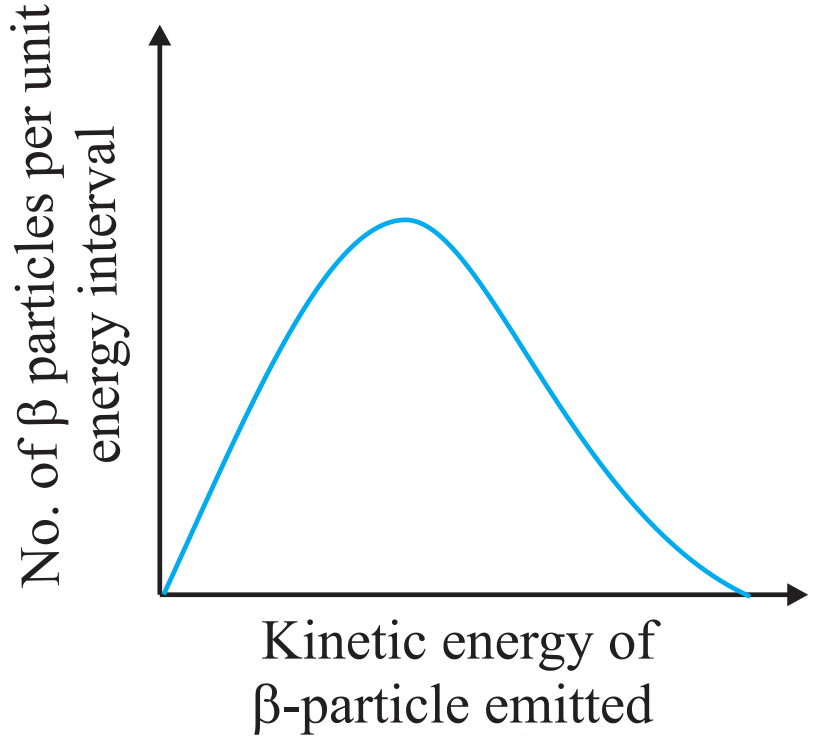
Consider the decay of a free neutron at rest: $n → p + e^-$ Show that the two-body decay of this type must necessarily give an electron of fixed energy and, therefore, cannot account for the observed continuous energy distribution in the β-decay of a neutron or a nucleus. [Note: The simple result of this exercise was one among the several arguments advanced by W. Pauli to predict the existence of a third particle in the decay products of β-decay. This particle is known as neutrino. We now know that it is a particle of intrinsic spin ½ (like $e^-$, p or n), but is neutral, and either massless or having an extremely small mass (compared to the mass of electron) and which interacts very weakly with matter. The correct decay process of neutron is: n → p + $e^-$ + v]
A uniform square plate of mass 2.0kg and edge 10cm rotates about one of its diagonals under the action of a constant torque of 0.10N-m. Calculate the angular momentum and the kinetic energy of the plate at the end of the fifth second after the start.
Does a nucleus lose mass when it suffers gamma decay?
Derive a relation for the time taken by a projectile to reach the highest point and the maximum height attained?
A particle of mass m is projected with a speed u at an angle $\theta$ with the horizontal. Find the torque of the weight of the particle about the point of projection when the particle is at the highest point.
A particle moves in a circle of radius $1.0\ cm$ at a speed given by $v = 2.0t$ where $v$ is in $cm/s$ and $t$ in seconds.
  1. Find the radial acceleration of the particle at $t = 1s.$
  2. Find the tangential acceleration at $t = 1s.$
  3. Find the magnitude of the acceleration at $t = 1s.$
If a number of little droplets of water, each of radius $r$, coalesce to form a single drop of radius $R$, show that the rise in temperature will be given by $\Delta \theta=\frac{3 \sigma}{J}\left(\frac{1}{r}-\frac{1}{R}\right)$ where $\sigma$ is the surface tension of water and J is the mechanical equivalent of heat.