Question
A particle moves in a straight line with a constant acceleration . It changes its velocity from $10 \ ms^{-1 }$ to $ 20\ ms^{-1 }$ while passing through a distance $135\,m$ in $t$ second. The value of $t$ is $..........s$

Answer

${v^2} - {u^2} = 2\,as$
Give $,v = 20\,m{s^{ - 1}},\,u = 10\,m{s^{ - 1}},\,s = 135\,m$
$\therefore a = \frac{{400 - 100}}{{2 \times 135}}$
$= \frac{{300}}{{270}}$
$= \frac{{10}}{9}m/{s^2}$
$v = u + at$
$\Rightarrow t = \frac{{v - u}}{a}$
$= \frac{{10m/s}}{{\frac{{10}}{9}m/{s^2}}}$
$= 9s$

Need a full question paper?

Generate a complete, print-ready paper with questions like this in minutes — across 16+ boards, with answer keys.
Start Generating Free

Similar questions

A solid metallic sphere of radius $r$ is allowed to fall freely through air. If the frictional resistance due to air is proportional to the cross-sectional area and to the square of the velocity, then the terminal velocity of the sphere is proportional to which of the following?
The focal lengths of the objective and eye-lens of a microscope are $1 \,cm $ and $5 \,cm$ respectively. If the magnifying power for the relaxed eye is $45$, then the length of the tube is.......$cm$
Which of the following statement is false
Two gases of equal mass are in thermal equilibrium. If ${P_a},\,{P_b}$ and ${V_a}$ and ${V_b}$ are their respective pressures and volumes, then which relation is true
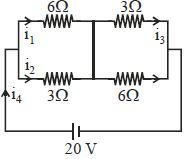
Diagram shows a circuit diagram choose incorrect statement
The coefficient of friction between a body and the surface of an inclined plane at $45^°$ is $0.5.$ If $g = 9.8\,m/{s^2}$, the acceleration of the body downwards in $m/{s^2}$ is
Two parallel large thin metal sheets have equal surface charge densities $(\sigma = 26.4 \times 10^{-12}\,c/m^2)$ of opposite signs. The electric field between these sheets is
Complete the reaction

$n + \,_{92}^{235}U \to \,_{56}^{144}Ba + .... + 3n$

At shallow depth $h$, the pressure in the ocean is simply given by $P = P_0 + \rho gh$, in which $\rho$ is the density of water and $P_0$ is the air pressure. As we go deeper, the high pressure causes the water to compress and become denser. Which of the following sketches illustrates the correct dependence of the pressure on the depth $h$ ?
The linear density of a vibrating string is $1.3 \times 10^{-4}\, kg/m.$ A transverse wave is  propagating on the string and is described by the equation $Y = 0.021\, \sin (x + 30t)$ where $x$ and $y$ are measured in meter and $t$ in second the tension in the  string is ..... $N$