Question
A proton and an α-particle are accelerated, using the same potential difference. How are the de-Broglie wavelengths λp and λa related to each other?

Answer

Key concept: Hence de-Broglie wavelength:

$\lambda=\frac{\text{h}}{\text{p}}=\frac{\text{h}}{\sqrt{2\text{mE}}}=\frac{\text{h}}{\sqrt{2\text{mqV}}}$

In this problrm since both proton and $\alpha-\text{particle}$ are accelerated through same potential difference,

We know that, $\lambda=\frac{\text{h}}{\sqrt{2\text{mqv}}}$

$\therefore\ \lambda\propto\frac{1}{\sqrt{\text{mq}}}$

$\frac{\lambda_\text{p}}{\lambda_\alpha}=\frac{\sqrt{\text{m}_\alpha\text{q}_\alpha}}{\text{m}_\text{p}\text{q}_\text{p}}=\frac{\sqrt{4\text{m}_\text{p}\times2\text{e}}}{\sqrt{\text{m}_\text{p}\times\text{e}}}=\sqrt{8}$

$\therefore\ \lambda_\text{p}=\sqrt{8}\lambda_\alpha$

i.e., wavelength of proton is times wavelength of $\alpha-\text{particle}$.

Important point:

De-Broglie wavelength associated with the charged particles: The energy of a charged particle acceletated through potential difference V is

$\text{E}=\frac{1}{2}\text{mv}^2=\text{qV}$

Hence de-Broglie wavelength $\lambda=\frac{\text{h}}{\text{p}}=\frac{\text{h}}{\sqrt{2\text{mE}}}=\frac{\text{h}}{\sqrt{2\text{mqV}}}$

$\lambda_\text{Electron}=\frac{12.27}{\sqrt{\text{V}}}\mathring{\text{A}},\lambda_\text{Proton}=\frac{0.286}{\sqrt{\text{V}}}\mathring{\text{A}}$

$\lambda_\text{Deutron}=\frac{0.200}{\sqrt{\text{V}}}\mathring{\text{A}},\lambda_{\alpha-\text{particle}}=\frac{0.101}{\sqrt{\text{V}}}\mathring{\text{A}}$

Need a full question paper?

Generate a complete, print-ready paper with questions like this in minutes — across 16+ boards, with answer keys.
Start Generating Free

Similar questions

A parallel-plate capacitor with the plate area 100cm2 and the separation between the plates 1.0cm is connected across a battery of emf 24 volts. Find the force of attraction between the plates.
The wavelengths of $\text{K}_\alpha$ and $\text{L}_\alpha$ X-rays of a material are 21.3pm and 141pm respectively. Find the wavelength of $\text{K}_\beta$ X-ray of the material.
Write the definition of electric flux.Obtain the expression for the electric field intensity at any point due to a uniformly charged straight wire of infinite extension using Gauss'law. Draw the necessary diagram.
Define resistivity of a conductor. Plot a graph showing the variation of resistivity with temperature for a metallic conductor. How does one explain such a behaviour, using the mathematical expression of the resistivity of a material?
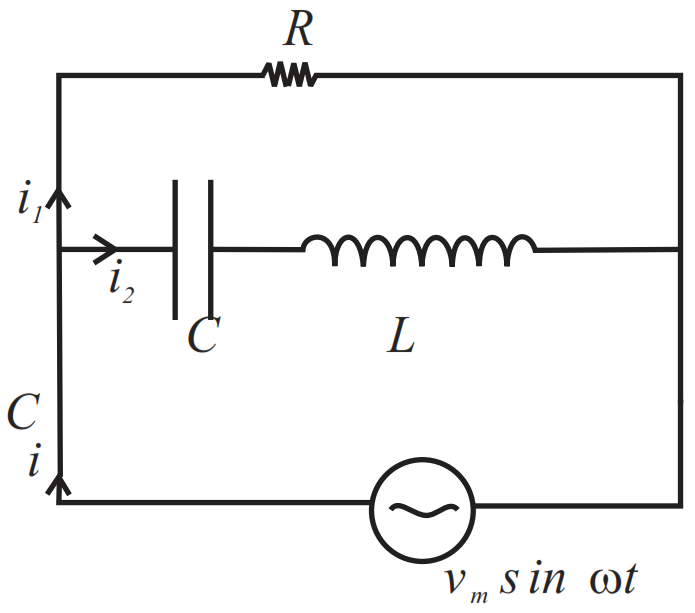
Consider the LCR circuit shown in Fig. Find the net current i and the phase of i. Show that . Find the impedence Z for this circuit.

a. Two-point charges $q _1$ and $q _2$ are kept r distance apart in a uniform external electric field $\overrightarrow{ E }$. Find the amount of work done in assembling this system of charges.
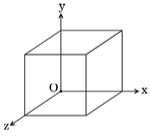
b. A cube of side 20 cm is kept in a region as shown in the figure. An electric field $\vec{E}$ exists in the region such that the potential at a point is given by $V =10 x +5$, where V is in volt and x is in m .
Image

Find the
i. electric field $\vec{E}$, and
ii. total electric flux through the cube.
A mercury lamp is a convenient source for studying frequency dependence of photoelectric emission, since it gives a number of spectral lines ranging from the UV to the red end of the visible spectrum. In our experiment with rubidium photo-cell, the following lines from a mercury source were used:
$\lambda_1=3650\ \mathring{\text{A}},\ \lambda_2=4047\ \mathring{\text{A}},\ \lambda_3=4358\ \mathring{\text{A}},\ \lambda_4=5461\ \mathring{\text{A}},\ \lambda_5=6907\ \mathring{\text{A}},$
The stopping voltages, respectively, were measured to be:
V01 = 1.28 V, V02 = 0.95 V, V03 = 0.74 V, V04 = 0.16 V, V05 = 0 V
Determine the value of Planck’s constant h, the threshold frequency and work function for the material.
[Note: You will notice that to get h from the data, you will need to know e (which you can take to be 1.6 × 10–19 C). Experiments of this kind on Na, Li, K, etc. were performed by Millikan, who, using his own value of e (from the oil-drop experiment) confirmed Einstein’s photoelectric equation and at the same time gave an independent estimate of the value of h.]
A wire of resistance $15.0\Omega$ is bent to form a regular hexagon ABCDEFA. Find the equivalent resistance of the loop between the points (a) A and B (b) A and C and (c) A and D.
An electron is projected horizontally with a kinetic energy of 10keV. A magnetic field of strength 1.0 × 10⁻⁷T exists in the vertically upward direction.
  1. Will the electron deflect towards the right or left of its motion?
  2. Calculate the sideways deflection of the electron while travelling through 1m. Make appropriate approximations.
Draw a phasor diagram for series LCR circuit joined with ac voltage source and obtain an expression for impedance of the circuit.