Question
A proton and an electron are placed in a uniform electric field.

Answer

Proton contain positive charge $= 1.6 \times 10^{-19} = e$
Electron contain negative charge $= -1.6 \times 10^{-19}= -e$
Force inoniforma electric field is $= qE$
$\therefore\ $The Magniludes of Electric force is equal But direction of electric force is opposite to each other.
mass of proton $= 1.67 \times 10^{-27}\ Kg.$
mass of electron $= 9.1 \times 10^{-31}\ Kg.$
So that Magnitudes of their acceleration will be unequal.

Need a full question paper?

Generate a complete, print-ready paper with questions like this in minutes — across 16+ boards, with answer keys.
Start Generating Free

Similar questions

In the above figure D and E respectively represent (a) Absorption line of Balmer series and the ionization potential of hydrogen(b) Absorption line of Balmer series and the wavelength lesser than lowest of the Lyman series(c) Spectral line of Balmer series and the maximum wavelength of Lyman series(d) Spectral line of Lyman series and the absorption of greater wavelength of limiting value of Paschen series


When the speed of electrons increase, then the value of its specific charge?
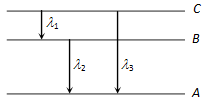
Energy levels $\text{A, B, C}$ of a certain atom corresponding to increasing values of energy i.e.$\mathrm{E}_{\mathrm{A}}<\mathrm{E}_{\mathrm{B}}<\mathrm{E}_{\mathrm{C}} $ if $\quad \lambda_1, \lambda_2, \lambda_3$ are the wavelengths of radiations corresponding to the transitions $C$ to $B, B$ to $A$ and $C$ to $A$ respectively, which of the following statements is correct
Which of the following is not a valid reason for using alloys to make standard resistors?
By properly combining two prisms made of different materials, it is possible to:
  1. Have dispersion without average deviation.
  2. Have deviation without dispersion.
  3. Have both dispersion and average deviation.
  4. Have neither dispersion nor average deviation.
Radioactivity was discovered by (a) Becquerel(b) Pierre Curie(c) Roentgen(d) Rutherford
       
The susceptibility of a diamagnetic substance is:
Two charges of $10C$ and $-15C$ are separated in air by $1m.$The ratio of force exerted by one on the other is:
Consider the following statements and select the incorrect statement(s).
  1. The presence of a large magnetic flux through a coil maintains a current in the coil if the circuit is continuous.
  2. A coil of a metal wire kept stationary in a non– uniform magnetic field has an e.m.f induced in it.
  3. A charged particle enters a region of uniform magnetic field at an angle of 85° to the magnetic lines of force, the path of the particle is a circle.
  4. There is no change in the energy of a charged particle moving in a magnetic field, although a magnetic force is acting on it.
An electric dipole placed in a uniform elecrtric field exepriences: