Question
A proton is about $1840$ times heavier than an electron. When it is accelerated by a potential difference of $1\, kV$, its kinetic energy will be......$keV$

Answer

(c) $KE = QV = e \times 10^3 \,V = 1\,KeV.$

Need a full question paper?

Generate a complete, print-ready paper with questions like this in minutes — across 16+ boards, with answer keys.
Start Generating Free

Similar questions

A uniform disk of mass $m$ and radius $R$ rolls without slipping down an incline plane of length $l$ and inclination $\theta$. Initially the disk was at rest at the top of the incline plane. Its angular momentum about the point of contact with the inclined plane when it reaches the bottom will be equal to :-
A solid cylinder $P$ rolls without slipping from rest down an inclined plane attaining a speed $v_p$ at the bottom. Another smooth solid cylinder $Q$ of same mass and dimensions slides without friction from rest down the inclined plane attaining a speed $v_q$ at the bottom. The ratio of the speeds $\frac{v_q}{v_p}$ is
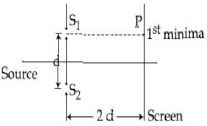
Consider a Young’s double slit experiment as shown in figure. What should be the slit separation $d$ in terms of wavelength $\lambda $ such that the first minima occurs directly in front of the slit $(S_1)$?
Choose the correct statement
The angle of dip at a place is $40.6°$ and the intensity of the vertical component of the earth's magnetic field $V = 6 \times {10^{ - 5}}$ $Tesla$. The total intensity of the earth's magnetic field $ (I) $ at this place is
The barrier potential of a $p-n$ junction depends on 

$(1)$ type of semiconductor material

$(2)$ amount of doping 

$(3)$ temperature

 Which one of the following is correct?

Let the $x-z$ plane be the boundary between two transparent media. Medium $1$ in $z \ge 0$ has a refractive index of $\sqrt 2$ and medium $2$ with $z < 0$ has a refractive index of $\sqrt 3$ . A ray of light in medium $1$ given by the vector $\overrightarrow A = 6\sqrt 3 \widehat i + 8\sqrt 3 \widehat j - 10\widehat k$ is incident on the plane of separation. The angle ofrefraction in medium $2$ is ......$^o$
The time taken by sunlight to cross a $5 \,mm$ thick glass plate $(\mu = 3/2$) is
$Assertion :$ Bodies radiate heat at all temperature.
$Reason :$ Rate of radiation of heat is proportional to the fourth power of absolute temperature.
Two vectors $\overrightarrow{ A }$ and $\overrightarrow{ B }$ have equal magnitudes. If magnitude of $\overrightarrow{ A }+\overrightarrow{ B }$ is equal to two times the magnitude of $\overrightarrow{ A }-\overrightarrow{ B }$, then the angle between $\overrightarrow{ A }$ and $\overrightarrow{ B }$ will be .......................