MCQ
A rocket can go vertically upwards in earth's atmosphere because
  • A
    It is lighter than air
  • B
    Of gravitational pull of the sun
  • C
    It has a fan which displaces more air per unit time than the weight of the rocket
  • Of the force exerted on the rocket by gases ejected by it
Answer

Correct option: D.
Of the force exerted on the rocket by gases ejected by it
d
In accordance with Newton's $3^{rd}$ Law of Motion the exhaust exerts an equal and opposite force on the rocket which propels it upward enabling it to overcome the gravitational force of the earth.It flies along a path at an angle to the earth's surface which places the payload in an orbit around the earth.

Need a full question paper?

Generate a complete, print-ready paper with questions like this in minutes — across 16+ boards, with answer keys.

Start Generating Free

Similar questions

Which of the following expressions corresponds to simple harmonic motion along a straight line, where $x$ is the displacement and $a, b, c$ are positive constants?
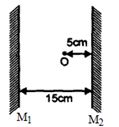
Two plane mirrors are parallel to each other and an object $O$ is placed between them. Then the distance of the first three images from the mirror $M_2$ ​ will be (in $cm$)
A ball hits a vertical wall horizontally at $10m/s$  bounces back at $10 m/s$ 
Two masses $m_1 = 3\,kg$ and $m_2 = 7\,kg$ tied to a string are hanging over a light frictionless pulley. What is the acceleration of the masses when system is free to move ? $[g = 10\,m/s^2]$  ...... $m/s^2$
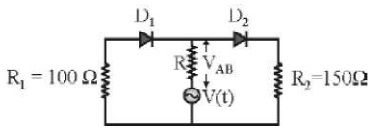
In the circuit given below, $V ( t )$ is the sinusoidal voltage source, voltage drop $V_{A B}(t)$ across the resistance $R$ is
The period of simple pendulum is measured as $T$ in a stationary lift. If the lift moves upwards with an acceleration of $5\, g$, the period will be
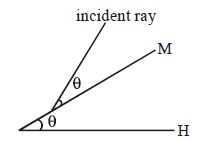
A mirror is inclined at an angle of ${{\theta ^o}}$ with the horizontal. If a ray of light is inclined at an angle of incidence ${{\theta ^o}}$ then the reflected ray makes the following angle with the horizontal
The Reynolds number of a flow is the ratio of
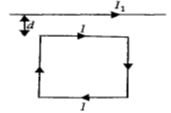
A square loop, carrying a steady current $I,$ is placed in a horizontal plane near a long straight conductor carrying a steady current $I_1$ at a distance $d$ from the conductor as shown in figure. The loop will experience
How will the voltage $(V)$ between the two plates of a parallel plate capacitor depend on the distance $(d)$ between the plates, if the charge on the capacitor remains the same?