A string of length $0.4\, m$ and mass ${10^{ - 2}}\,kg$ is tightly clamped at its ends. The tension in the string is $1.6\, N.$ Identical wave pulses are produced at one end at equal intervals of time $\Delta t$. The minimum value of $\Delta t$ which allows constructive interference between successive pulses is .... $s$
IIT 1998, Diffcult


Download our appand get started for free
Experience the future of education. Simply download our apps or reach out to us for more information. Let's shape the future of learning together!No signup needed.*
Similar Questions
- 1Two cars are approaching each other at an equal speed of $7.2\, km / hr$. When they see each other, both blow horns having frequency of $676\, Hz$. The beat frequency heard by each driver will be $.....\, Hz$. [Velocity of sound in air is $340\,m / s .]$View Solution
- 2At what temperature velocity of sound is double than that of at $0°C$View Solution
- 3View SolutionStanding stationary waves can be obtained in an air column even if the interfering waves are
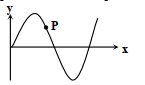
- 4A transverse sinusoidal wave moves along a string in the positive $\mathrm{x}$-direction at a speed of $10 \mathrm{~cm} / \mathrm{s}$. The wavelength of the wave is $0.5 \mathrm{~m}$ and its amplitude is $10 \mathrm{~cm}$. At a particular time $t$, the snap -shot of the wave is shown in figure. The velocity of point $P$ when its displacement is $5 \mathrm{~cm}$ is Figure: $Image$View Solution
- 5View SolutionThe Doppler's effect is applicable for
- 6When a tuning fork of frequency $341$ is sounded with another tuning fork, six beats per second are heard. When the second tuning fork is loaded with wax and sounded with the first tuning fork, the number of beats is two per second. The natural frequency of the second tuning fork isView Solution
- 7A wave on a string is travelling and the displacement of particles on it is given by $x = A\, sin\, (2t -0.1\, x)$. Then the wavelength of the wave isView Solution
- 8Two strings $X$ and $Y$ of a sitar produce a beat frequency $4 Hz$. When the tension of the string $Y$ is slightly increased the beat frequency is found to be $2 Hz.$ If the frequency of $X$ is $300 Hz,$ then the original frequency of $Y$ was .... $Hz$View Solution
- 9The pressure wave, $P = 0.01\,sin\,[1000t -3x]\,Nm^{-2},$ corresponds to the sound produced by a vibrating blade on a day when atmospheric temperature is $0\,^oC.$ On some other day when temperature is $T,$ the speed of sound produced by the same blade and at the same frequency is found to be $336 \,ms^{-1}$. Approximate value of $T$ is .... $^oC$View Solution
- 10Two tuning forks $A$ and $B$ give $4$ beats per second. The frequency of $A$ is $256 Hz$. On loading $B$ slightly, we get $5$ beats in $2$ seconds. The frequency of $B$ after loading is .... $Hz$View Solution