Question
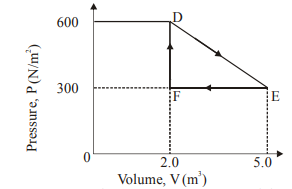
A thermodynamic system is taken from an original state to an intermediate state by the linear process shown in Fig.
Image

Its volume is then reduced to the original value from E to F by an isobaric process. Calculate the total work done by the gas from D to E to F.
Answer

Get the step-by-step solution for this question inside the Vidyadip app.

Get the answer in the app

Need a full question paper?

Generate a complete, print-ready paper with questions like this in minutes — across 16+ boards, with answer keys.

Start Generating Free

Similar questions

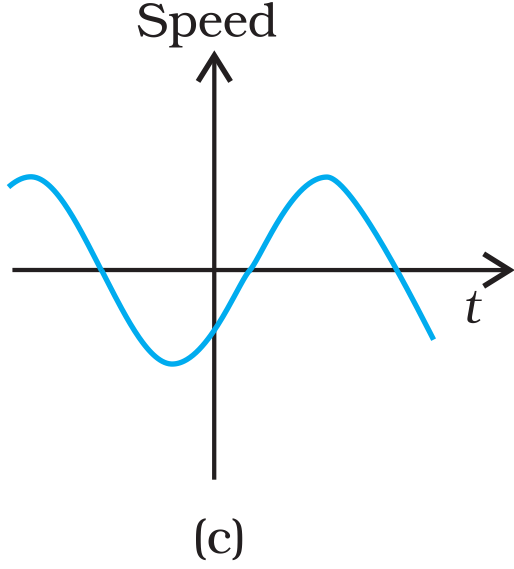
Look at the graphs carefully and state, with reasons, which of these cannot possibly represent one-dimensional motion of a particle.

Answer the following:
You are given a thread and a metre scale. How will you estimate the diameter of the thread?
What is convection current? How does it form land and sea breeze?
An object of 2 kg falls into the sand from a height of 10 m . If the object moves 2 cm in the sand before coming to rest, what will be the average resistance force? $\left(g=10 m / s ^2\right)$
State if each of the following statements is true or false. Give reasons for your answer.
(a) In an elastic collision of two bodies, the momentum and energy of each body is conserved.
(b) Total energy of a system is always conserved, no matter what internal and external forces on the body
are present.
(c) Work done in the motion of a body over a closed loop is zero for every force in nature.
(d) In an inelastic collision, the final kinetic energy is always less than the initial kinetic energy of the system.
A wire of length 2.5m has a percentage strain of 0.012% under a tensile force. Determine the extension in the wire.
If the resultant torque of all the forces acting on a body is zero about a point, is it necessary that it will be zero about any other point?
Draw a diagram to show the standing pressure wave and standing displacement wave for the 3rd overtone mode of vibration of an open organ pipe.
A body rotates about a fixed axis with an angular acceleration of one radian/ second/ second. Through what angle does it rotate during the time in which its angular velocity increases from 5rad/s to 15rad/s.
Explain why (or how):
in a sound wave, a displacement node is a pressure antinode and vice versa,