Question
According to the classical electromagnetic theory, calculate the initial frequency of the light emitted by the electron revolving around a proton in hydrogen atom.

Answer

From Example 12.3 we know that velocity of electron moving around a proton in hydrogen atom in an orbit of radius $5.3 \times 10^{-11} m$ is $2.2 \times 10^{-6} m / s$. Thus, the frequency of the electron moving around the proton is
$
\begin{array}{r}
v=\frac{v}{2 \pi r}=\frac{2.2 \times 10^6 m s ^{-1}}{2 \pi\left(5.3 \times 10^{-11} m \right)} \\
\approx 6.6 \times 10^{15} Hz .
\end{array}
$
According to the classical electromagnetic theory we know that the frequency of the electromagnetic waves emitted by the revolving electrons is equal to the frequency of its revolution around the nucleus. Thus the initial frequency of the light emitted is $6.6 \times 10^{15} Hz$.

Need a full question paper?

Generate a complete, print-ready paper with questions like this in minutes — across 16+ boards, with answer keys.
Start Generating Free

Similar questions

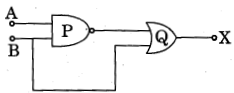
  1. Identify the logic gates marked P and Q in the given logic circuit.
  1. Write down the output at X for the inputs A = 0, B = 0 and A = 1, B = 1.
A spectroscopic instrument can resolve two nearby wavelengths $\lambda$ and $\lambda+\Delta\lambda$ if $\frac{\lambda}{\Delta\lambda}$ is smaller than 8000. This is used to study the spectral lines of the Balmer series of hydrogen. Approximately how many lines will be resolved by the instrument?
Write Snell's law and derive its general equation.
A body builder exerts a force of 150N against a bullworker and compresses it by 20cm. Calculate the spring constant of the spring in the bullworker.
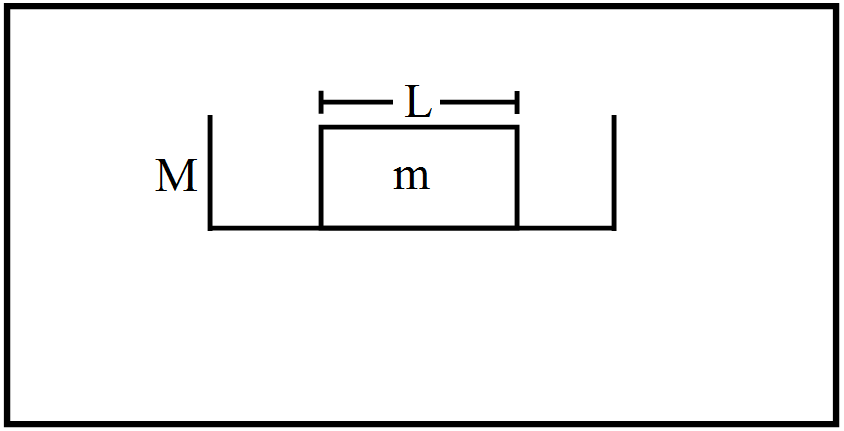
Consider a gravity-free hall in which a tray of mass M, carrying a cubical block of ice of mass m and edge L, is at rest in the middle. If the ice melts, by what distance does the centre of mass of "the tray plus the ice" system descend?
Define threshold frequency. How does it relate with the work function of the metal?
Draw a plot of potential energy of a pair of nucleons as a function of their separation. What is the significance of negative potential energy in the graph drawn?
Explain the reflection of a plane wave using Huygen's principle.
Estimate the speed of vertically falling raindrops from the following data. Radius of the drops $=0.02 \mathrm{~cm}$, viscosity of air $=1.8 \times 10^{-4}$ poise, $g=9.9 \mathrm{~m} / \mathrm{s}^2$ and density of water $=1000 \mathrm{~kg} / \mathrm{m}^3$.
Find the neutral temperature and inversion temperature of a copper-iron thermocouple if the reference junction is kept at $0^\circ$C. Use the data in the table.
 
Metal with
a
b
lead (Pb)
$\mu\text{V}/^\circ\text{C}$
$\mu\text{V}/^\circ(\text{C})^2$
Aluminium
-0.47
0.003
Bismuth
-43.7
-0·47
Copper
2.76
0·012
Gold
2.90
0.0093
Iron
16.6
-0.030
Nickel
19.1
-0.030
Platinum
-1.79
-0.035
Silver
2.50
0.012
Steel
10.8
-0.016