MCQ
Acetaldehyde on treatment with dil. $NaOH $ followed by heating gives
  • A
    $C{H_3}C{H_2}C{H_2}C{H_2}OH$
  • B
    $C{H_3}C{H_2}C{H_2}CHO$
  • $C{H_3} - CH = CHCHO$
  • D
    $C{H_3} - CH = CHC{H_2}OH$

Answer

Correct option: C.
$C{H_3} - CH = CHCHO$
c
(c) $C{H_3}CHO\xrightarrow{{dil\,\,NaOH}}\mathop {C{H_3} - \mathop {\mathop {CH}\limits_{|\,\,\,\,\,} }\limits_{OH}  - C{H_2} - CHO}\limits_{{\text{Aldol}}} $

                                                        $\xrightarrow{{Heat}}\mathop {C{H_3} - CH = CH - CHO + {H_2}O}\limits_{} $

Need a full question paper?

Generate a complete, print-ready paper with questions like this in minutes — across 16+ boards, with answer keys.
Start Generating Free

Similar questions

Two vessels separately contain two ideal gases $A$ and $B$ at the same temperature, the pressure of $A$ being twice that of $B.$ Under such conditions, the density of $A$ is found to be $1.5$ times the density of $B.$ The ratio of molecular weight of $A$ and $B$ is
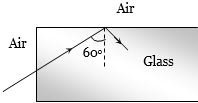
A light ray from air is incident (as shown in figure) at one end of a glass fiber (refractive index $\mu = 1.5$) making an incidence angle of $60^o$ on the lateral surface, so that it undergoes a total internal reflection. How much time would it take to traverse the straight fiber of length $1 km$
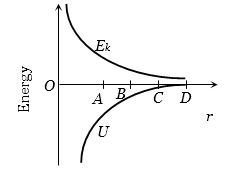
The curves for potential energy $(U)$ and kinetic energy $({E_k})$ of a two particle system are shown in figure. At what points the system will be bound?
In uniform circular motion
The figure shows a tetrahedron, each side of which has a resistance $r$ Choose the correct diagram $(s),$ which show two-dimensional equivalent of the tetrahedron.
What is the intensity of gravitational field of the centre of a spherical shell
An electric charge $+ q$ moves with velocity $\overrightarrow V  = 3\hat i + 4\hat j + \hat k$ in an electromagnetic field given by :  $\overrightarrow E  = 3\hat i + \hat j + 2\hat k$ and $\overrightarrow B  = \hat i + \hat j - 3\hat k$. The $y-$ component of the force experienced by $+ q$ is :-
Two identical charged spheres suspended from a common point by two massless strings of lengths $l,$ are initially at a distance $d\;(d < < l)$ apart because of their mutual repulsion. The charges begin to leak from both the spheres at a constant rate. As a result, the spheres approach each other with a velocity $v.$ Then $v$ varies as a function of the distance $x$ between the spheres, as 
A coil having $N$ $turns$ is wound tightly in the form of a spiral with inner and outer radii $a$ and $b$ respectively. When a current $I$ passes through the coil, the magnetic field at the centre is
Three concentric metal shells $A, B$ and $C$ of respective radii $a, b$ and $c (a < b < c)$ have surface charge densities $+\sigma,-\sigma$ and $+\sigma$ respectively. The potential of shell $B$ is