MCQ
Alkynes on reduction with sodium in liquid ammonia forms:
  • A
    Cis-alkene.
  • B
    Alkane.
  • C
    Trans-alkene.
  • D
    Both (a) and (c).

Answer

  1. Trans-alkene.

Need a full question paper?

Generate a complete, print-ready paper with questions like this in minutes — across 16+ boards, with answer keys.
Start Generating Free

Similar questions

Of the following hydrides which has the lowest boiling point
One litre of a buffer solution containing 0.01M NH4Cl and 0.1M NH4OH having pKb of 5 has pH of:
Many atoms have non-integral atomic masses because
If $S$ and ${K_{sp}}$ are respectively solubility and solubility product of a sparingly soluble binary electrolyte, then
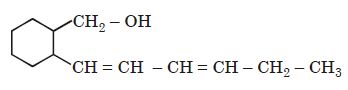
Total number of stereo-isomers possible for the following compound is
Given below are two statements, one is labelled as Assertion $A$ and the other is labelled as Reason $R$

Assertion $A :$- Carbon forms two important oxides $- CO$ and $CO _2 . CO$ is neutral whereas $CO _2$ is acidic in nature.

Reason $R :$- $CO _2$ can combine with water in a limited way to form carbonic acid, while $CO$ is sparingly soluble in water.

In the light of the above statements, choose the most appropriate answer from the options given below :-
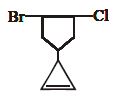
Give the $IUPAC$ name of this compound
The formation of the oxide ion, O2- (g), from oxygen atom requires first an exothermic and then an endothermic step as shown below:
$\text{O(g)}+\text{e}^-\xrightarrow{\ \ \ \ \ \ \ \ \ \ \ }\text{O}^-(\text{g}),\ \Delta\text{H}^\ominus=-141\text{kJ}\text{ mol}^{-1}$
$\text{O(g)}+\text{e}^-\xrightarrow{\ \ \ \ \ \ \ \ \ \ \ }\text{O}^{-2}(\text{g}),\ \Delta\text{H}^\ominus=+780\text{kJ}\text{ mol}^{-1}$
Thus process of formation of O2- in gas phase is unfavourable even though O2- is isoelectronic with neon. It is due to the fact that:
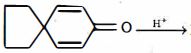
Major product of the reaction is
“The resultant heat change in a reaction is the same whether it takes place in one or several stages.” This statement is called