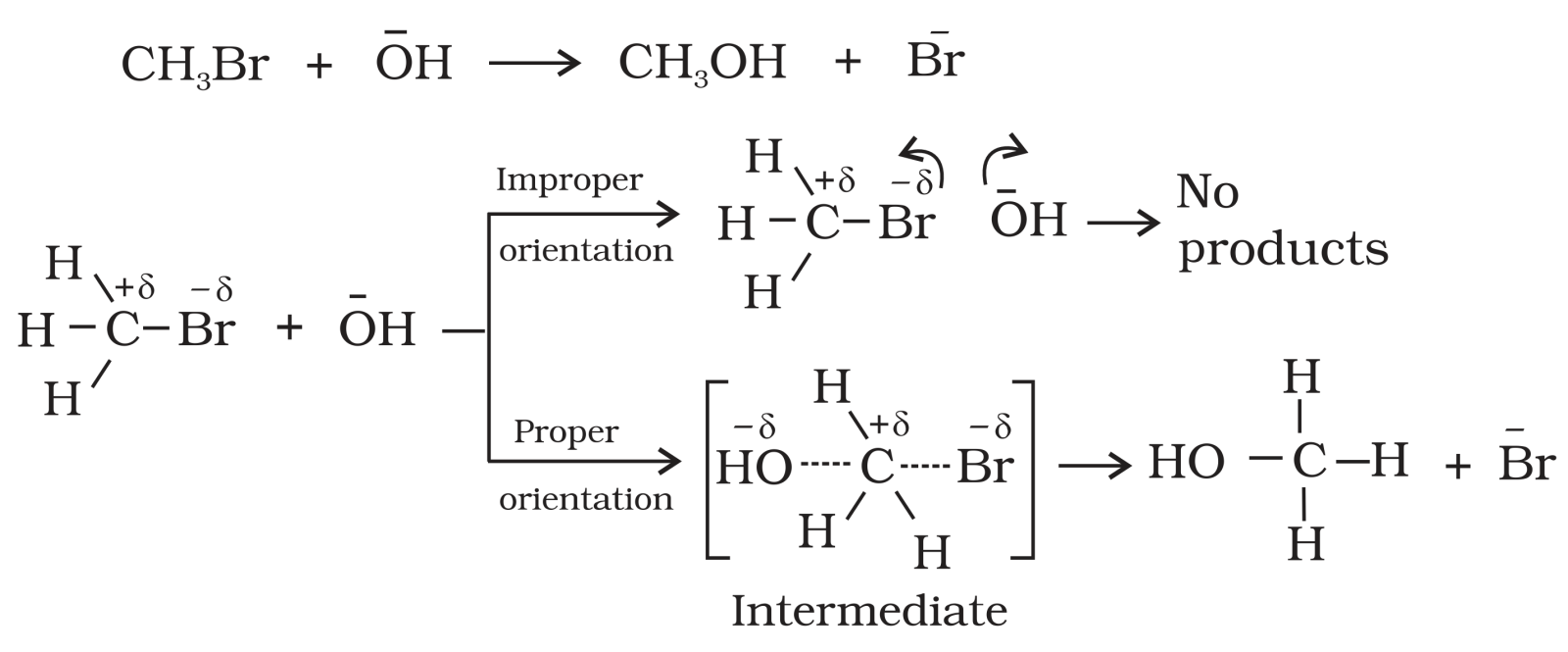
Question
All energetically effective collisions do not result in a chemical change. Explain with the help of an example.

Need a full question paper?

Generate a complete, print-ready paper with questions like this in minutes — across 16+ boards, with answer keys.

Start Generating Free

Similar questions

  1. State two main differences between globular proteins and fibrous proteins.
  2. Based on their chemical composition, state how are lipids classified Give one example of each class.
Write difference between Phenol and Alcohol.
Arrange the following compounds in a decreasing order of basic strength in their aqueous solutions.
NH3, CH3NH2, (CH3)2NH, (CH3)3N
Write the differences between thermoplastic and thermosetting polymers?
Explain the different methods of preparing haloakanes from alcohols.
Match the terms given in Column I with the units given in Column II.
 
Column I
 
Column II
i.
m
a.
S cm-1
ii.
ECell
b.
m-
iii.
K
c.
S cm2 mol-1
iv.
G*
d.
V
Match the statements given in Column I with the oxidation states given in Column II.
 
Column I
 
Column II
(i)
Oxidation state of Mn in MnO2 is
(a)
+2
(ii)
Most stable oxidation state of Mn is
(b)
+3
(iii)
Most stable oxidation state of Mn in oxides is
(c)
+4
(iv) Characteristic oxidation state of lanthanoids is
(d)
+5
    (e) +7
Attempt any five of the following:
(a) Which sugar is present in milk?
(b) Why must vitamin C be supplied regularly in diet?
(c) What type of substance is phenylanine hydroxylate? Write its importance.
(d) Define denaturation of protein. What is the effect of denaturation on the structure of protein?
(e) Name the linkage connecting monosaccharide units in polysaccharides.
(f) How do you explain the presence of all six carbon atoms in glucose in a straight chain?
(g) Write the reactions showing the presence of following in the open structure of glucose:
i. a carbonyl group
ii. chain with six carbon atoms
(a) Differentiate between
a. Nucleotide and Nucleoside
b. Amylose and Amylopectin
(b) Write a reaction which shows that all the carbon atoms in glucose are linked in a straight chain.
(c) Write two differences between DNA and RNA.
(d) Amino acids can be classified as $\alpha-, \beta-, \gamma-, \delta-$ and so on depending upon the relative position of the amino group with respect to the carboxyl group. Which type of amino acids forms a polypeptide chain in proteins?
(e) What are any two good sources of vitamin A?
(f) What is anomeric carbon?
(g) What is the difference between a glycosidic linkage and a peptide linkage?
Describe the methods of studying various first order reactions with examples.