MCQ
Amongst halogens fluorine is most oxidising because
  • A
    Fluorine has highest electron affinity
  • B
    Fluorine is most electronegative
  • Dissociation energy for fluorine molecule is lowest
  • D
    All are correct

Answer

Correct option: C.
Dissociation energy for fluorine molecule is lowest
c
It’s Obvious.

Need a full question paper?

Generate a complete, print-ready paper with questions like this in minutes — across 16+ boards, with answer keys.
Start Generating Free

Similar questions

The number of tertiary carbon atoms in the compound ${(C{H_3})_2}CHC{H_2}C\;{(C{H_3})_3}$is
The hybridization in $P{F_3}$ is
Which of the following provisions of the Bohr atomic model of hydrogen turned out to be false ?
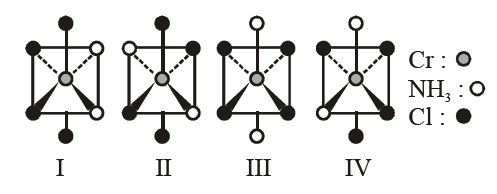
Consider the following isomers of $[Cr(NH_3)_2 Cl_4]^-$ and answer the questions Out of these isomers
The reagent which is used to distinguish between propene and propyne is
The unit of molality is
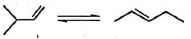
The heat of hydrogenation for $3$ -methylbutene and $2$ -pentene are $-30\, kcal/mol$ and $-28\,kcal/mol$ respectively. The heats of combustion of $2$ -methylbutane and  pentane are - $784 \,kcal / mol$ and $-782 \,kcal/mol$ respectively. All the values are  given under standard conditions. Taking into account that combustion of both alkanes  give the same products, what is $\Delta H$ (in $kcal/mol$) for the following reaction under  same conditions ?
A $0.004\, M$ solution of $N{a_2}S{O_4}$ is isotonic with a $0.010 \,M$ solution of glucose at same temperature. The apparent degree of disociation of $N{a_2}S{O_4}$ is.....$\%$
In which of the following processes entropy increases?

$A$. A liquid evaporates to vapour.

$B$. Temperature of a crystalline solid lowered from $130 \mathrm{~K}$ to $0 \mathrm{~K}$.

$C$. $2 \mathrm{NaHCO}_{3(\mathrm{~s})} \rightarrow \mathrm{Na}_2 \mathrm{CO}_{3(\mathrm{~s})}+\mathrm{CO}_{2(\mathrm{~g})}+\mathrm{H}_2 \mathrm{O}_{(\mathrm{g})}$

$D$. $\mathrm{Cl}_{2(g)} \rightarrow 2 \mathrm{Cl}_{(g)}$

Choose the correct answer from the options given below:

Activation energy of any reaction depends on