MCQ
An AC generator is a device which converts:
- AElectrical energy to mechanical energy.
- BHeat energy to electrical energy.
- CHeat energy to light energy.
- DMechanical energy to electrical energy.
Explanation:
An AC generator converts mechanical energy into electrical energy, while a motor does the opposite - it converts electrical energy into mechanical energy. Both devices work because of electromagnetic induction, which is when a voltage is induced by a changing magnetic field.
Generate a complete, print-ready paper with questions like this in minutes — across 16+ boards, with answer keys.
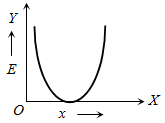
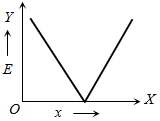
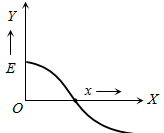
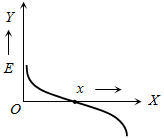
Two identical point charges are placed at a separation of d. P is a point on the line joining the charges, at a distance x from any one charge. The field at P is E, E is plotted against x for values of x from close to zero to slightly less than d. Which of the following represents the resulting curve
|
(a)
|
(b)
|
(c)
|
(d)
|
In good conductors of electricity, the type of bonding that exists is
|
(a) Ionic |
(b) Vander Waals |
(c) Covalent |
(d) Metallic |
How many NAND gates are used to form an AND gate
|
(a) 1 |
(b) 2 |
(c) 3 |
(d) 4 |
A thick wire is stretched so that its length become two times. Assuming that there is no change in its density, then what is the ratio of change in resistance of wire to the initial resistance of wire
|
(a) 2 : 1 |
(b) 4 : 1 |
(c) 3 : 1 |
(d) 1 : 4 |
Assertion : Photosensitivity of a metal is high if its work function is small.
Reason : Work function =  where
where  is the threshold frequency.
|
(a) If both assertion and reason are true and the reason is the correct explanation of the assertion. |
|
(b) If both assertion and reason are true but reason is not the correct explanation of the assertion. |
|
(c) If assertion is true but reason is false. |
|
(d) If the assertion and reason both are false. |
A biconvex lens of glass having refractive index 1.47 is immersed in a liquid. It becomes invisible and behaves as a plane glass plate. The refractive index of the liquid is:
The electric field due to a dipole at a distance r on its axis is
|
(a) Directly proportional to |
(b) Inversely proportional to |
|
(c) Directly proportional to |
(d) Inversely proportional to |