Question
An astronomical telescope is an optical instrument which is used for observing distinct images of heavenly bodies libe stars, planets etc. It consists of two lenses. In normal adjustment of telescope, the final image is formed at infinity. Magnifying power of an astronomical telescope in normal adjustment is defined as the ratio of the angle subtended at the eye by the angle subtended at the eye by the final image to the angle subtended at the eye, by the object directly, when the final image and the object both lie at infinite distance from the eye. It is given by, $\text{m}=\frac{\text{f}_0}{\text{f}_\text{g}}.$ To increase magnifying power of an astronomical telescope in normal adjustment, focal length of objective lens should be large and focal length of eye lens should be small.
  1. An astronomical telescope of magnifying power 7 consists of the two thin lenses 40cm apart, in normal adjustment. The focal lengths of the lenses are
  1. 5cm, 35cm
  2. 7cm, 35cm
  3. 17cm, 35cm
  4. 5cm, 30cm
  1. An astronomical telescope has a magnifying power of 10. In normal adjustment, distance between the objective and eye piece is 22cm. The focal length of objective lens is:
  1. 25cm
  2. 10cm
  3. 15cm
  4. 20cm
  1. In astronomical telescope compare to eye piece, objective lens has:
  1. Negative focal length.
  2. Zero focal length.
  3. Small focal length.
  4. Large focal length.
  1. To see stars, use:
  1. Simple microscope.
  2. Compound microscope.
  3. Endoscope.
  4. Astronomical telescope.
  1. For large magnifying power of astronomical telescope.
  1. f0 << fe
  2. f0 << fe
  3. f0 << fe
  4. None of these.

Answer

  1. (a) 5cm, 35cm

Explanation:

$\text{m}=\frac{\text{f}_0}{\text{f}_\text{e}}=7$

$\text{f}_0=7\text{f}_e$

In normal adjustment, distance between the lenses,

$\text{f}_0+\text{f}_\text{e}=40$

$7\text{f}_0+\text{f}_\text{e}=40\Rightarrow\text{f}_\text{e}=\frac{40}{8}=5\text{cm}$

$\text{f}_0=7\text{f}_\text{e}=7\times5=35\text{cm}$

  1.  (d) 20cm

Explanation:

$\text{m}=-10;\text{L}=22\text{cm}$

As, $\text{m}=\frac{-\text{f}_0}{\text{f}_e}\Rightarrow-10=-\frac{\text{f}_0}{\text{f}_\text{e}}$

$\text{f}_0=10\text{f}_\text{e}$

As, $\text{L}=\text{f}_0+\text{f}_\text{e}$

$22=10\text{f}_\text{e}+\text{f}_e=11\text{f}_\text{e}$

or $\text{f}_\text{e}=\frac{22}{11}=2\text{cm}$

$\text{f}_0=10\text{f}_\text{e}=20\text{cm}$

  1.  (d) Large focal length.

Explanation:

Objective lens has larger focal length than eye-piece.

  1.  (d) Astronomical telescope.

Explanation:

Astronomial telescope is used to see stars, sun etc.

  1. (c) f0 << fe

Need a full question paper?

Generate a complete, print-ready paper with questions like this in minutes — across 16+ boards, with answer keys.

Start Generating Free

Similar questions

A car starts from rest on a half kilometer long bridge. The coefficient of friction between the tyre and the road is 1.0. Show that one cannot drive through the bridge in less than 10s.
Two friends A and B are standing a distance x apart in an open field and wind is blowing from A to B. A beats a drum and B hears the sound t1 time after he sees the event. A and B interchange their positions and the experiment is repeated. This time B hears the drum t2 time after he sees the event. Calculate the velocity of sound in still air v and the velocity of wind u. Neglect the time light takes in travelling between the friends.
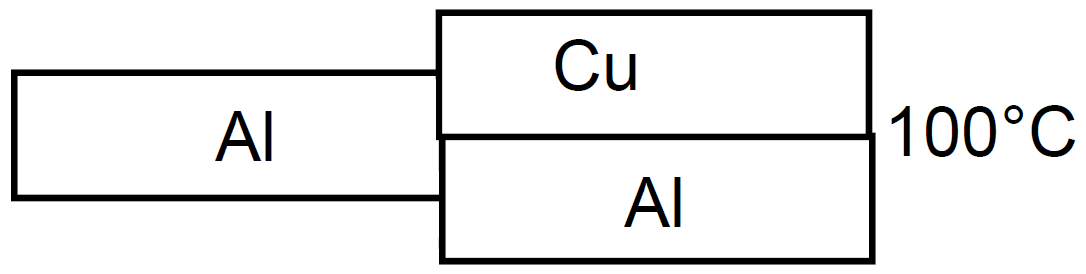
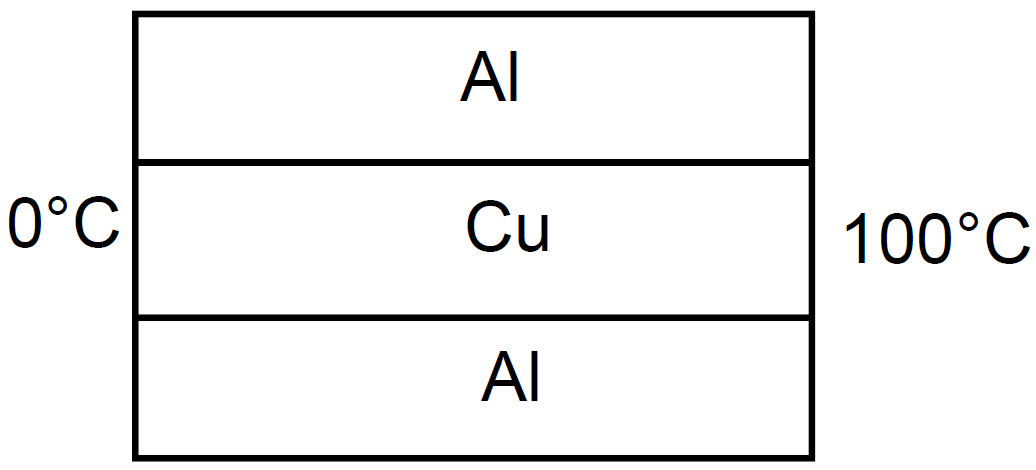
The three rods shown in figure, have identical geometrical dimensions. Heat flows from the hot end at a rate of 40 Win the arrangement (a) Find the rates of heat flow when the rods are joined as in arrangement (b) and in (c) Thermal conductivities of aluminium and copper are 200Wm-1°C-1 and 400Wm-1°C-1 respectively.

  1.  

  1.  

  1.  

A simple pendulum fixed in a car has a time period of 4 seconds when the car is moving uniformly on a horizontal road. When the accelerator is pressed, the time period changes to 3.99 seconds. Making an approximate analysis, find the acceleration of the car.
Refraction of light is the change in the path of light as it passes obliquely from one transparent medium to another medium. According to law of refraction $\frac{\sin\text{i}}{\sin\text{r}}=\ ^1\mu_2,$ where $^1\mu_2$ is called refractive index of second medium with respect to first medium. From refraction at a convex spherical surface, we have $\frac{\mu_2}{\text{v}}=\frac{\mu_1}{\text{u}}=\frac{\mu_2-\mu_1}{\text{R}}.$ Similarly from refraction at a concave spherical surface when object lies in the rarer medium, we have $\frac{\mu_2}{\text{v}}-\frac{\mu_1}{\text{u}}=\frac{\mu_2-\mu_1}{\text{R}}$ and when object lies in the denser medium, we have $\frac{\mu_1}{\text{v}}-\frac{\mu_2}{\text{u}}=\frac{\mu_1-\mu_2}{\text{R}}.$
  1. Refractive index of a medium depends upon:
  1. Nature of the medium.
  2. Wavelength of the tight used.
  3. Temperature.
  4. All of these.
  1. A ray of light of frequency 5 × 1014Hz is passed through a liquid. The wavelength of light measured inside the liquid is found to be 450 × 10-9m. The refractive index of the liquid is:
  1. 1.33
  2. 2.52
  3. 2.22
  4. 0.75
  1. A ray of light is incident at an angle of 60º on one face of a rectangular glass slab of refractive index 1.5. The angle of refraction is:
  1. $\sin^-1 (0.95)$
  2. $\sin^-1 (0.58)$
  3. $\sin^-1 (0.79)$
  4. $\sin^-1 (0.86)$
  1. A point object is placed at the centre of a glass sphere of radius 6 cm and refractive index 1.5. The distance of the virtual image from the surface of sphere is:
  1. 2cm
  2. 4cm
  3. 6cm
  4. 12cm
  1. In refraction, light waves are bent on passing from one medium to the second medium because in the second medium:
  1. The frequency is different.
  2. The co-efficient of elasticity is different.
  3. The speed is different.
  4. The amplitude is smaller.
Explain refraction at spherical surfaces and derive formula $-\frac{n_1}{n}+\frac{n_2}{v}=\frac{n_2-n_1}{ R }$.
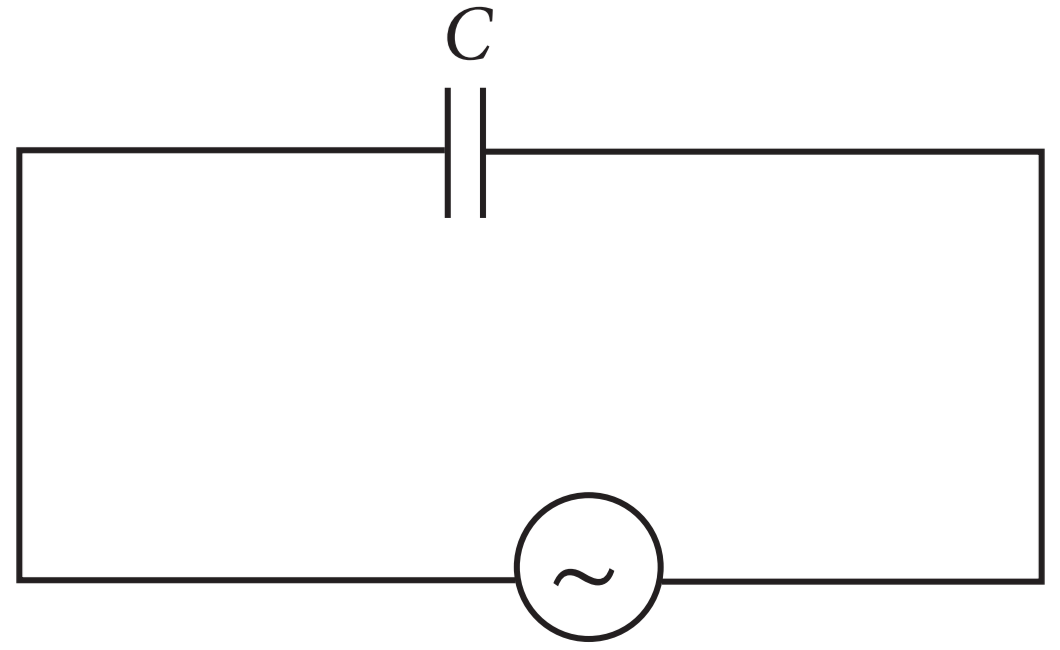
Let a source of alternating e.m.f. $\text{E} = \text{E}_\circ\sin\omega\text{t}$ be connected to a capacitor of capacitance C. If 'I' is the instantaneous value of current in the circuit at instant t, then $\text{I}=\frac{\text{E}_0}{\frac{1}{\omega\text{C}}}\sin\Big(\omega\text{t}+\frac{\pi}{2}\Big).$ The capacitive reactance limits the amplitude of current in a purely capacitive circuit and it is given by $\text{X}_\text{C}=\frac{1}{\omega\text{C}}.$

  1. What is the unit of capacitive reactance?
  1. Farad
  2. Ampere
  3. Ohm
  4. Ohm-1
  1. The capacitive reactance of a $5\mu\text{F}$ capacitor for a frequency of 106Hz is:
  1. $0.032\Omega$
  2. $2.52\Omega$
  3. $1.25\Omega$
  4. $4.51\Omega$
  1. In a capacitive circuit, resistance to the flow of current is offered by:
  1. Resistor
  2. Capacitor
  3. Inducto
  4. Frequency
  1. In a capacitive circuit, by what value of phase angle does alternating current leads the e.m.f?
  1. 45º
  2. 90º
  3. 75º
  4. 60º
  1. One microfarad capacitor is joined to a 200V, 50Hz alternator. The rrns current through capacitor is:
  1. 6.28 × 10⁻²A
  2. 7.5 × 10⁻⁴A
  3. 10.52 × 10⁻²A
  4. 15.25 × 10⁻²A
To keep valuable instruments away from the earth's magnetic field, they are enclosed in iron boxes. Explain.
Draw the ray diagram for the formation of image by a compound microscope and obtain the formula for magnification.
What can be said about the centre of mass of a uniform hemisphere without making any calculation? Will its distance from the centre be more than $\frac{\text{r}}{2}$ or less than $\frac{\text{r}}{2}?$