Question
An electric charge in uniform motion produces:

Answer

  1. Both electric and magnetic fields.

Need a full question paper?

Generate a complete, print-ready paper with questions like this in minutes — across 16+ boards, with answer keys.
Start Generating Free

Similar questions

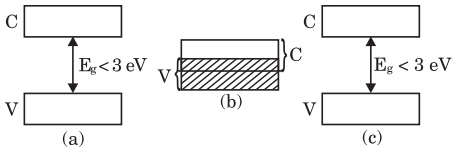
Energy Bands of three substances are shown in the following figures, where V is valance band and C is conduction band.
Image
These substances respectively are :
Nuclear fission was discovered by(a) Auto Hahn and F. strassmann(b) Fermi(c) Bethe(d) Rutherford
   
   
The electric field inside a spherical shell of uniform surface charge density is:
A plano convex lens (f = 20cm) is silvered at plane surface. Now f will be(a) 20 cm (b) 40 cm(c) 30 cm (d) 10 cm
       
Which of the following is/ are true for "magnetic lines of force around a bar magnet"?
A moving charge produces:
In an elastic collision:
  1. The initial kinetic energy is equal to the final kinetic energy.
  2. The final kinetic energy is less than the initial kinetic energy.
  3. The kinetic energy remains constant.
  4. The kinetic energy first increases then decreases.
The potential at a point due to an electric dipole will be maximum and minimum when  the angles between the axis of the dipole and the line joining the point to the dipole are respectively(a) 90° and 180 °  (b) 0°  and 90°(c) 90 ° and 0°(d) 0° and 180°
       
The electric field between the plates of a parallel plate capacitor when connected to a certain battery $I$ . If the space between the plates of the capacitor is filled by introducing a material of dielectric constant $K$ without disturbing the battery connections, the field between the plates shall be
An electron enters a region where magnetic (B) and electric (E) fields are mutually perpendicular to one another, then(a) It will always move in the direction of B(b) It will always move in the direction of E(c) It always possess circular motion(d) It can go undeflected also