Question
An element X (atomic number 17) reacts with an element Y (atomic number 20) to form a divalent halide.
  1. Where in the periodic table are elements X and Y placed?
  2. Classify X and Y as metal (s), non-metal (s) or metalloid (s)
  3. What will be the nature of oxide of element Y? Identify the nature of bonding in the compound formed.
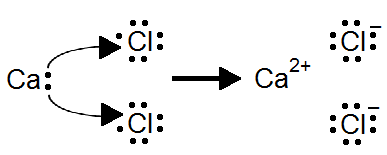
  4. Draw the electron dot structure of the divalent halide.
Answer

  1. X is in Group 17, period 3 and Y is in group 2, period 4.
  2. X is a non-metal, While Y is a metal.
  3. Oxide of element Y would be basic. This compound is formed by ionic bond.
  4.  

Need a full question paper?

Generate a complete, print-ready paper with questions like this in minutes — across 16+ boards, with answer keys.

Start Generating Free

Similar questions

Explain why, a salt which does not conduct electricity in the solid state becomes a good conductor in molten state.
The metal M reacts vigorously with water to form a solution S and a gas G. The solution S turns red litmus to blue whereas gas G, which is lighter than air, burns with a pop sound. Metal M has a low melting point and it is used as a coolant in nuclear reactors.
  1. What is metal M?
  2. What is solution S? Is it acidic or alkaline?
  3. What is gas G?
  4. Write a balanced chemical equation for the reaction which takes place when metal M reacts with water.
  5. Is this reaction exothermic or endothermic?
Name the reaction which is commonly used in the conversion of vegetable oils to fats. Explain the reaction involved in detail.
Write the chemical formula and name of the compound which is the active ingredient of all alcoholic drinks. List its two uses. Write chemical equation and name of the product formed when this compound reacts with-
  1. Sodium metal.
  2. Hot concentrated sulphuric acid.
What are the various ways in which a chemical equation can be made more informative? Give examples to illustrate your answer.
  1. Write the steps involved in the extraction of pure metals in the middle of the activity series from their carbonate ores.
  2. How is copper extracted from its sulphide ore? Explain the various steps supported by chemical equations. Draw labelled diagram for the electrolytic refining of copper.
Atoms of eight elements A, B, C, D, E, F, G and H have the same number of electron shells but different number of electrons in their outermost shells. It was found that elements A and G combine to form an ionic compound. This ionic compound is added in a small amount to almost all vegetables and dishes during cooking. Oxides of elements A and B are basic in nature while those of elements E and F are acidic. The oxide of element D is, however, almost neutral. Based on the above information, answer the following questions:
  1. To which group or period of the periodic table do these elements belong?
  2. What would be the nature of compound formed by a combination of elements B and F?
  3. Which two of these elements could definitely be metals?
  4. Which one of the eight elements is most likely to be found in gaseous state at room temperature?
  5. If the number of electrons in the outermost shell of elements C and G be 3 and 7 respectively, write the formula of the compound formed by the combination of C and G.
A metal X which is resistant to corrosion is produced by the electrolysis of its molten oxide whereas another metal Y which is also resistant to corrosion is produced by the reduction of its oxide with carbon. Metal X can be used in powder form in thermite welding whereas metal Y is used in making cathodes of ordinary dry cells.
  1. Name the metals X and Y.
  2. Which of the two metals is more reactive : X or Y?
  3. Name one ore or metal X. Also write its chemical formula.
  4. Name one ore of metal Y. Also write its chemical formula.
  5. Name one alloy of metal X and one alloy of metal Y.
Which among the following are physical or chemical changes?
  1. Evaporation of petrol.
  2. Burning of Liquefied Petroleum Gas (LPG).
  3. Heating of an iron rod to red hot.
  4. Curdling of milk.
  5. Sublimation of solid ammonium chloride.
A group of students measured the pH of some substances they found in their homes. Their results are given in the following table:
SabstancepHSabstancepH
Apples3.0Salt7.0
Baking soda8.5Sugar7.0
Black coffee5.0Toothpaste9.0
Houshold ammonia12.0Vinegar3.0
Lemon juice2.5Washing soda11.5
Milk6.0
  1. What would the students have used to measure the pH?
  2. Which solution is the most acidic?
  3. Which solution is the most alkaline?
  4. Which solutions are neutral?
  5. Which solution can be used to treat wasp stings?
  6. Which solution can be used to treat bee stings?