Questions

Answer the questions.[Che-5M]

🎯

Test yourself on this topic

13 questions · timed · auto-graded

Question 15 Marks
Which group of elements could be placed in Mendele′ ev's Periodic Table without disturbing the original order? Give reason.
Answer
Inert gases could be placed in Mendeleev’s Periodic Table without disturbing the original order.
Noble gases; like Helium, Neon and Argon had been mentioned by various scientists even before Mendeleev. But these gases could be grouped together as noble gases much later than Mendeleev’s discovery. Mendeleev used 63 elements till his periodic table because these were the only known elements till his time. However, he was bold enough to leave gaps in his periodic table. He had predicted that that more elements would be discovered in times to come.
Mendeleev’s Periodic Table was the first comprehensive attempt to classify elements on the basis of their chemical properties. This is the main reason that new elements could be easily placed in Mendeleev’s Periodic Table without disturbing the original order.
View full question & answer
Question 25 Marks
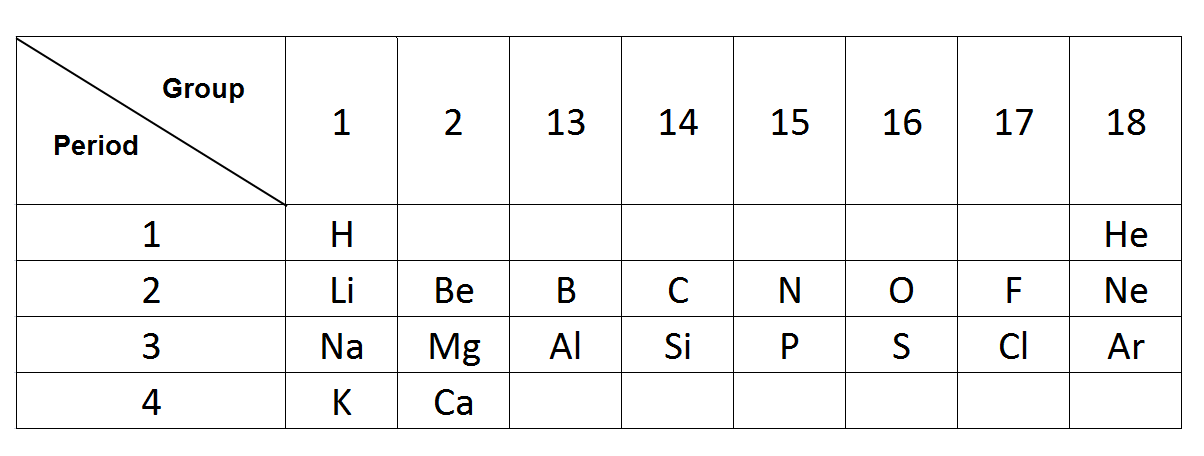
Properties of the elements are given below. Where would you locate the following elements in the periodic table?
  1. A soft metal stored under kerosene.
  2. An element with variable (more than one) valency stored under water.
  3. An element which is tetravalent and forms the basis of organic chemistry.
  4. An element which is an inert gas with atomic number 2.
  5. An element whose thin oxide layer is used to make other elements corrosion resistant by the process of “anodising”.
Answer
  1. Sodium (Group 1 and Period 3) or Potassium (Group 1 and Period 4).
  2. Phosphorus (Group 15 and Period 3). It shows variable valencies 3 and 5 and is stored under water.
  3. Carbon (Group 14 and Period 2).
  4. Helium (Group 18 and Period 1).
  5. Aluminium (Group 13 and Period 3).
View full question & answer
Question 45 Marks
  1. Electropositive nature of the element(s) increases down the group and decreases across the period.
  2. Electronegativity of the element decreases down the group and increases across the period.
  3. Atomic size increases down the group and decreases across a period (left to right).
  4. Metallic character increases down the group and decreases across a period.

On the basis of the above trends of the Periodic Table, answer the following about the elements with atomic numbers 3 to 9.

  1. Name the most electropositive element among them.
  2. Name the most electronegative element.
  3. Name the element with smallest atomic size.
  4. Name the element which is a metalloid.
  5. Name the element which shows maximum valency.
Answer
  1. Element with 3 as atomic number, i.e. Lithium.
  2. Element with 9 as atomic number, i.e. Fluorine.
  3. Fluorine.
  4. Carbon, valency 4.
View full question & answer
Question 55 Marks
Mendeleev predicted the existence of certain elements not known at that time and named two of them as Eka-silicon and Eka-aluminium.
  1. Name the elements which have taken the place of these elements.
  2. Mention the group and the period of these elements in the Modern Periodic Table.
  3. Classify these elements as metals, non-metals or metalloids.
  4. How many valence electrons are present in each one of them?
Answer
  1. Eka-silicon was later identified as Germanium (Ge) and Eka- aluminium was taken as Gallium (Ga).
  2.  
  • Germanium (Ge)- Group 14, period 4.
  • Gallium (Ga)- Group 13, period 4.
  1. Gallium(Ga) is a metal while Germanium (Ge) is a metalloid.
  2. Gallium is placed in 13th group so there must be 13 - 10 = 3 valence electrons. Similarly germanium is placed in group 14 so there must be 14 - 10 = 4 valence electrons.
View full question & answer
Question 65 Marks
Give an account of the process adopted by Mendele′ ev for the classification of elements. How did he arrive at “Periodic Law”?
Answer
Mendeleev purposed the relation between atomic masses of elements and their properties. He examined that physical and chemical properties of elements are periodic function of their atomic masses. He arranged all known 63 elements according to their atomic masses.
He examined the compounds formed by elements hydrogen and oxygen. He used these elements because they readily form different compounds with other elements like hydride and oxides.
The chemical properties of hydrides and oxides were used to determine the chemical properties of different elements and that again used for their classification. He recorded properties of all 63 elements and paired the elements which exhibit same chemical properties. Later he arranged elements on the basis of their similarities in chemical properties and found that most of the elements were arranged in order of their increasing atomic masses.
In this arrangement, he also observed the periodic recurrence of elements with similar physical and chemical properties. He formulated the periodic law which states that the properties of elements are the periodic function of their atomic masses.
View full question & answer
Question 75 Marks
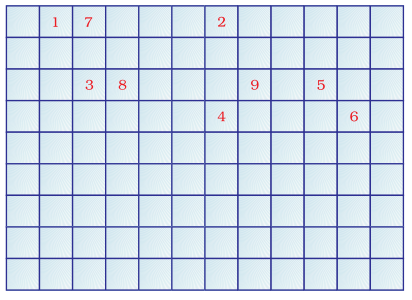
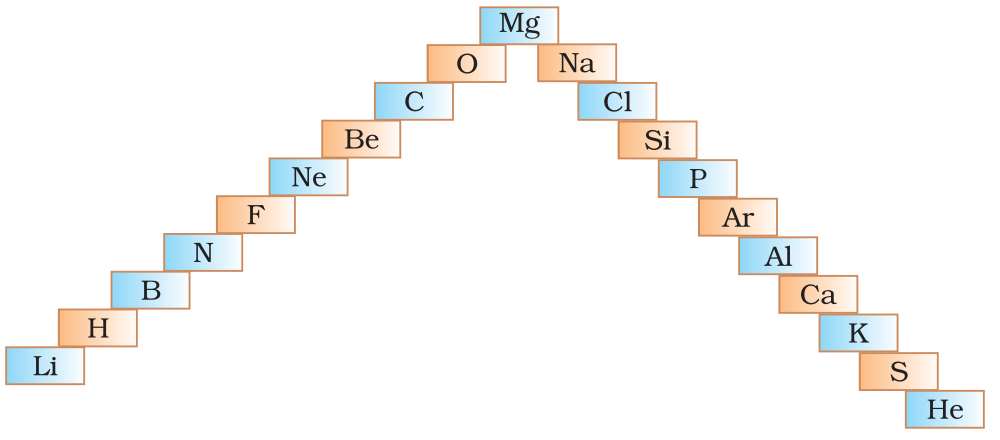
Complete the following cross word puzzle (Figure).

Across:

  1. An element with atomic number 12.

  1. Metal used in making cans and member of Group 14.

  2. A lustrous non-metal which has 7 electrons in its outermost shell.

​​​​​​​Down:

  1. Highly reactive and soft metal which imparts yellow colour when subjected to flame and is kept in kerosene.

  1. The first element of second Period.

  2. An element which is used in making fluorescent bulbs and is second member of Group 18 in the Modern Periodic Table.

  3. A radioactive element which is the last member of halogen family.

  4. Metal which is an important constituent of steel and forms rust when exposed to moist air.

  5. The first metalloid in Modern Periodic Table whose fibres are used in making bullet-proof vests.

Answer
Across:

  1. Magnesium.

  1. Tin.

  2. Iodine.

Down:

  1. Sodium.
  1. Lithium.

  2. Neon.

  3. Astatine.

  4. Iron.

  5. Boron.

View full question & answer
Question 85 Marks
Atomic number of a few elements are given below:
10, 20, 7, 14
  1. Identify the elements.
  2. Identify the Group number of these elements in the Periodic Table.
  3. Identify the Periods of these elements in the Periodic Table.
  4. What would be the electronic configuration for each of these elements?
  5. Determine the valency of these elements.
Answer
Atomic Number
10
20
7
14
Element
Neon
Calcium
Nitrogen
Silicon
Group Number
(8 + 10) = 18
2
(5 + 10) = 15
(4 + 10) = 14
Period Number
2nd
4th
2nd
3rd
Electronic Configuration
2, 8
2, 8, 8, 2
2, 5
2, 8, 4
Valency
Zero
2
(8 - 5) = 3
4
View full question & answer
Question 95 Marks
Arrange the following elements in the increasing order of their metallic character Mg, Ca, K, Ge, Ga.
Answer
The arrangement of given elements in the Modern Periodic table is listed below.

Group/ Period
1
2
13
14
3
 
Mg
 
 
4
K
Ca
Ga
Ge

We know that metallic character decreases from left to right in the periodic table. In the given elements, excluding Mg, remaining elements are placed in same period so the metallic character will decrease from K to Ge and order of metallic character would be;

Ge < Ga < Ca < K

Now, as we move down in a group, metallic nature of elements increases. So, Ca is more metallic than Mg. Similarly, Mg will be less metallic than K because in period, metallic nature decreases from left to right. Hence the increasing order of metallic character would be;

Ge < Ga < Mg < Ca < K

View full question & answer
Question 105 Marks
An element X which is a yellow solid at room temperature shows catenation and allotropy. X forms two oxides which are also formed during the thermal decomposition of ferrous sulphate crystals and are the major air pollutants.
  1. Identify the element X.
  2. Write the electronic configuration of X.
  3. Write the balanced chemical equation for the thermal decomposition of ferrous sulphate crystals?
  4. What would be the nature (acidic/ basic) of oxides formed?
  5. Locate the position of the element in the Modern Periodic Table.
Answer
  1. The available information suggests that the element X is sulphur.

  2. Electronic configuration of S(Z = 16) 2, 8, 6.

  3. $2\text{FeSO}_4.7\text{H}_2\text{O(s)}\xrightarrow{\ \ \ \text{heat}\ \ \ }\text{Fe}_2\text{O}_3(\text{s})+\text{SO}_2(\text{g})+\text{SO}_3(\text{g})+7\text{H}_2\text{O(g)}$

  4. Fe2O3 (basic oxide), SO2(acidic oxide), SO3(acidic oxide).

  5. Sulphur is a member of group 16 and period 3.

View full question & answer
Question 115 Marks
An element X of group 15 exists as diatomic molecule and combines with hydrogen at 773K in presence of the catalyst to form a compound, ammonia which has a characteristic pungent smell.
  1. Identify the element X. How many valence electrons does it have?
  2. Draw the electron dot structure of the diatomic molecule of X. What type of bond is formed in it?
  3. Draw the electron dot structure for ammonia and what type of bond is formed in it?
View full question & answer
Question 125 Marks
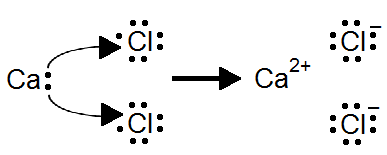
An element X (atomic number 17) reacts with an element Y (atomic number 20) to form a divalent halide.
  1. Where in the periodic table are elements X and Y placed?
  2. Classify X and Y as metal (s), non-metal (s) or metalloid (s)
  3. What will be the nature of oxide of element Y? Identify the nature of bonding in the compound formed.
  4. Draw the electron dot structure of the divalent halide.
Answer
  1. X is in Group 17, period 3 and Y is in group 2, period 4.
  2. X is a non-metal, While Y is a metal.
  3. Oxide of element Y would be basic. This compound is formed by ionic bond.
  4.  

View full question & answer
Question 135 Marks
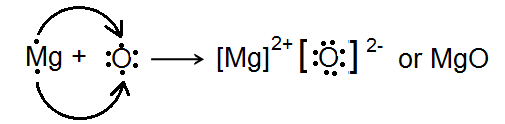
An element is placed in 2nd Group and 3rd Period of the Periodic Table, burns in presence of oxygen to form a basic oxide.
  1. Identify the element.
  2. Write the electronic configuration.
  3. Write the balanced equation when it burns in the presence of air.
  4. Write a balanced equation when this oxide is dissolved in water.
  5. Draw the electron dot structure for the formation of this oxide.
View full question & answer
Answer the questions.[Che-5M] - Science STD 10 Questions - Vidyadip