Question
An element X (atomic number 17) reacts with an element Y (atomic number 20) to form a divalent halide.
  1. Where in the periodic table are elements X and Y placed?
  2. Classify X and Y as metal (s), non-metal (s) or metalloid (s)
  3. What will be the nature of oxide of element Y? Identify the nature of bonding in the compound formed.
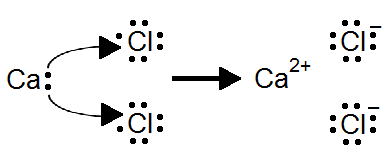
  4. Draw the electron dot structure of the divalent halide.
Answer

  1. X is in Group 17, period 3 and Y is in group 2, period 4.
  2. X is a non-metal, While Y is a metal.
  3. Oxide of element Y would be basic. This compound is formed by ionic bond.
  4.  

Need a full question paper?

Generate a complete, print-ready paper with questions like this in minutes — across 16+ boards, with answer keys.

Start Generating Free

Similar questions

a. List the sequence of events in the uterus of a human female from fertilisation of egg till childbirth.
b. State the changes that are observed in the uterus if fertilisation of egg does not occur.
When a person eats sugary food, then organisms A present in his mouth act on sugar to produce a substance B. The substance B first dissolves the calcium salts from the top part C of the tooth and then from its middle part D forming holes E. These holes ultimately reach the part F in the lower part of tooth which contains nerves and blood vessels. The substance B irritates the nerve endings inside the tooth causing toothache.
  1. What are (i) organisms A, and (ii) substance B?
  2. What are (i) part C, and (ii) part D, of tooth known as?
  3. By what name are the holes E in the tooth known?
  4. Name the part F of the tooth.
  5. What will happen if organisms A reach part F of the tooth known?
Distinguish between pollination and fertilisation. Mention the site and product of fertilisation in a flower.
Draw a neat, labelled diagram of a pistil showing pollen tube growth and its entry into the ovule.
'Nervous and hormonal systems together perform the function of control and coordination in human beings.' Justify the statement.
The pH values of five solutions A, B, C, D and E are given below:
  1. 1
  2. 5
  3. 7
  4. 11
  5. 13
Which solution is:
  1. Weakly alkaline.
  2. Neutral.
  3. Strongly acidic.
  4. Strongly alkaline, and.
  5. Weakly acidic?
 A metal salt MX when exposed to light splits up to form metal M and a gas $X _2$. Metal M is used in making ornaments whereas gas $X _2$ is used in making bleaching powder. The salt MX is itself used in black and white photography:
a. What do you think metal $M$ is?
b. What could be gas $X _2$ ?
c. Name the metal salt MX.
d. Name any two salt solutions which on mixing together can produce a precipitate of salt MX.
e. What type of chemical reaction takes place when salt MX is exposed to light? Write the equation of the reaction?
How is double circulation different from single circulation?
What are the merits of the modern periodic table of elements?
Mention the major events during photosynthesis.
What is long-sightedness? State the two causes of long-sightedness (or hypermetropia). With the help of ray diagrams, show:
  1. The eye-defect long-sightedness.
  2. Correction of long-sightedness by using a lens.