MCQ
An example of a colloid which is an emulsion is:
  • A
    Wipped cream.
  • Mayonnaise.
  • C
    Fog.
  • D
    Gelatin.

Answer

Correct option: B.
Mayonnaise.
Mayonnaise often abbreviated as mayo is a thick, creamy dressing often used as a condiment.
It is a stable emulsion of oil, egg yolk, and acid, either vinegar or lemon juice, with many options for embellishment with other herbs and spices. It is an emulsion.
Whereas Whipped cream is a colloid. It consists of a gas in a liquid, so it is foam, Fog is an example of liquid aerosol, Gelatin is a sol.

Need a full question paper?

Generate a complete, print-ready paper with questions like this in minutes — across 16+ boards, with answer keys.
Start Generating Free

Similar questions

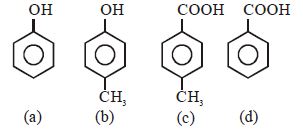
Correct order of acidic strength is ?
The Henry law constant for dissolution of a gas in aqueous medium is $3 × 10^2$  $atm$. At what partial pressure of the gas, the molality of gas in aqueous solution will be $\frac{5}{9}\,m$.
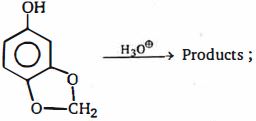
Product of the reaction is/are
The oxyacid of phosphorus, in which phosphorus has the lowest oxidation state, is
Compound $"x"$ having molecular formula $C_3H_6O$, reduced by Red $P /HI$ to gives compound $'y'(C_3H_8)$, but reduces tollen's reagent, what will be possible structure of $"x"$
Blood sugar is the same as
Give the correct of initials $T$ or $F$ for following statements. Use $T$ if  statement is true and $F$ if it is false.

$(I)\, Co(III)$ is stabilised in presence of weak field ligands, while $Co(II)$ is  stabilised in presence of strong field ligand. 

$(II)$ Four coordinated complexes of $Pd(II)$ and $Pt(II)$ are diamagnetic and  square planar.

$(III)\,[Ni (CN)_4]^{4-}$ ion and $[Ni (CO)_4]$ are diamagnetic tetrahedral and  square planar respectively. 

$(IV)\,Ni^{2+}$ ion does not form inner orbital octahedral complexes.

$(A)\xrightarrow[dil.{{H}_{2}}S{{O}_{4}}]{HgS{{O}_{4}}}(B)\xrightarrow{LiAl{{H}_{4}}}\underset{recemic\,mixture}{\mathop{(C)}}\,$

$\therefore$ reactant $(A)$ is

Identify the optically active compounds from the following:
$a. {\left[\mathrm{Co}(\mathrm{en})_3\right]^{3+}} $
$b.$ Trans $-\left[\mathrm{Co}(\mathrm{en})_2 \mathrm{Cl}_2\right]^{+} $
$c.$ Cis $-\left[\mathrm{Co}(\mathrm{en})_2 \mathrm{Cl}_2\right]^{+} $
$d.  {\left[\mathrm{Cr}\left(\mathrm{NH}_3\right)_5 \mathrm{Cl}\right]} $
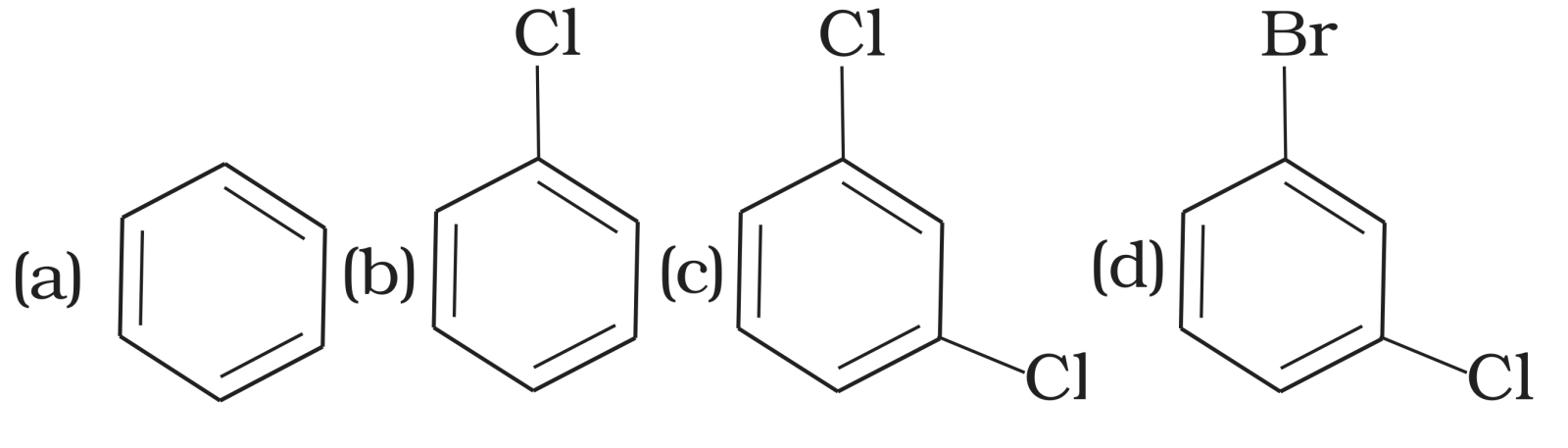
Arrange the following compounds in the increasing order of their densities.