MCQ
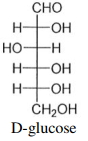
Blood sugar is the same as
- ✓Glucose
- BGalactose
- CGlycogen
- DFructose
Generate a complete, print-ready paper with questions like this in minutes — across 16+ boards, with answer keys.
$\frac{2}{3} Al_2 O_3 \rightarrow \frac{4}{3} Al + O_2$
$\Delta _rG = + 960\, kJ\, mol^{-1}$
The potential difference needed for the electrolytic reduction of aluminium oxide $(Al_2O_3)$ at $500^oC$ is at least ........ $V$.
$E^o_{Cr^{3+}/Cr} =-0.74\, V,\,$ $E^o_{MnO_4^-/Mn^{2+}} =1.51 \,V$
$E^o_{Cr_2O_7^{2-}/Cr^3+} =1.33\,V:$ $E^o_{Cl/Cl^-} =1.36\,V$
Based on the data given above, strongest oxidising agent will be :
|
List$-I$ (Chemical Reaction) |
List$-II$ (Reagent used) |
| $(a)$ $\mathrm{CH}_{3} \mathrm{COOCH}_{2} \mathrm{CH}_{3} \rightarrow \mathrm{CH}_{3} \mathrm{CH}_{2} \mathrm{OH}$ |
$(i)$ $\mathrm{CH}_{3} \mathrm{MgBr} / \mathrm{H}_{3} \mathrm{O}^{+}$ $(1 .$ equivalent $)$ |
| $(b)$ $\mathrm{CH}_{3} \mathrm{COOCH}_{3} \rightarrow \mathrm{CH}_{3} \mathrm{CHO}$ | $(ii)$ $\mathrm{H}_{2} \mathrm{SO}_{4} / \mathrm{H}_{2} \mathrm{O}$ |
| $(c)$ $\mathrm{CH}_{3} \mathrm{C} \equiv \mathrm{N} \rightarrow \mathrm{CH}_{3} \mathrm{CHO}$ | $(iii)$ $\mathrm{DIBAL}-\mathrm{H} / \mathrm{H}_{2} \mathrm{O}$ |
| $(d)$ $\mathrm{CH}_{3} \mathrm{C} \equiv \mathrm{N} \rightarrow \mathrm{CH}_{3}CO\mathrm{CH}_{3}$ | $(iv)$ $\mathrm{SnCl}_{2}, \mathrm{HCl} / \mathrm{H}_{2} \mathrm{O}$ |
Choose the most appropriate match :
| Column $I$ | Column $II$ |
| $(A)$ $\left(\mathrm{CH}_3\right)_2 \mathrm{SiCl}_2$ | $(p)$ Hydrogen halide formation |
| $(B)$ $\mathrm{XeF}_4$ | $(q)$ Redox reaction |
| $(C)$ $\mathrm{Cl}_2$ | $(r)$ Reacts with glass |
| $(D)$ $\mathrm{VCl}_5$ | $(s)$ Polymerization |
| $(t)$ $\mathrm{O}_2$ formation |