Question
Answer the following question:
Every metal has a definite work function. Why do all photoelectrons not come out with the same energy if incident radiation is monochromatic? Why is there an energy distribution of photoelectrons?
Answer

Work function indicates the minimum energy required for the electron in the highest level of the conduction band to get out of the metal.
Not all electrons in the metal belong to this level but, rather they occupy a continuous band of levels. Consequently, for the same incident radiation, electrons knocked off from different levels come out with different energies.

Need a full question paper?

Generate a complete, print-ready paper with questions like this in minutes — across 16+ boards, with answer keys.

Start Generating Free

Similar questions

By explaining the (Electric) current density, derive Ohm's law in vector form.
The contact angle between pure water and pure silver is $90^\circ$. If a capillary tube made of silver is dipped at one end in pure water, will the water rise in the capillary?
The focal length of a convex lens made of glass is 20cm. What will be its new focal length when placed in a medium of refractive index 1.25?
Infinite charges of $1 \mu C$ are placed on the x -axis at the positions $x=1,2,4,8, \ldots \infty$. If a charge of 1 C is situated at the origin, then find the value of the total force applied on it.
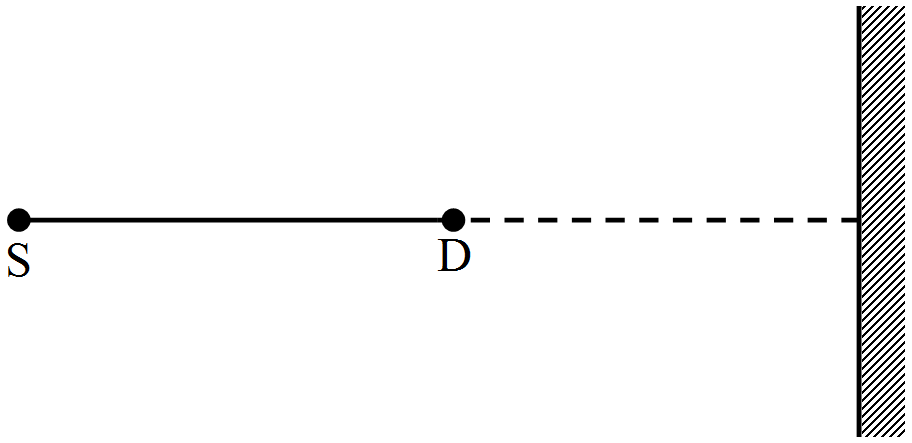
A source of sound S and a detector D are placed at some distance from one another. A big cardboard is placed near the detector and perpendicular to the line SD as shown in figure, It is gradually moved away and it is found that the intensity changes from a maximum to a minimum as the board is moved through a distance of 20cm. Find the frequency of the sound emitted. Velocity of sound in air is 336m/s.
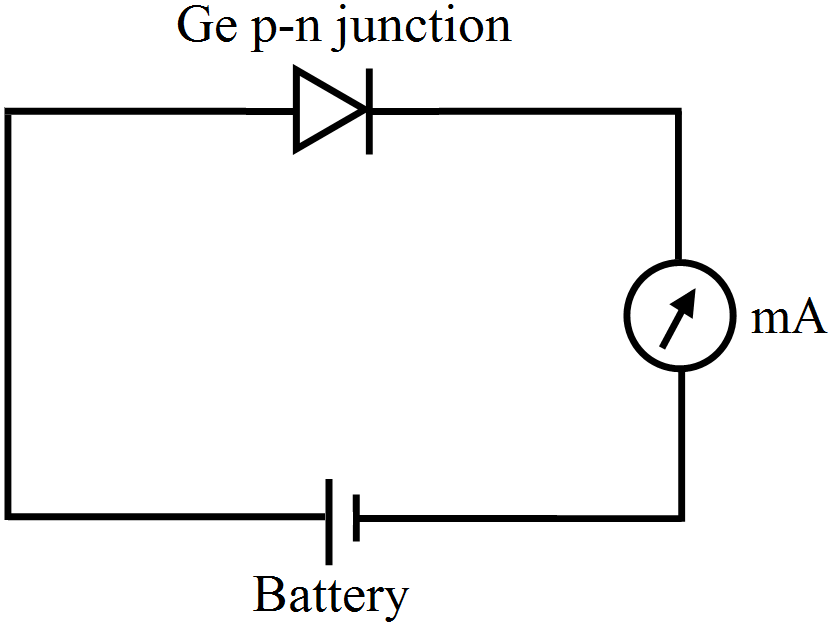
A germanium p-n junction is connected to a battery with milliammeter in series. What should be the minimum voltage of battery so that current may flow in the circuit?
In a Michelson experiment for measuring speed of light, the distance travelled by light between two reflections from the rotating mirror is 4.8km. The rotating mirror has a shape of a regular octagon. At what minimum angular speed of the mirror (other than zero) the image is formed at the position where a non-rotating mirror forms it?
A bob suspended from the ceiling of a car which is accelerating on a horizontal road. The bob stays at rest with respect to the car with the string making an angle $\theta$ with the vertical. The linear momentum of the bob as seen from the road is increasing with time. Is it a violation of conservation of linear momentum? If not, where is the external force which changes the linear momentum?
What is the specific heat capacity of:
  1. Melting ice
  2. Boiling water?
  1. The mass of a nucleus in its ground state is always less than the total mass of its constituents - neutrons and protons. Explain.
  2. Plot a graph showing the variation of potential energy of a pair of nucleons as a function of their separation.