MCQ
Assertion : Electron capture occurs more often than positron emission in heavy elements.
Reason : Heavy elements exhibit radioactivity.
  • A
    If both assertion and reason are true and the reason is the correct explanation of the assertion.
  • If both assertion and reason are true but reason is not the correct explanation of the assertion.
  • C
    If assertion is true but reason is false.
  • D
    If the assertion and reason both are false.
Answer

Correct option: B.
If both assertion and reason are true but reason is not the correct explanation of the assertion.
  If both assertion and reason are true but reason is not the correct explanation of the assertion.

Need a full question paper?

Generate a complete, print-ready paper with questions like this in minutes — across 16+ boards, with answer keys.

Start Generating Free

Similar questions

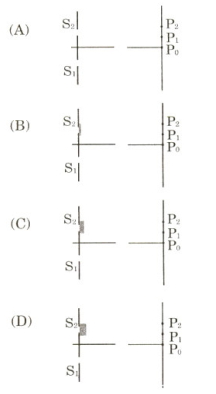
Column $I$ shows four situations of standard Young's double slit arrangement with the screen placed far away from the slits $S_1$ and $S_2$. In each of these cases $\mathrm{S}_1 \mathrm{P}_0=\mathrm{S}_2 \mathrm{P}_0, \mathrm{~S}_1 \mathrm{P}_1-\mathrm{S}_2 \mathrm{P}_1=\lambda / 4$ and $\mathrm{S}_1 \mathrm{P}_2-\mathrm{S}_2 \mathrm{P}_2=\lambda / 3$, where $\lambda$ is the wavelength of the light used. In the cases $\mathrm{B}, \mathrm{C}$ and $\mathrm{D}$, a transparent sheet of refractive index $\mu$ and thickness $t$ is pasted on slit $\mathrm{S}_2$. The thicknesses of the sheets are different in different cases. The phase difference between the light waves reaching a point $\mathrm{P}$ on the screen from the two slits is denoted by $\delta(\mathrm{P})$ and the intensity by $I(\mathrm{P})$. Match each situation given in Column $I$ with the statement$(s)$ in Column $II$ valid for that situation.

Column $I$ Column $II$
$(A)$ $Image$ $(p)$ $\delta\left(\mathrm{P}_0\right)=0$
$(B)$ $(\mu-1) t=\lambda / 4$ $Image$ $(q)$ $\delta\left(\mathrm{P}_1\right)=0$

$(C)$ $(\mu-1) t=\lambda / 2$ $Image$

$(r)$ $I\left(\mathrm{P}_1\right)=0$
$(D)$ $(\mu-1) t=3 \lambda / 4$ $Image$ $(s)$ $\left(\mathrm{P}_0\right)>I\left(\mathrm{P}_1\right)$
  $(t)$ $I\left(\mathrm{P}_2\right)>I\left(\mathrm{P}_1\right)$

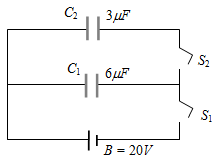
In the circuit shown here $C_1=6\mu F,C_2=3\mu F$ and battery B = 20V. The switch $S_1$ is first closed. It is then opened and afterwards $S_2$ is closed. What is the charge finally on $C_2$
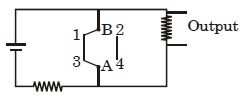
Switch $B$ can rest at either $1$ or $2$ as well as switch $A$ can rest at either $3$ or $4$ then output will be 
Assertion : In all conductors, for studying the thermoelectric behaviour or metals, lead is taken as a reference metal.
Reason : In lead, the Thomson effect is negative.
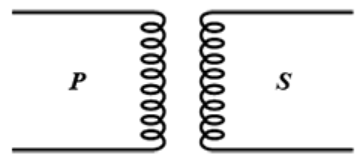
The value of coefficient of mutual induction for the arrangement of two coils shown in the figure will be:Image
A nucleus with mass number 220 initially at rest emits an a-particle. If the Q value of the reaction is 5.5 MeV, calculate the kinetic energy of the a-particle
The universal property among all substances is
In case of electrons and photons having the same wavelength. What is same for them?
Which of the following is used to produce radio waves of constant amplitude
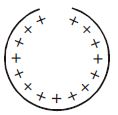
A ring of charge with radius $0.5\, m$ having a $0.02\, m$ gap, carries a charge of $+1\, C$. The field at the centre is