Question
Assess the U.S. hegemony as a soft power.

Answer

The U.S. hegemony as a Soft Power:
  1. The U.S. hegemony in the world today is based not only on its military power and economic powerbut also on its cultural dominance.
  2. America is the most powerful country in the world and can manage to win the consent of various countries.
  3. People in other countries get so used to hegemony that we hardly notice it. America is the most powerful culture on the earth.
  4. A pair of blue jeans from the U.S. has became a common wear now. A few years back, it was considered a dream in the Soviet Union to wear a pair of jeans. It depicts the strength of US as a soft power.
  5. During the cold war period, the two Super Powers were great rivals in hard power, but as a soft power, the U.S. has always excelled.

Need a full question paper?

Generate a complete, print-ready paper with questions like this in minutes — across 16+ boards, with answer keys.

Start Generating Free

Similar questions


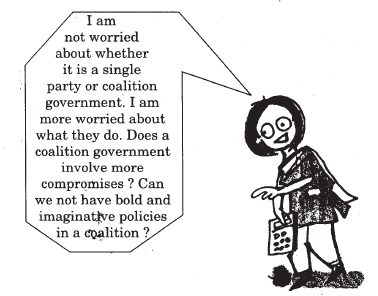
Study the cartoon given above and answer the following questions:
  1. Why is the girl shown in the cartoon not worried about whether it is a single party or a coalition government?
  2. Does a coalition government involve more compromises and why?
  3. Do you think we can have bold and imaginative policies in a coalition government and why?
‘Assam Movement was a combination of cultural pride and economic backwardness.’ Justify the statement.
Highlight any four factors which justify India’s claim to a permanent seat in the U.N. Security Council.
Highlight any two lessons which we have learnt from the National Emergency imposed during the 1970s.
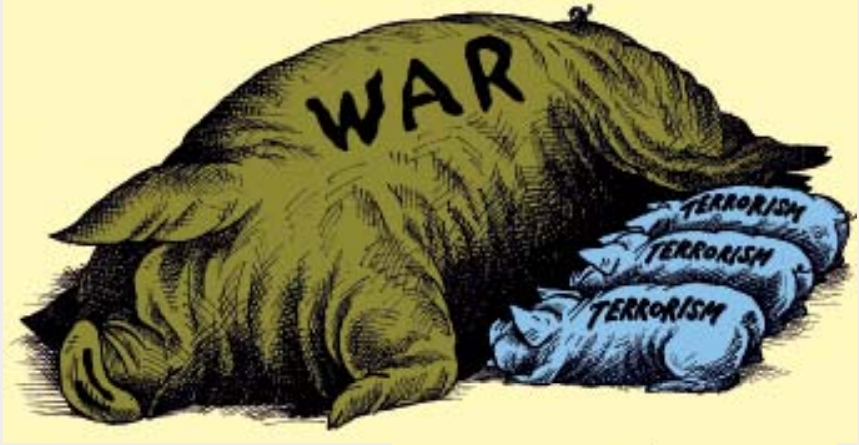
Read the cartoon below and write a short note in favour or against the connection between war and terrorism depicted in this cartoon.
Read the given passage carefully and answer the following questions:
Non-alignment as a strategy evolved in the Cold War context..... with the disintegration of USSR and the end of Cold War in 1991, non-alignment, both, as an international movement and as the core of India's foreign policy, lost some of its earlier relevance and effectiveness.
  1. Why did India adopt non-alignment?
  2. Explain any two reasons for the loss of its relevance by the Non-Aligned Movement.
  3. How far do you agree that the Non-Aligned Movement has become an international movement?
Name the principal players in the ethnic conflict in Sri Lanka. How do you assess the prospects of the resolution of this conflict?
Read the passage given below carefully and answer the following questions:India stands to benefit from its relationship with Russia on issues like Kashmir, energy supplies, sharing information on international terrorism, access to Central Asia and balancing its relations with China. Russia stands to benefit from this relationship because India is the second largest arms market for Russia. The Indian military gets most of its hardware from Russia. Since India is an oil importing nation, India is important to Russia and has repeatedly come to the assistance of India during its oil crises. India is seeking to increase its energy imports from Russia and the republics of Kazakhstan and Turkmenistan. Cooperation with these republics includes partnership and investment inoilfields. Russia is important for India’s nuclear energy plans and assisted India’s space industry also.
  1. How did Russia help India on Kashmir issue?
  2. How do good relations with Russia help India to balance its relations with China?
  3. In what way did Russia help the space industry of India?
  4. How did India and Russia get benefitted from each other? Give on example from each side.
Why did the superpowers need smaller states as their allies? Explain any four reasons.
How has globalisation created an intense division of opinion all over the world? Explain.