Question
Assign appropriate reasons for the following statement:
Metal fluorides are more ionic in nature than metal chlorides.

Answer

According to Fajan’s rule, a bigger anion is more easily polarised than a smaller anion. As a result, same metal cation can polarise a bigger $Cl^-$ ion more easily than the smaller $F^-$ ion. In other words, for the same metal, the metal fluoride is more ionic than metal chloride. So, in general, we can easily say that metal fluorides are more ionic than metal chlorides.

Need a full question paper?

Generate a complete, print-ready paper with questions like this in minutes — across 16+ boards, with answer keys.

Start Generating Free

Similar questions

Note: In the following questions a statement of assertion followed by a statement of reason is given. Choose the correct answer out of the following choices.
Assertion: $N_2$ is less reactive than $P_4.$
Reason: Nitrogen has more electron gain enthalpy than phosphorus.
Why are lyophilic colloidal sols more stable than lyophobic colloidal sols?
Write the reaction of $t-$butyl methyl ether with conc. $HI$ and also explain its mechanism.
A first order reaction is $50\%$ completed in $40$ minutes at $300K$ and in $20$ minutes at $320K.$ Calculate the activation energy of the reaction.
$\big(\text{Given}:\log2=0.3010,\log4=0.6021,\text{R}=8.314\ \text{JK}^{-1}\text{mol}^{-1}\big)$

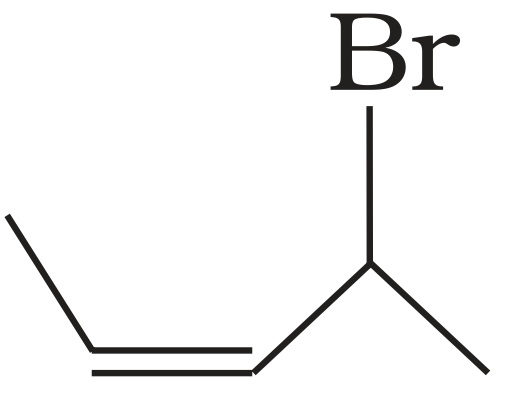
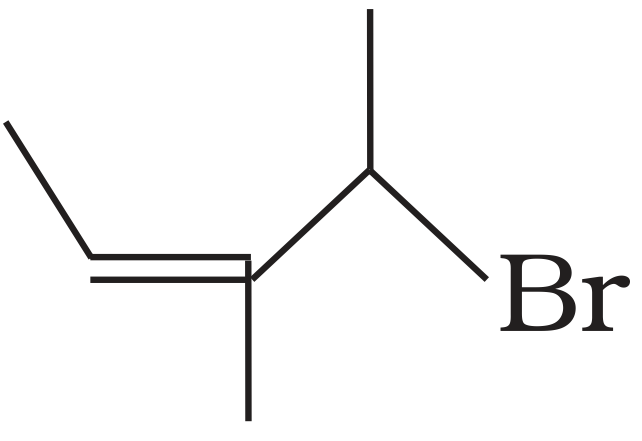
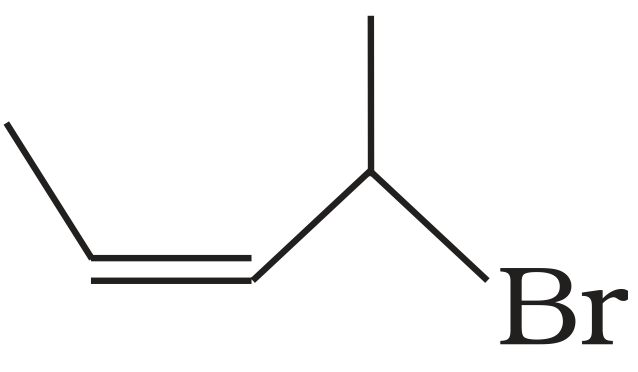
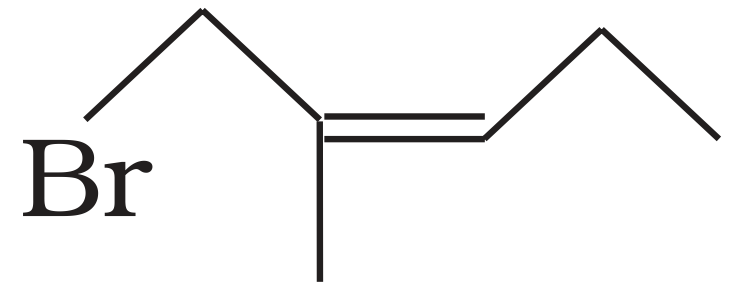
Match the structures given in Column I with the names in Column II.
  Column I   Column II
(i) (a) 4-Bromopent-2-ene
(ii) (b) 4-Bromo-3-methylpent-2-ene
(iii) (c) 1-Bromo-2-methylbut-2-ene
(iv) (d) 1-Bromo-2-methylbut-2-ene
Alcohols react both as nucleophiles as well as electrophiles. Write one reaction of each type and describe its mechanism.
The vapour pressure of water is $12.3$ kPa at $300$ K. Calculate vapour pressure of 1 molal solution of a non-volatile solute in it.
Describe the role of the following:
  1. $SiO_2$ in the extraction of copper from copper matte.
  2. $NaCN$ in froth floatation process.
Explain the following terms:
  1. Invert sugar.
  2. Polypeptides.
Name the processes from which chlorine is obtained as a by-product. What will happen if an aqueous solution of $NaCl$ is subjected to electrolysis?