Question
Between $\mathrm{AlF}_3$ and $\mathrm{AlCl}_3$, which one will have a higher melting point?

Answer

$\mathrm{AlF}_3$ is more ionic, therefore, has higher melting point as compared to $\mathrm{AlCl}_3$ because ' F ' is more electronegative than Cl . Higher the difference in electro-negativity more will be ionic character.

Need a full question paper?

Generate a complete, print-ready paper with questions like this in minutes — across 16+ boards, with answer keys.
Start Generating Free

Similar questions

  1. Which of the following have identical bond order?
$\text{CN}^-,\text{NO}^-,\text{O}^-_2,\text{O}^{2-}_2$
  1. Which of the following attain the linear structure?
$\text{BeCl}_2,\text{NCO}^+,\text{NO}_2,\text{CS}_2$
Why geometry of $BF _3$ is triangular while that of $NH _3$ is pyramidal? Give reason.
The relative reactivity of 1°, 2°, 3° hydrogen’s towards chlorination is 1 : 3.8 : 5. Calculate the percentages of all monochlorinated products obtained from 2-methylbutane.

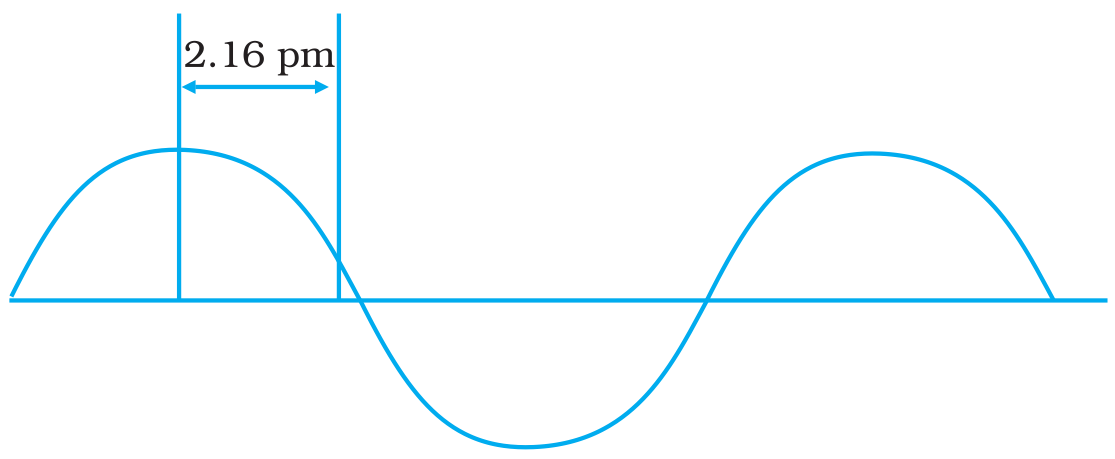
A hypothetical electromagnetic wave is shown in Fig. Find out the wavelength of the radiation.
A liquid is in equilibrium with its vapour in a sealed container at a fixed temperature. The volume of the container is suddenly increased.
How do rates of evaporation and condensation change initially?
Why is hydrogen peroxide stored in wax lined bottles?
How many significant figures should be present in the answer of the following calculations?
0.0125 + 0.7864 + 0.0215
Justify that the following reactions are redox reactions:$4 \mathrm{BCl}_{3(\mathrm{~g})}+3 \mathrm{LiAlH}_{4(\mathrm{~s})} \rightarrow 2 \mathrm{~B}_2 \mathrm{H}_{6(\mathrm{~g})}+3 \mathrm{LiCl}_{(\mathrm{s})}+3 \mathrm{AlCl}_{3(\mathrm{~s})}$
Explain the following:
Silicon forms $\text{SiF}^{2-}_6$ ion whereas corresponding fluoro compound of carbon is not known.
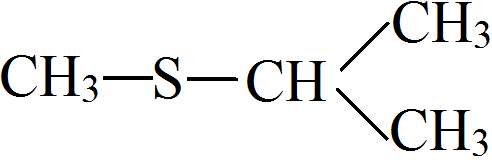
Compounds with same molecular formula but differing in their structures are said to be structural isomers. What type of structural isomerism is shown by $\mathrm{CH}_3-\mathrm{S}-\mathrm{CH}_2-\mathrm{CH}_2-\mathrm{CH}_3$ and