Question
Calculate Current Ratio from the following information:
Particulars
Particulars
Total Assets.
5,00,000
Non-Current Liabilities.
1,30,000
Fixed Tangible Assets.
2,50,000
Non-Current Investments
1,50,000
Shareholders' Funds.
3,20,000


Answer

Total Assets = Fixed Tangible Assets + Non - Current Investments + Current Assets
5,00,000 = 2,50,000 + 1,50,000 + Current Assets Current Assets
= 5,00,000 - 4,00,000 = ₹ 1,00,000
Total Assets = Shareholder’s Funds + Non - Current Liabilities + Current Liabilities
5,00,000 = 3,20,000 + 1,30,000 + Current Liabilities
Current Liabilities = 5,00,000 - 4,50,000 = ₹ 50,000
$\text{Current Ratio}=\frac{\text{Current Assets}}{\text{Current Liabilities}}$
$=\frac{1,00,000}{50,000}=2:1$

Need a full question paper?

Generate a complete, print-ready paper with questions like this in minutes — across 16+ boards, with answer keys.

Start Generating Free

Similar questions

G. Ltd forfeited 7,000 equity shares of ₹ 100 each for the non-payment of first call of ₹ 30 per share. These shares were issued at a premium of ₹ 30 per share. The second and final call of ₹ 20 per share was not yet made. The forfeited shares were re-issued at ₹ 80 per share fully paid up.
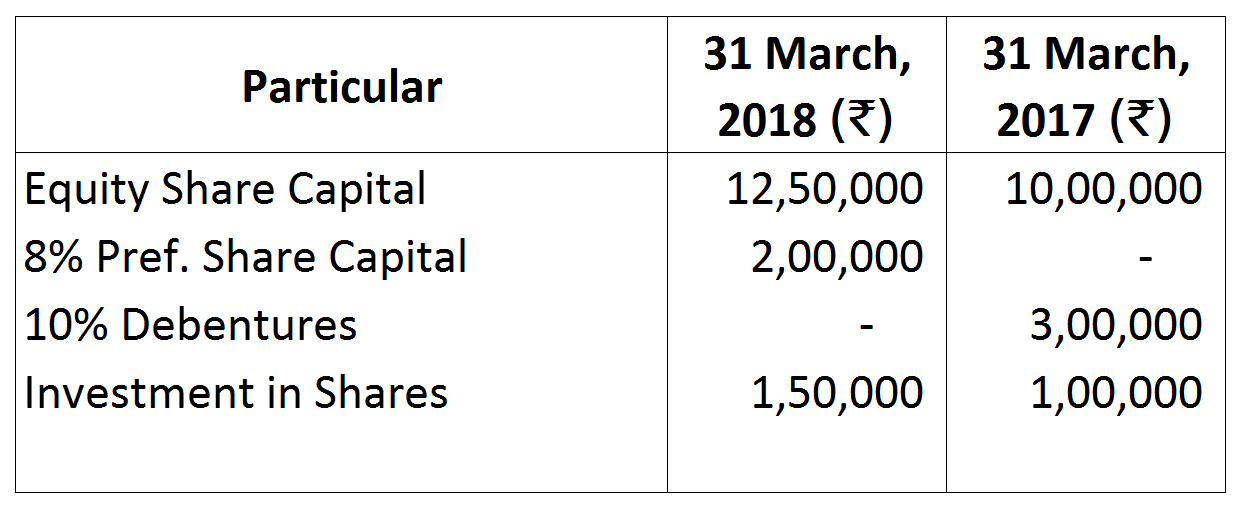
Sony Ltd. provides you the following information. Calculate Cash flows from financing activities:

Additional Information:
  1. During the year 2017-18, Sony Ltd. issued bonus shares in the ratio of 4 : 1 by capitalising reserve.
  2. 10% Debentures were redeemed on 1 Jan., 2018 at a premium of 5%.
  3. Preference Dividend paid ₹ 8,000.
  4. Dividend received on Investments ₹ 10,000.
'Suvidha Ltd.' is registered with an authorised capital of ₹ 10,00,00,000 divided into 10,00,000 equity shares of ₹ 100 each. The company issued 1,00,000 shares for public subscription. A shareholder holding 100 shares, failed to pay the final call of ₹ 20 per share. His shares were forfeited. The forfeited shares were re-issued at ₹ 90 per share as fully paid up.
Present the 'Share Capital' in the Balance Sheet of the company as per Schedule VI Part I of the Companies Act, 1956. Also prepare 'Notes to Accounts'.
From the following balance sheet of a company, calculate Debt-Equity Ratio:
Balance Sheet
ParticularsNote No.
I. Equity and Liabilities  
1. Shareholders' funds  
(a) Share capital 8,00,000
(b) Reserves and Surplus11,00,000
2. Share application money pending allotment 2,00,000
3. Non-Current Liabilities  
Long-term borrowings 1,50,000
Current liabilities 1,50,000
  14,00,000
II. Assets  
1. Non-Current Assets  
a) Fixed assets  
-Tangible assets211,00,000
2. Current Assets  
a) Inventories  
b) Trade receivables 90,000
c) Cash and cash equivalents 1,10,000
  14,00,000
Notes to Accounts 
 
1. Share Capital 
Equity Share Capital6,00,000
Preference Share Capital2,00,000
 8,00,000
Fixed Assets 
 
2. Tangible Assets: 
Plant and Machinery5,00,000
Land and Building4,00,000
Motor Car1,50,000
Furniture50,000
 11,00,000
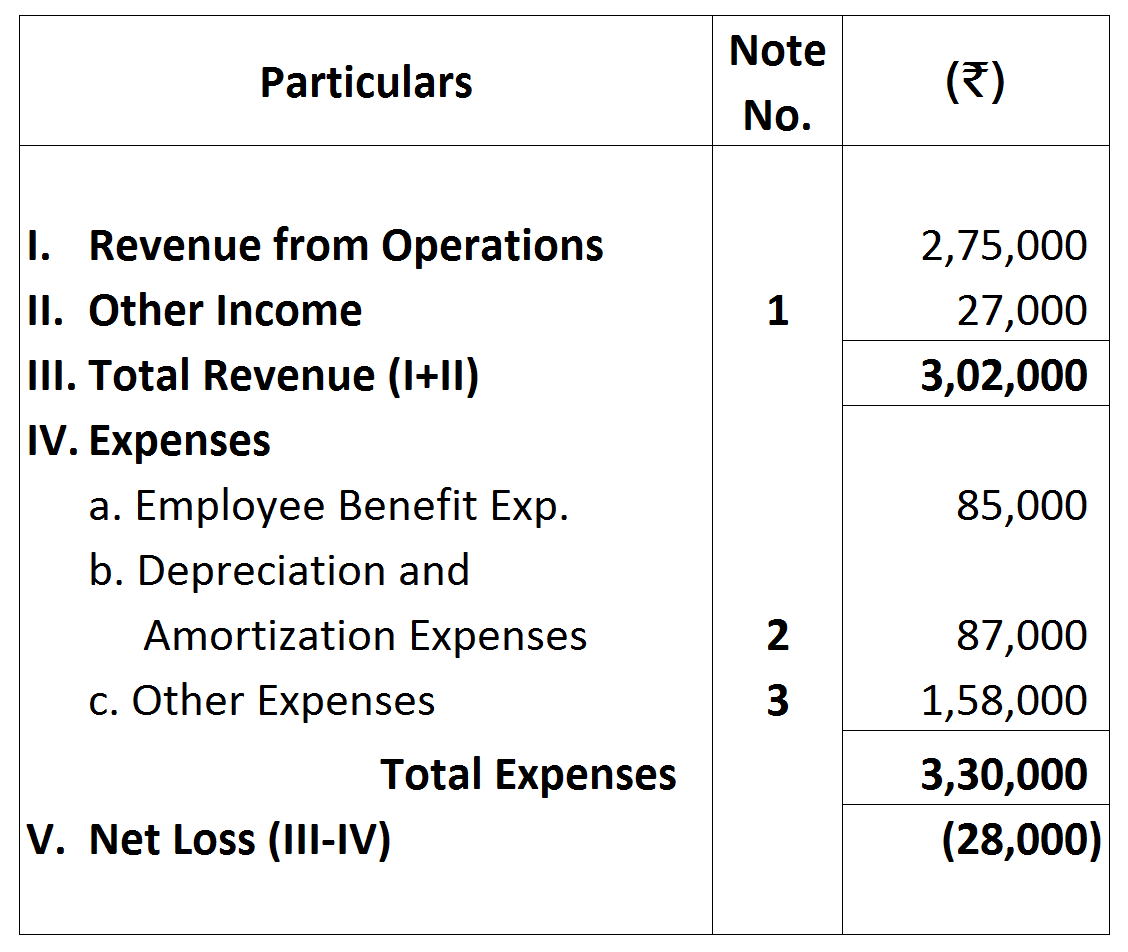
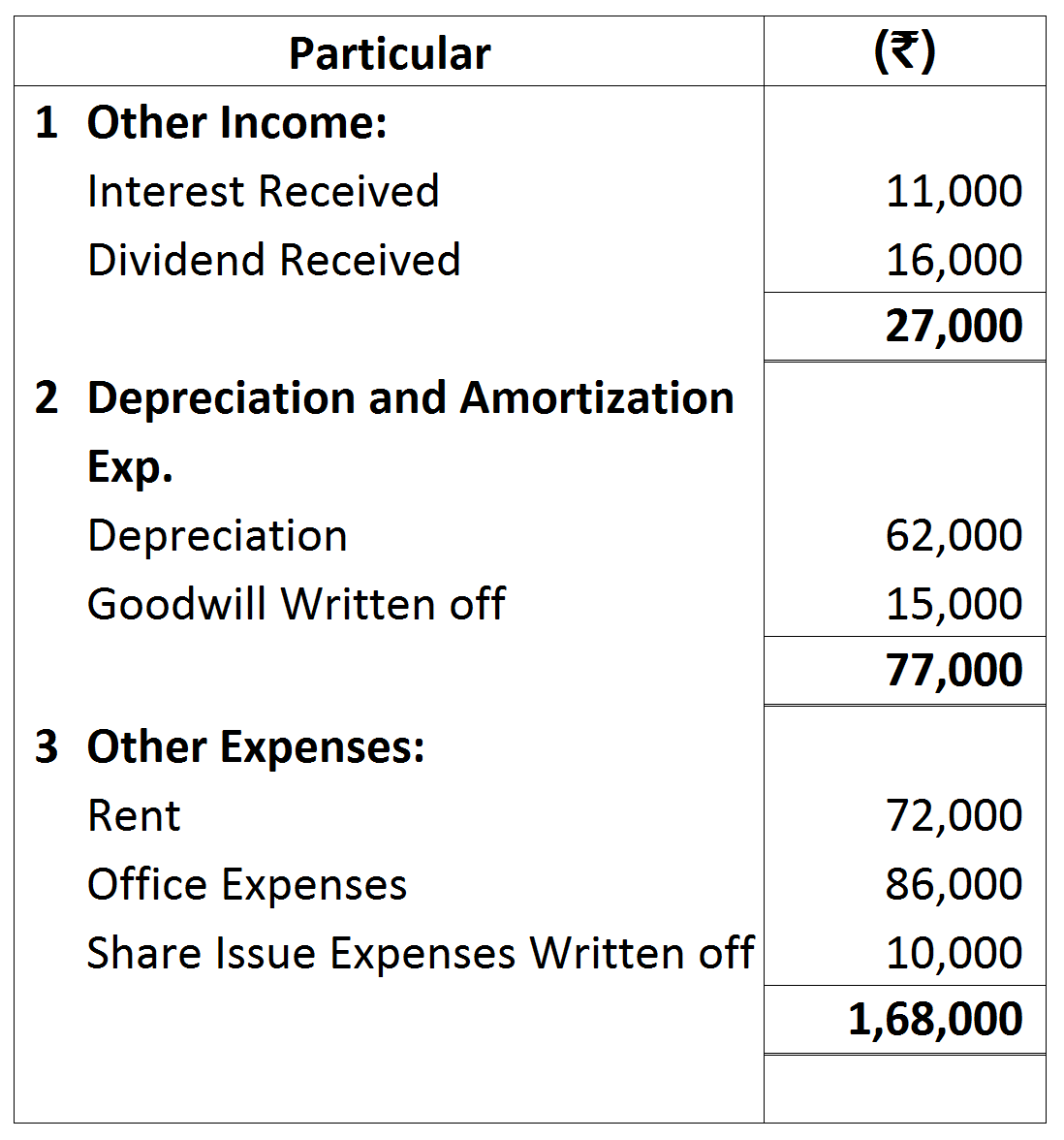
Following is the Profit & Loss Statement of Z Ltd. for the year ended 31st March, 2018:
Notes:
A Company's inventory is ₹ 2,00,000. Total liquid assets are ₹ 8,00,000 and quick ratio is 2 : 1. Calculate the current ratio.
From the following details, calculate Inventory Turnover Ratio:
 
Cost of Revenue from Operations (Cost of Goods Sold).
4,50,000
Inventory in the beginning of the year.
1,25,000
Inventory at the close of the year.
1,75,000
On 1st April 2016 X Ltd. has a debit balance of ₹ 3,00,000 in Reserves and Surplus as Balance of Statement of Profit & Loss. It earned a profit of ₹ 5,00,000 for the year ended 31st March 2017. How would you show these items in the Balance Sheet and notes to accounts?
X Ltd. has Current Ratio of 4.5 : 1 and a Quick Ratio of 3 : 1. If its inventory is ₹ 36,000, find out its total Current Assets and total Current Liabilities.
₹ 1,50,000 is the cost of revenue from operations of a firm for the year 2014. If inventory turnover ratio is 6 times, calculate inventory at the end of the year. Inventory at the end is 1.5 times than that in the beginning.