Question
Can $\text{L}_\alpha$ X-ray of one material have shorter wavelength than $\text{K}_\alpha$ X-ray of another?

Answer

An $\text{L}\alpha$ X-ray is emitted when an electron jumps from the M to the L shell, and a $\text{K}_\alpha$ X-ray is emitted when an electron jumps from the L to the K shell. Less energy is involved when an electron jumps from the M to the L shell than when it jumps from the L to the K shell. Also, wavelength of a photon is inversely related to its energy. Therefore, an $\text{L}\alpha$ X-ray has higher wavelength than a $\text{K}_\alpha$ X-ray for the same material.

Need a full question paper?

Generate a complete, print-ready paper with questions like this in minutes — across 16+ boards, with answer keys.
Start Generating Free

Similar questions

Two perfect gases at absolute temperature $T_1$ and $T_2$ are mixed. There is no loss of energy. Find the temperature of the mixture if masses of molecules are $m_1$ and $m_2$ and the number of molecules in the gases are $n_1$ and $n_2$ respectively.
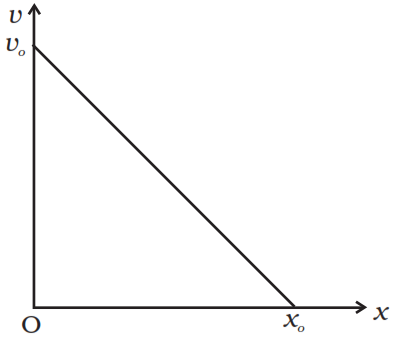
The velocity-displacement graph of a particle is shown in Fig.
  1. Write the relation between v and x.
  2. Obtain the relation between acceleration and displacement and plot it.
Consider the situation of the previous problem:
  1. Find the tension in the string in equilibrium.
  2. Suppose the ball is slightly pushed aside and released. Find the time period of the small oscillations.
How high must a body be lifted to gain an amount of potential energy equal to the kinetic energy it has, when moving at speed $20 ms^{-1}$. The value of acceleration due to gravity at that place is $g = 9.8 ms^{-2}$.
In a series LCR circuit with an AC source, $\text{R}=300\Omega,\text{C}=20\mu\text{F},\text{L}=1.0\text{ henry},\in_0=50\text{V}$ and $\nu=\frac{50}{\pi}\text{Hz}.$ Find:
  1. The rms current in the circuit.
  2. The rms potential difference across the capacitor, the resistor and the inductor. Note that the sum of the rms potential differences across the three elements is greater than the rms voltage of the source.
Derive the formula for centripetal acceleration of a particle moving with constant speed on a plane circular path. Or Derive the formula of acceleration for a particle moving with uniform speed on a circular path and tell its direction.
Rain is falling vertically with a speed of $10\sqrt{3}\text{ms}^{-1}.$ A man riding on a bicycle is moving with a speed of $10ms^{-1}$ in north to south direction. What is the direction in which he should hold his umbrella?
A battery of emf 100V and a resistor of resistance $10\text{k}\Omega$ are joined in series. This system is used as a source to supply current to an external resistance R. If R is not greater than $100\Omega,$ the current through it is constant up to two significant digits. Find its value. This is the basic principle of a constant-current source.
Steam at $120^{\circ} \mathrm{C}$ is continuously passed through a 50 cm long rubber tube of inner and outer radii 1.0 cm and 1.2 cm . The room temperature is $30^{\circ} \mathrm{C}$. Calculate the rate of heat flow through the walls of the tube. Thermal conductivity of rubber $=0.15 \mathrm{Js}^{-1} \mathrm{~m}^{-1^\circ} \mathrm{C}^{-1}$.
The driver of a three-wheeler moving with a speed of 36km/h sees a child standing in the middle of the road and brings his vehicle to rest in 4.0s just in time to save the child. What is the average retarding force on the vehicle ? The mass of the three-wheeler is 400kg and the mass of the driver is 65kg.