Question
$\ce{[Ti(H_2O)]^{3+}}$ is coloured while $\ce{[Sc(H_2O)_6]^{3+}}$ is colourless.

Answer

This is due to $d-d$ transition of electron in $\ce{[Ti(H_2O)]^{3+}}$ complex $\ce{Ti^{3+}}$ has one electron in $d-$orbital $(3d^1)$ which absorb energy corresponding to blue$-$green region and jumps from $t_{2g}$ to $e_g$ set of $d-$orbitals $\big(\text{t}^1_{2\text{g}}\text{ e}^0_{\text{g}}\xrightarrow{\ \ \ \ \ }\text{t}^0_{2\text{g}}\text{ e}^1_{\text{g}}\big).$ But $Sc^{3+}$ has no electron in the $d-$orbital.

Need a full question paper?

Generate a complete, print-ready paper with questions like this in minutes — across 16+ boards, with answer keys.
Start Generating Free

Similar questions

Write a note on DDT.
An anti-freeze solution is prepared from 222.6 g of ethylene glycol $ [C_{2}H_{4}(OH)_{2}] $, and 200 g of water. Calculate the molality of the solution. If the density of the solution is 1.072 g $ mL^{-1} $, then what shall be the molarity of the solution ?
  1. Define crystal field splitting energy. On the basis of crystal field theory, write the electronic configuration for $d^4$ ion if $\triangle_0>\text{P}.$
  2. Write the hybridization and magnetic character of $\ce{[CoF_6]^{3–}}. ($At. no. of $Co = 27)$
Answer the following questions:
Compare non transition and transition elements on the basis of their.
  1. Variability of oxidation states.
  2. Stability of oxidation states.
  1. Using valence bond theory predict the geometry and magnetic behaviour of $\ce{[Cr(NH_3)_6]^{3+ }ion[Cr=24]}.$
  2. Write $\text{IUPAC}$ name of:
$\ce{[Pt(NH_3)_2Cl_2]}.$
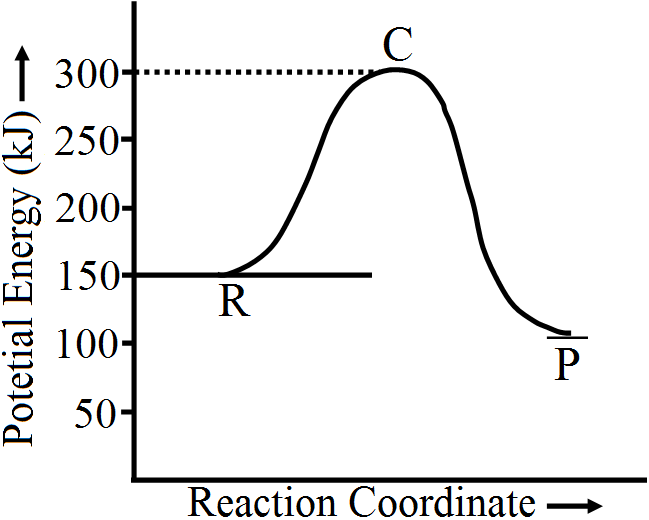
Answer the following questions on the basis of the given plot of potential energy vs reaction coordinate$:$
  1. What is the threshold energy for the reaction?
  2. What is the activation energy for forward reaction?
  3. What is the activation energy for backward reaction?
  4. What is enthalpy change for the forward reaction?
The Fischer projection of D-Glucose is given alongside.
What happens when L-Glucose is treated with Tollens’ reagent?
How would you account for the following: Transition metals sometimes exhibit very low oxidation state such as $+1$ and $0.$
What is meant by unidentate, didentate and ambidentate ligands? Give two examples for each.
For the complex $\ce{[Fe(en)_2Cl_2]Cl}, ($en $=$ ethylene diamine$),$ identify.
  1. The oxidation number of iron,
  2. The hybrid orbitals and the shape of the complex,
  3. The magnetic behaviour of the complex,
  4. The number of geometrical isomers,
  5. Whether there is an optical isomer also, And
  6. Name of the complex. $($At. no. of $Fe = 26).$
​​​​​