MCQ
$C{{H}_{3}}-C\equiv C-C{{H}_{3}}\xrightarrow{Cold\,\,KMn{{O}_{4}}}(A)$

Product $(A)$ is

  • A
    $\begin{array}{*{20}{c}}
      {\,\,\,\,\,\,\,\,\,\,\,\,\,\,\,\,\,\,\,\,\,\,\,\,\,O\,\,\,\,\,\,\,O} \\ 
      {\,\,\,\,\,\,\,\,\,\,\,\,\,\,\,\,\,\,\,\,\,\,\,\,\,||\,\,\,\,\,\,\,\,\,||} \\ 
      {C{H_3} - C{H_2} - C - C - H} 
    \end{array}$
  • $\begin{matrix}
       O\,\,\,\,O  \\
       ||\,\,\,\,\,\,\,||  \\
       C{{H}_{3}}-C-C-C{{H}_{3}}  \\
    \end{matrix}$
  • C
    $\begin{matrix}
       \,\,\,OH\,\,\,\,\,OH  \\
       |\,\,\,\,\,\,\,\,\,\,\,\,\,|\,\,  \\
       C{{H}_{3}}-CH-CH-C{{H}_{3}}  \\
    \end{matrix}$
  • D
    $O = CH - CH_2 - CH_2CH = O$

Answer

Correct option: B.
$\begin{matrix}
   O\,\,\,\,O  \\
   ||\,\,\,\,\,\,\,||  \\
   C{{H}_{3}}-C-C-C{{H}_{3}}  \\
\end{matrix}$
b
$\begin{matrix}
   \,\,\,\,\,\,\,\,\,\,\,\,\,\,\,\,\,\,\,\,\,\,\,\,\,\,\,\,\,\,\,\,\,\,\,\,\,\,\,\,\,\,\,\,\,\,\,\,\,\,\,\,\,\,\,\,\,\,\,\,\,\,\,\,\,\,\,\,\,\,\,\,\,\,\,\,\,\,\,\,\,\,\,\,\,\,\,\,O\,\,\,\,\,O  \\
   \,\,\,\,\,\,\,\,\,\,\,\,\,\,\,\,\,\,\,\,\,\,\,\,\,\,\,\,\,\,\,\,\,\,\,\,\,\,\,\,\,\,\,\,\,\,\,\,\,\,\,\,\,\,\,\,\,\,\,\,\,\,\,\,\,\,\,\,\,\,\,\,\,\,\,\,\,\,\,\,\,\,\,\,\,\,\,\,\,||\,\,\,\,\,\,\,\,||  \\
   C{{H}_{3}}-C\equiv C-C{{H}_{3}}\xrightarrow{Cold\,KMn{{O}_{4}}}\,C{{H}_{3}}-C-C-C{{H}_{3}}  \\
\end{matrix}$

Need a full question paper?

Generate a complete, print-ready paper with questions like this in minutes — across 16+ boards, with answer keys.

Start Generating Free

Similar questions

A chemical reaction cannot occur at all if
$2\  moles$ of a gas undergoes a change in state from $(2\  bar, 40\ l )$ to $(5\ bar, 15\ l)$ at a constant temperature. If change in illternal energy is given by $35\  bar-lit$ then enthalpy change forthe process will be
Correct order of nucleophilicity ?
The number of primary alcohols possible with the formula $C_4H_{10}O$ is :-
When $\Delta \mathrm{H}_{\mathrm{vap}}=30 \mathrm{~kJ} / \mathrm{mol}$ and $\Delta \mathrm{S}_{\mathrm{vap}}=75 \mathrm{~J} \mathrm{~mol}^{-1} \mathrm{~K}^{-1}$, then the temperature of vapour, at one atmosphere is . . . . $\mathrm{K}$.
The compound insoluble in acetic acid is
A solution of cyclohexene in benzene is stirred at $0\,^oC$ while concentrated sulphuric acid is added. After washing away the acid and removing the excess  benzene, what product is isolated?
Central atom of the following compound has one lone pair of electrons and three bond pairs of electrons
$\begin{array}{*{20}{c}}
  {C{H_3} - C{H_2} - CH - C{H_3}\xrightarrow[{KOH}]{{Alc.}}\mathop X\limits_{\left( {{\text{major}}} \right)} \,;} \\ 
  {\,\,\,\,\,\,\,\,\,\,\,\,|\,\,\,\,\,\,\,\,\,\,\,\,\,\,\,\,\,\,\,\,\,\,\,\,\,\,\,\,\,\,\,} \\ 
  {\,\,\,\,\,\,\,\,\,\,\,\,\,Br\,\,\,\,\,\,\,\,\,\,\,\,\,\,\,\,\,\,\,\,\,\,\,\,\,\,\,\,\,} 
\end{array}\,$

$\begin{array}{*{20}{c}}
  {C{H_3} - C{H_2} - CH - C{H_3}\xrightarrow[\Delta ]{{EtoNa}}\mathop {{\text{ }}Y}\limits_{\left( {{\text{major}}} \right)} } \\ 
  {{\mkern 1mu} {\mkern 1mu} {\mkern 1mu} {\mkern 1mu} {\mkern 1mu} {\mkern 1mu} {\mkern 1mu} {\mkern 1mu} {\mkern 1mu} {\mkern 1mu} {\mkern 1mu} {\mkern 1mu} |{\mkern 1mu} {\mkern 1mu} {\mkern 1mu} {\mkern 1mu} {\mkern 1mu} {\mkern 1mu} \,\,\,\,\,{\mkern 1mu} \,\,\,\,{\mkern 1mu} {\mkern 1mu} {\mkern 1mu} {\mkern 1mu} {\mkern 1mu} {\mkern 1mu} {\mkern 1mu} {\mkern 1mu} {\mkern 1mu} {\mkern 1mu} {\mkern 1mu} {\mkern 1mu} {\mkern 1mu} {\mkern 1mu} {\mkern 1mu} {\mkern 1mu} {\mkern 1mu} {\mkern 1mu} {\mkern 1mu} {\mkern 1mu} {\mkern 1mu} {\mkern 1mu} {\mkern 1mu} {\mkern 1mu} } \\ 
  {{\mkern 1mu} {\mkern 1mu} {\mkern 1mu} \mathop {{\mkern 1mu} {\mkern 1mu} {\mkern 1mu} {\mkern 1mu} \,\,\,\,\,\,\,NM{e_3}\,\,\,\,\,\,\,{\mkern 1mu} }\limits_{\,\,\,\,\,\,\,\,\,\, \oplus \,\,\,\,\,\,\,\,\,\,\,\,\,\,\,\,\,\,\,\,} {\mkern 1mu} {\mkern 1mu} {\mkern 1mu} {\mkern 1mu} {\mkern 1mu} {\mkern 1mu} {\mkern 1mu} {\mkern 1mu} {\mkern 1mu} {\mkern 1mu} {\mkern 1mu} {\mkern 1mu} {\mkern 1mu} {\mkern 1mu} } 
\end{array}{\mkern 1mu} $

Product $(X)$ and $(Y)$ respectively is

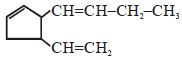
Stereoisomer possible for following compound