MCQ
Choose the correct statement.
  • A
    A sphere can do pure rolling on smooth horizontal surface
  • B
    A sphere can't do pure rolling on a fixed smooth wedge
  • C
    Rolling friction can act parallel or antiparallel to the direction of motion
  • All of these

Answer

Correct option: D.
All of these
d
(d)

Need a full question paper?

Generate a complete, print-ready paper with questions like this in minutes — across 16+ boards, with answer keys.
Start Generating Free

Similar questions

A particle executes $S.H.M.$ and its position varies with time as $x=A$ sin $\omega t$. Its average speed during its motion from mean position to mid-point of mean and extreme position is
The radius of gyration of a uniform rod of length $l,$ about an axis passing through a point $\frac{l}{4}$ away from the centre of the rod, and perpendicular to it, is
A radioactive sample is $\alpha$-emitter with half life $138.6$ days is observed by a student to have $2000$ disintegration/sec. The number of radioactive nuclei for given activity are
What does not change in the field of central force
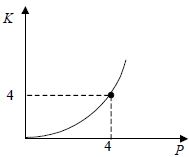
A graph between kinetic energy and momentum of a particle is plotted as shown in the figure. The mass of the moving particle is ........ $kg$.
One proton beam enters a magnetic field of ${10^{ - 4}}$ $T$ normally, Specific charge = ${10^{11}}\,C/kg.$ velocity = ${10^7}\,m/s$. What is the radius of the circle described by it....$m$
Choose the correct statement
In a communication system operating at wavelength $800\,nm,$ only one percent of source frequency is available as signal bandwidth. The number of channels accommodated for transmitting $TV$ signals of band width $6\,MHz$ are (Take velocity  of light $c = 3 \times 10^8\,m/s,\,\,h = 6.6 \times 10^{-34}\,J-s$ )
Atomic mass number of an element thorium is $232$ and its atomic number is $90$. The end product of this radioactive element is an isotope of lead (atomic mass $208$ and atomic number $82$). The number of alpha and beta particles emitted is
Spherical balls of radius $ 'r'$  are falling in a viscous fluid of viscosity '$\eta$' with a velocity $ 'v'. $ The retarding viscous force acting on the spherical ball is