Question
Classify the following transactions as:
  1. Operating Activities,
  2. Investing Activities,
  3. Financing Activities,
  4. Cash and Cash Equivalents.
  1. Purchase of Shares.
  2. Buy-back of Equity Shares.
  3. Payment of Share issue expenses.
  4. Discount allowed to Customers.
  5. Discount received from Suppliers.
  6. Increase in balance of Cash Credit.
  7. Repayment of Long-term Loan.
  8. Repayment of Short-term Loan.
  9. Proceeds from Short-term Borrowings.
  10. Dividend paid on Preference Shares.
  11. Short-term deposits in Bank.
  12. Rent received by a Company whose main business is Real Estate Business.
  13. Rent received by a Company whose main business is manufacturing.
Answer

1.
Purchase of Shares.
Investing Activities
2.
Buy-back of Equity Shares.
Financing Activities
3.
Payment of Share issue expenses.
Financing Activities
4.
Discount allowed to Customers.
Operating Activities
5.
Discount received from Suppliers.
Operating Activities
6.
Increase in balance of Cash Credit.
Financing Activities
7.
Repayment of Long-term Loan.
Financing Activities
8.
Repayment of Short-term Loan.
Financing Activities
9.
Proceeds from Short-term Borrowings.
Financing Activities
10.
Dividend paid on Preference Shares.
Financing Activities
11.
Short-term deposits in Bank.
Cash and Cash Equivalents
12.
Rent received by a Company whose main business is Real Estate Business.
Operating Activities
13.
Rent received by a Company whose main business is manufacturing.
Investing Activities

Need a full question paper?

Generate a complete, print-ready paper with questions like this in minutes — across 16+ boards, with answer keys.

Start Generating Free

Similar questions

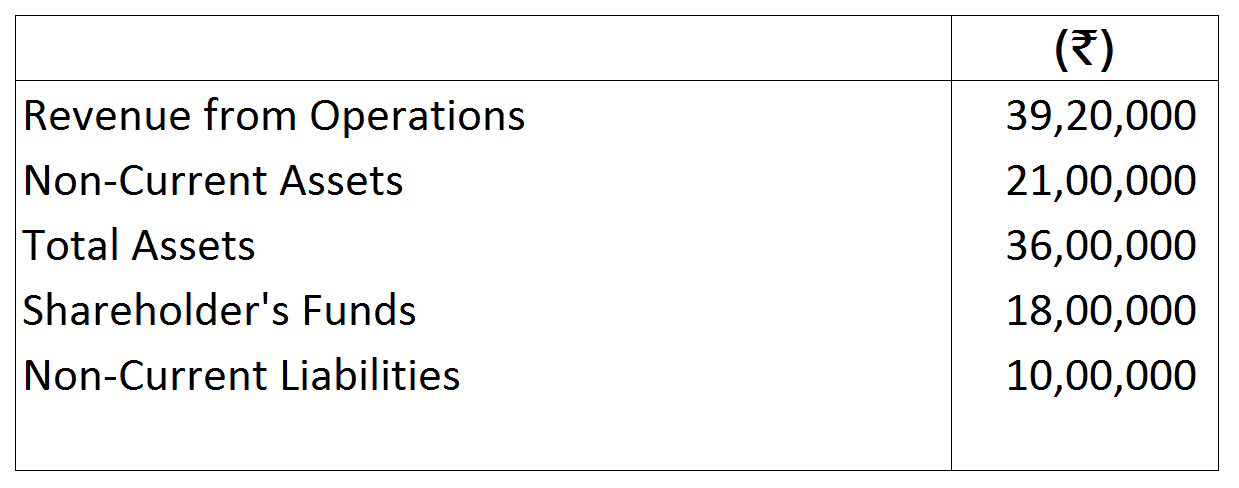
Calculate Working Capital Turnover Ratio from the following:
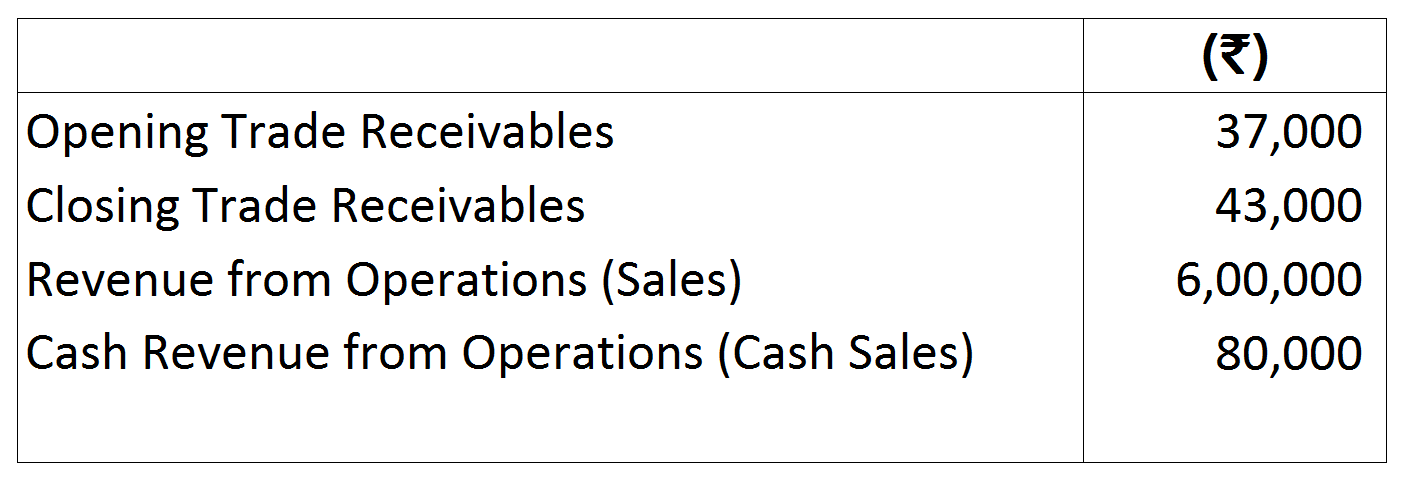
From the following information, calculate Trade Receivables Turnover Ratio:
For each of the following transactions, calculate the resulting Cash Flow and state the nature of Cash Flow, i.e. whether it is Operating, Investing or Financing:
  1. Acqured machinery for ₹ 2,50,000 paying 20% by cheque and executing a bond for the balance payable.
  2. Paid ₹ 2,50,000 to acqire shares in Informa Tech Ltd.and received a dividend of ₹ 50,000 after acquisition.
  3. Sold machinery of original cost of ₹ 2,00,000 with an accumulated depreciation of ₹ 1,60,000 for ₹ 60,000.
Quick Ratio 2.2; Current Assets ₹ 40,000; Inventory ₹ 32,000. Calculate Current Assets.
‘David Ltd.’ issued ₹ 40,00,000 equity shares of ₹ 10 each out of its registered capital of ₹ 10,00,00,000. The amount payable on these shares was as follows:
On application – ₹ 1 per share
On allotment – ₹ 2 per share
On first call – ₹ 3 per share
On second and final call – ₹ 4 per share
All calls were made and were duly received, except the second and final call on 1,000 shares held by Vipul. These shares were forfeited.
Present the ‘Share Capital’ in the Balance Sheet of the company as per Schedule VI Part I of the Companies Act, 1956. Also prepare ‘Notes to Accounts’.
Z Ltd. has the following balances on 1st April 2013:
 
General Reserve 2,50,000
Capital Reserve 1,50,000
Statement of Profit & Loss 2,00,000
During the year ended 31st March 2014, it incurred a loss of 7,10,000. Show how these items will appear in the Balance Sheet and notes to accounts?
From the following information, calculate Change in Inventory of Finished Goods:
Opening Inventory and Closing Inventory of Finished Goods ₹ 2,50,000 and ₹ 2,00,000 respectively.
Securities premium can also be utilized for three other purposes besides (i) ‘Issuing fully paid bonus shares’ and (ii) ‘Buy back of shares’. State those purposes.
Show the major headings on the liabilities side of the Balance Sheet of a company as per Schedule VI Part I of the Companies Act, 1956.
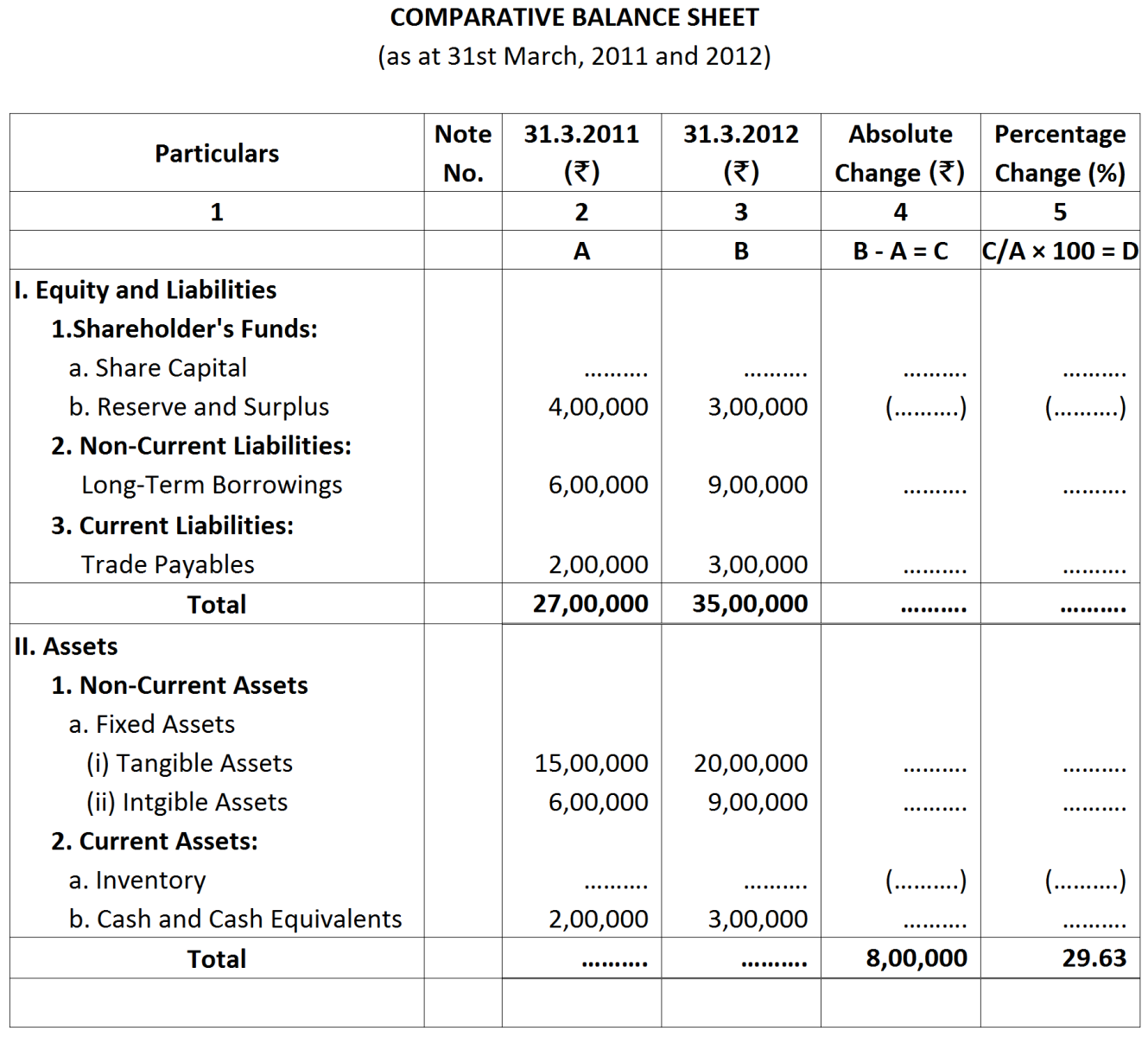
Universe Ltd. is into the business of manufacturing woolen garments. It decided to help the poor people by donating Woolen clothes and blankets during winter season. Following is the Comparative Balance Sheet of Universe Ltd. for two consecutive years:
You are required to:
  1. Fill in the missing figures in the Comparative Balance Sheet.
  2. Compute the Current Ratio for both the years.
  3. Identify the value involved.