Question
Column A (Scientist)Column B (Theory)
(1) Munch(a) Proton transport theory
(2) Bohem(b) Pressure flow theory
(3) J. Pristley(c) Capillary theory
(4) Levitt(d) Root Pressure theory

Answer

Column A (Scientist)Column B (Theory)
(1) Munch(b) Pressure flow theory
(2) Bohem(c) Capillary theory
(3) J. Pristley(d) Root Pressure theory
(4) Levitt(a) Proton transport theory

Need a full question paper?

Generate a complete, print-ready paper with questions like this in minutes — across 16+ boards, with answer keys.
Start Generating Free

Similar questions

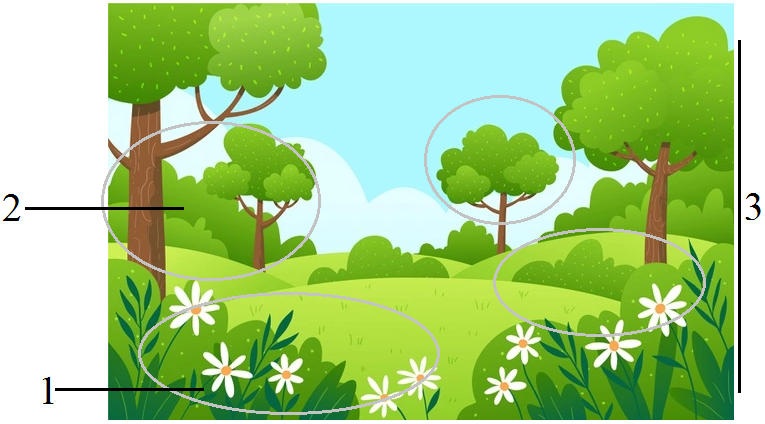
Read the following and answer any four questions from (i) to (v) given below: Ecosystem diversity is the variety of forms in the ecosystem due to diversity of niches, trophic levels and ecological processes like nutrient recycling, food webs, energy flow, etc. Study the given figure.
  1. Identify different types of diversity denoted by 1, 2 and 3 in the given figure.
 
1
2
3
(a)
Alpha diversity
Beta diversity
Gamma diversity
(b)
Gamma diversity
Alpha diversity
Beta diversity
(c)
Gamma diversity
Beta diversity
Alpha diversity
(d)
Beta diversity
Alpha diversity
Gamma diversity
  1. Alpha diversity is biodiversity present.
  1. Within conununity.
  2. Between conununities.
  3. In ranges of communities.
  4. None of these.
  1. Diversity represented by diversity of habitats over a total landscape area is:
  1. $\alpha-\text{diversity}$
  2. $\gamma-\text{diversity}$
  3. $\beta-\text{diversity}$
  4. $\delta-\text{diversity}$
  1. Concept of three types of ecological diversity was given by:
  1. Elton
  2. Odum
  3. Edward Wilson
  4. Whittaker
  1. The diversity of organisms sharing the same habitat or conununity is termed as:
  1. Alpha diversity.
  2. beta diversity.
  3. gamma diversity.
  4. delta diversity.
Blood vesselFunctions
(1) Pulmonary aorta(a) Carries oxygenated blood to left atrium
(2) Superior vena cava(b) Carries oxygenated blood to all body parts
(3) Pulmonary vein(c) Carries deoxygenated blood from upper parts of body to right atrium
(4) Aorta(d) Carries deoxygenated blood to lungs
Distinguish between : Atrio ventricular valves and Semilunar valves.
Distinguish between : Primary and secondary succession.
A patient is suffering from ADA deficiency. Can he be cured? How?
Distinguish Between: Monohybrid cross and Dihybrid cross.
Distinguish between: Primary sex organs and Secondary sex organs.
Column AColumn B
(1) Nutritive tissue of embryo(a) Perisperm
(2) Remnants of nucellus in seed(b) Cotyledon
(3) Nutritive tissue of developing microspores(c) Endosperm
(4) First photosynthetic organ of embryo(d) Tapetum
Read the following and answer any four questions from (i) to (v) given below:
The process of translation requires transfer of genetic information from a polymer of nucleotides to synthesise a polymer of amino acids. The relationship between the sequence of amino acids in a polypeptide and nucleotide sequence of DNA or mRNA is called genetic code. George Gamow suggested that in order to code for all the 20 amino acids, code should be made up of three nucleotides.
  1. What is a codon?
  1. A length of DNA which codes for a particular protein.
  2. A part of the tRNA molecule to which a specific amino acid is attached.
  3. A part of the tRNA molecule which recognises the triplet code on the messenger RNA.
  4. A part of the messenger RNA molecule that has a sequence of bases coding for an amino acid.
  1. Three consecutive bases in the DNA molecule provide the code for each amino acid in a protein molecule. What is the maximum number of different triplets that could occurs?
  1. 16
  2. 20
  3. 24
  4. 64
  1. Listed below are some amino acids and their corresponding mRNA triplets.
Amino acid
mRNA triplet
Phenylalanine
UUU
Lysine
AAG
Arginine
CGA
Alanine
GCA
Which DNA sequence would be needed to produce the following polypeptide sequence? Alanine-Arginine-Lysine-Phenylalanine
  1. $\text{CGT}\ \ \ \text{GCT}\ \ \ \text{TTC}\ \ \ \text{AAA}$
  2. $\text{CGT}\ \ \ \text{GCT}\ \ \ \text{TTC}\ \ \ \text{TTT}$
  3. $\text{CGU}\ \ \ \text{GCU}\ \ \ \text{UUC}\ \ \ \text{AAA}$
  4. $\text{CGU}\ \ \ \text{GCU}\ \ \ \text{UUC}\ \ \ \text{TTT}$
  1. Identify the non-sense codons among the following.
  1. AUG
  2. GUG
  3. UAA
  4. UGG
  1. A polypeptide is made using synthetic mRNA molecules as shown.
Synthetic mRNA used
Polypeptide produced
UUUAAAUUUAAA
Phenylalanine-Iysine-phenylalanine-Iysine
What are the DNA codes for the amino acids phenylalanine and lysine?
S.no
Phenylalanine
Lysine
(a)
AAA
TTT
(b)
AAA
UUU
(c)
GGG
CCC
(d)
TTT
GGG
Read the following and answer any four questions from (i) to (v) given below:
Kangaroo rat seldom drinks water. It has thick coat to minimise evaporative desiccation. TI1e animal seldom comes out of its comparatively humid and cool burrow during the day time. 90% of its water requirement is met from metabolic water (water produced by respiratory breakdown of fats) while 10% is obtained from its food. Loss of water is minimised by producing nearly solid urine and faeces. As the animal faces acute water scarcity, it develops two types of adaptations : reducing water loss and ability to tolerate desert conditions.
  1. Kangaroo rat is a:
  1. Partial regulators
  2. Partial conformer
  3. Regulator
  4. Conformer
  1. Metabolic water refers to:
  1. Water required for metabolic activities.
  2. Water present in intercellular fluid.
  3. Water produced during oxidation of fat or carbohydrate.
  4. Water taken in, to promote metabolism.
  1. Desert animals minimise water loss by:
  1. Producing highly concentrated urine.
  2. Promoting maximum reabsorption of water in kidney tubules.
  3. Possessing one of the longest loop of Henle in kidney tubules.
  4. All of these.
  1. Assertion: Kangaroo rat can tolerate and thrive in wide temperature range and is known as stenothermal.
Reason: Kangaroo rats go into hibernation during winter to escape cold weather.
  1. Both assertion and reason are true and reason is the correct explanation of assertion.
  2. Both assertion and reason are true but reason is not the correct explanation of assertion.
  3. Assertion is true but reason is false.
  4. Both assertion and reason are false.
  1. The adaptations in an organism are meant for:
  1. Optimum primary production.
  2. Optimum life span.
  3. Optimum mobility.
  4. Optimum survival and reproduction.