Question
Compute Cash Flow from Operating Activities from the following information:
Particulars
Net Profit after Provision for Tax nd Payment of Dividend
Provision for Tax
Final Dividend paid during the year
Depreciation
Loss on Sale of Machinery
Patents Amortised
Gain on Sale of Land
Income Tax Refund
2,15,000
45,000
50,000
25,000
10,000
30,000
70,000
30,000

Answer

Get the step-by-step solution for this question inside the Vidyadip app.

Get the answer in the app

Need a full question paper?

Generate a complete, print-ready paper with questions like this in minutes — across 16+ boards, with answer keys.

Start Generating Free

Similar questions

Name the major heads under which the following items will be presented in the Balance Sheet of a company as per Schedule III of the Companies Act, 2013:
  1. Loose Tools.
  2. Unpaid Dividend.
  3. Copyrights and Patents.
  4. Land and Building.
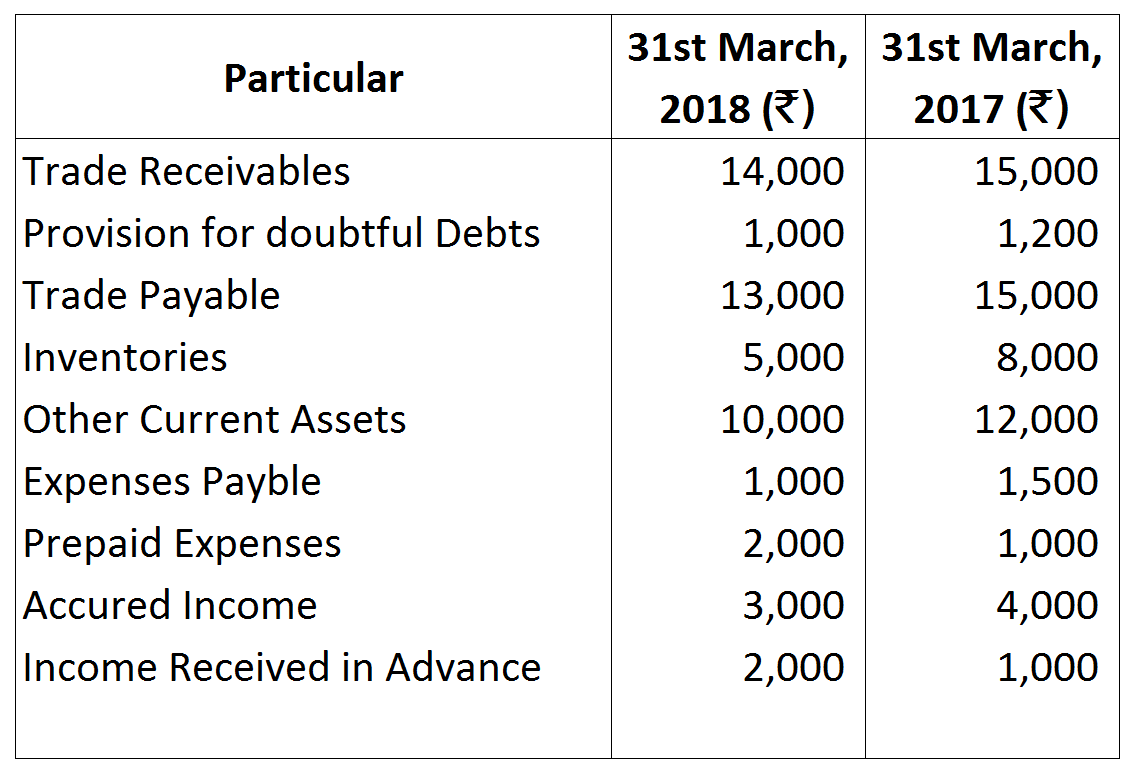
Compute Cash Flow from Operating Activities from the following:
  1. Profit for the year ended 31st March, 2018 is ₹ 10,000 after providing for depreciation of ₹ 2,000.
  2. Current Assets and Current Liabilities of the business for the year ended 31st March, 2017 and 2018 are as follows:
Green Valley Ltd. offered 5,00,000 shares to public for subscription. Applications were received for 7,50,000 shares and pro rata allotment was made to the applicants of 6,00,000 shares. Arushi applied for 4,800 shares and Navya was allotted 3,000 shares.
From the above information, calculate:
  1. How many applications have been rejected altogether?
  2. What is the pro rata ratio?
  3. How many shares were allotted to Arushi?
  4. How many shares were applied by Navya?
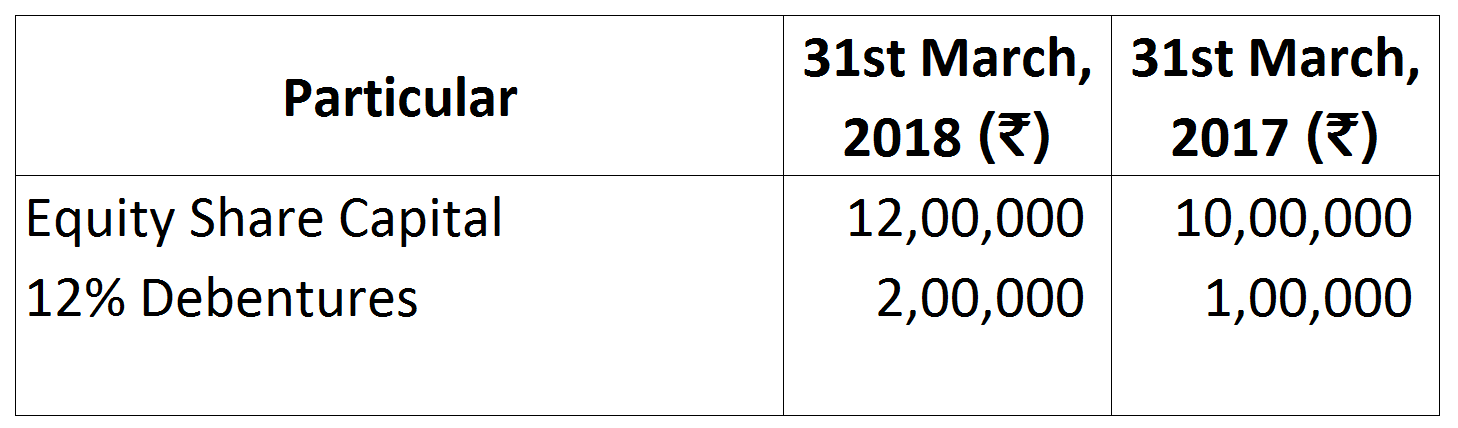
From the following information, calculate Cash Flow from Investing and Financing Activities
Additional Information:
  1. Interest paid on debentures ₹ 19,000.
  2. Dividend paid in the year ₹ 50,000.
  3. During the year, XYZ Ltd. issued bonus shares in the ratio of 5 : 1 by capitalising reserve.
Compute Gross Profit Ratio from the following information:
Revenue from Operations, i.e., Net Sales = ₹ 4,00,000; Gross Profit 25% on Cost.
$X$ Ltd., had ₹ $8,00,000, 9\%$ debentures due to be redeemed out of profits on $1^{st}$​​​​​​​ Oct, $2009$ ,at a premium of $5\%$. The company had a : Debenture, Redemption Reserve of ₹ $4,14,000$.
Pass necessary journal entries at the time of redemption.
State giving reason, whether the Current Ratio will improve or decline or will have no effect in each of the following transactions if Current Ratio is 2 : 1.
  1. Cash paid to Trade Payables.
  2. Bills Payable discharged.
  3. Bills Receivable endorsed to a creditor.
  4. Payment of final Dividend already declared.
  5. Purchase of Stock-in-Trade on credit.
  6. Bills Receivable endorsed to a Creditor dishonoured.
  7. Purchase of Stock-in-Trade for cash.
  8. Sale of Fixed Assets (Book Value of ₹ 50,000) for ₹ 45,000.
  9. Sale of Fixed Assets (Book Value of ₹ 50,000) for ₹ 60,000.
Give journal entries for forfeiture and re-issue of shares:
Chirag Ltd. forfeited 3,000 shares of ₹ 10 each, ₹ 7 called up, issued at a premium of 20% (to be paid at the time of allotment) for non-payment of a first call of ₹ 2 per share. Out of these, 1,800 shares were re-issued as ₹ 7 paid up for ₹ 4 per share.
  1. Compute 'Working Capital Turnover Ratio' from the following information: Cash Sales ₹ 1,30,000; Credit Sales ₹ 3,80,000; Sales Returns ₹ 10,000; Liquid Assets ₹ 1,40,000; Current Liabilities ₹ 1,05,000 and Inventory ₹ 90,000.
  2. Calculate 'Debt Equity Ratio' from the following information: Total Assets ₹ 3,50,000; Total Debt ₹ 2,50,000 and Current Liabilities ₹ 80,000.
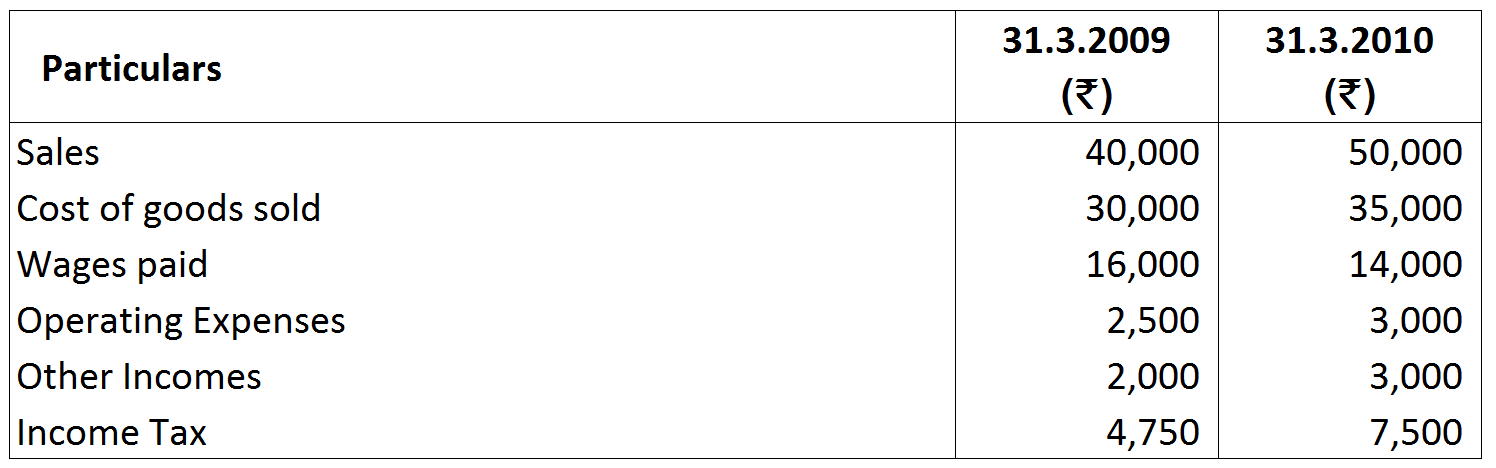
Prepare a Comparative Income Statement from the following information: