Question
Consider the following two equations:
  1. $\text{L}=\text{I}\omega$
  2. $\frac{\text{dL}}{\text{dt}}=\Gamma$
In noninertial frames:
  1. Both A and Bare true.
  2. A is true but B is false.
  3. B is true but A is false.
  4. Both A and Bare false.

Answer

  1. A is true but B is false.
Explanation:
In non-inertial frames, $\frac{\text{dL}}{\text{dt}}=\Gamma_{\text{Total}}$
Here, $\Gamma_{\text{Total}}$ is the total torque on the system due to all the external forces acting on the system. So, equation (B) is not true as in non-inertial frames, pseudo force must be applied to study the motion of the object.

Need a full question paper?

Generate a complete, print-ready paper with questions like this in minutes — across 16+ boards, with answer keys.

Start Generating Free

Similar questions

A closed cylindrical tube containing some water (not filling the entire tube) lies in a horizontal plane. If the tube is rotated about a perpendicular bisector, the moment of inertia of water about the axis:
  1. Increases.
  2. Decreases.
  3. Remains constant.
  4. Increases if the rotation is clockwise and decreases if it is anticlockwise.
Who proved the absence of backward wave in Huygens' theory of secondary waves?
Best neutron moderator is (a) Berillium oxide(b) Pure water(c) Heavy water(d) Graphite
       
Taking the Bohr radius as $a_0 = 53\ pm,$ the radius of $Li^{++} $ ion in its ground state, on the basis of Bohr’s model, will be about:
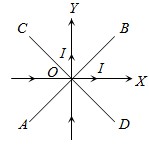
Two very thin metallic wires placed along $X$ and $Y-$axis carry equal currents as shown here. $AB$ and $CD$ are lines at $45^\circ$  with the axes with origin of axes at $O.$ The magnetic field will be zero on the line
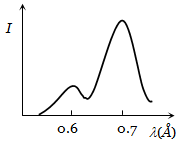
In the diagram a graph between the intensity of $X-$rays emitted by a molybdenum target and the wavelength is shown, when electrons of $30 \ \text{keV}$ are incident on the target. In the graph one peak is of $\mathrm{K}_\alpha$ line and the other peak is of $\mathrm{K}_\alpha$ line and the other peak is of $\mathrm{K}_\beta$ line
The wavelength of a photon needed to remove a proton from a nucleus which is bound to the nucleus with $1\ MeV$ energy is nearly:
To construct a barometer, a tube of length $1m$ is filled completely with mercury and is inverted in a mercury cup. The barometer reading on a particular day is $76\ cm.$ Suppose a $1m$ tube is filled with mercury up to $76\ cm$ and then closed by a cork. It is inverted in a mercury cup and the cork is removed. The height of mercury column in the tube over the surface in the cup will be.
Light energy emitted by stars is due to(a) Breaking of nuclei(b) Joining of nuclei(c) Burning of nuclei(d) Reflection of solar light
   
   
Potential at a point $x-$distance from the centre inside the conducting sphere of radius $R$ and charged with charge $Q$ is